► Key Points – Trump Raises Cuba Military Threat as Rubio Admits Diplomacy Is Almost Dead
- President Trump raised the threat of U.S. military intervention in Cuba on May 21, 2026, saying “it looks like I’ll be the one that does it”
- Secretary of State Marco Rubio said the likelihood of a diplomatic resolution is “not high” given Cuba’s current leadership
- The escalation follows the May 20 indictment of former Cuban President Raúl Castro on murder and conspiracy charges over the 1996 shootdown of civilian planes
- Four men — including three American citizens — were killed in the 1996 attack by Cuban MiG fighters on Brothers to the Rescue aircraft
- Rubio confirmed CIA chief John Ratcliffe and senior national security officials had already been meeting with Cuban officials in recent months
- Cuba’s Foreign Ministry called the Castro indictment “illegitimate and illegal” — deepening the diplomatic rift
- Analysts warn the Cuba pressure campaign mirrors the Venezuela playbook that removed Nicolás Maduro from power
By TrenBuzz Staff · May 22, 2026 · 5 min read
In the span of 48 hours, the Trump administration has transformed its Cuba policy from quiet pressure into an open threat. A historic criminal indictment of a former head of state. A Secretary of State admitting diplomacy is unlikely to work. And a sitting president who told reporters he may be the one to finally intervene militarily in Cuba after six decades of American hesitation.
The cascade of events — the Rubio Cuba diplomacy admission, the Trump military action Cuba warning, and the explosive indictment of 94-year-old former Cuban President Raúl Castro — have sent shockwaves through Havana, Miami, and Washington alike. Whether this is strategic pressure or a genuine march toward military confrontation, nobody outside the White House is quite sure.
What is clear is this: the Trump administration is done waiting Cuba out — and it wants Havana to know it.
Raúl Castro Indicted — The Move That Started It All
The trigger for this week’s escalation was a dramatic legal action that few expected to happen in their lifetimes. On May 20, 2026 — deliberately timed to Cuba’s Independence Day — the U.S. Department of Justice unsealed a federal indictment charging former Cuban President Raúl Castro with conspiracy to kill U.S. nationals, murder, and destruction of aircraft.
The charges stem from Cuba’s 1996 shootdown of two unarmed civilian planes operated by the Cuban-American exile organization Brothers to the Rescue, over international waters in the Florida Straits. The attack killed four men — three American citizens and one permanent resident — and was condemned at the time by the United Nations Security Council and the International Civil Aviation Organization.
Acting AG Todd Blanche made the announcement at Freedom Tower in downtown Miami — the same building that processed thousands of Cuban refugees in the 1960s and ’70s. Five Cuban air force personnel were also indicted alongside Castro. Cuba’s Foreign Ministry immediately condemned the charges as “illegitimate and illegal,” insisting the planes were in Cuban airspace.
“Other presidents have looked at this for 50, 60 years, doing something. And it looks like I’ll be the one that does it.”
— President Donald Trump, Oval Office, May 21, 2026
Rubio’s Blunt Admission: Diplomacy With Cuba Is “Not High” Likelihood
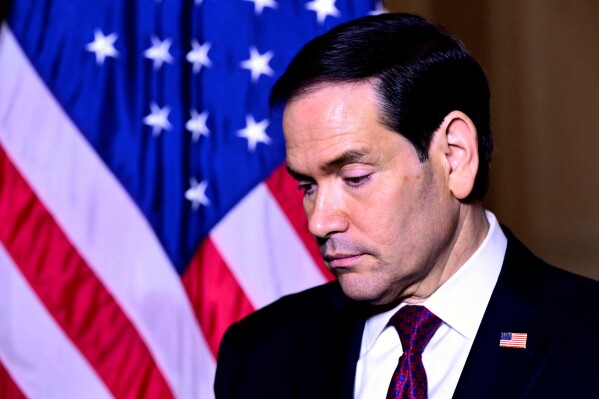
The day after the indictment, Secretary of State Marco Rubio — himself the son of Cuban immigrants and a lifelong hard-liner on Havana — delivered one of the most candid foreign policy assessments heard from a sitting Secretary of State in years. Speaking to reporters in Miami before departing for a NATO summit in Sweden, Rubio confirmed the administration’s preference for a peaceful resolution but left little room for optimism.
“Trump’s preference is always a negotiated agreement that’s peaceful. That’s always our preference. That remains our preference with Cuba,” Rubio said. Then came the gut punch: “I’m just being honest with you — the likelihood of that happening, given who we’re dealing with right now, is not high.”
Rubio also confirmed that top Trump aides — including CIA Director John Ratcliffe and other senior national security officials — had already held meetings with Cuban officials in recent months in an effort to explore possible improvements in relations. Those talks, clearly, did not go well enough to change Rubio’s assessment.
🔗 Also Read: Iran Revised Peace Proposal Shared With U.S. Through Pakistan — What’s in the Deal
Trump’s Cuba Threat — And the Venezuela Playbook Behind It
Trump’s comment in the Oval Office — that he would be the president who finally “does something” about Cuba — landed with particular weight given what the administration has already done elsewhere in the region. In early 2026, a U.S.-backed operation in Venezuela removed President Nicolás Maduro from power and installed friendlier leadership, upending a socialist government Washington had targeted for years.
Analysts note that the Castro indictment follows the same strategic template: create a legal pretext for potential intervention, apply maximum economic and diplomatic pressure, then leave the military option visibly on the table. The indictment, as CNN noted, gives the U.S. “the pretext it needs for an operation to capture Castro, similar to the raid in Venezuela.”
Whether Trump would actually order military action against Cuba — a sovereign nation 90 miles from Florida with significant civilian infrastructure and deep historical sensitivities — remains deeply uncertain. Former diplomats close to the situation told CNN there is “little belief that another military operation is imminent, at least for now,” with the White House still consumed by the war in Iran.
Cuba Fires Back — and the Stakes for the Region Grow
Havana has not taken the escalation lying down. Cuba’s Foreign Ministry issued a sharp rebuke of the Castro indictment, calling it a politically motivated legal attack on Cuban sovereignty. The island’s government has long maintained that the 1996 shootdown was a legitimate defensive action against planes that had repeatedly violated Cuban airspace — a claim that U.S. courts and international aviation bodies have rejected.
The broader context matters too. Cuba remains a close ally of Russia and Iran — two countries already in America’s crosshairs. Cuba hosts Russian intelligence listening posts, allows Chinese military facilities, and provides support networks for Venezuelan and Nicaraguan governments that Washington considers hostile. Rubio’s explicit reference to Cuba being “a national security threat” because of “its ties to U.S. adversaries” signals the administration sees this as part of a larger strategic picture.
In Miami, where the Cuban-American community celebrated the indictment in the streets outside Freedom Tower, the mood was one of long-delayed justice. Protesters held signs calling for American intervention. For the exile community that has watched Cuba’s communist government survive twelve U.S. presidents, Trump’s words carry a weight that previous administrations’ rhetoric did not.
🔗 Also Read: https://trenbuzz.com/cuba-runs-out-of-fuel-and-diesel/
What Happens Next — And Why the Next 30 Days Matter
The ball is now squarely in Havana’s court. The indictment of Raúl Castro is, as analysts widely acknowledge, largely symbolic — the 94-year-old former president is unlikely to ever step foot in a U.S. courtroom. But symbolism in geopolitics carries real consequences, and the message from Washington couldn’t be clearer: the era of waiting Cuba out is over.
Rubio is heading to a NATO summit in Sweden before traveling to India — taking the Cuba pressure campaign international, signaling to U.S. allies that Havana’s ties to Russia and China are a hemispheric security concern, not just a bilateral grudge. Whether European allies will back any escalation against Cuba, however, remains to be seen.
For now, the administration has set a clock ticking without publicly announcing when it runs out. Trump hinted at action. Rubio admitted diplomacy is nearly dead. The indictment has been served. Cuba, as Rubio put it, can no longer simply “buy time and wait us out” — and the next move belongs to Havana.
Disclaimer: This article is intended for informational and news reporting purposes only. The views and analysis expressed are based on publicly available information sourced from credible news agencies including AP, NPR, CNN, CBS News, Reuters, and the Washington Post, and do not constitute political, legal, or foreign policy advice. TrenBuzz.com does not endorse any government, military action, political figure, or foreign policy position. All trademarks and names belong to their respective owners. Content is produced in compliance with Google AdSense publisher policies.