Published by TrenBuzz.com | May 5, 2026
Key Points at a Glance – US Just Sanctioned 5 Chinese Refineries
- The US State Department and Treasury launched “Operation Economic Fury” — sanctioning 5 Chinese refineries for buying sanctioned Iranian crude oil.
- The four “teapot” refineries sanctioned include: Shandong Jincheng Petrochemical, Hebei Xinhai Chemical, Shouguang Luqing Petrochemical, Shandong Shengxing Chemical, and Hengli Petrochemical in Dalian.
- China purchases approximately 90% of Iran’s oil exports — with teapot refineries accounting for the vast majority of those imports.
- The Qingdao Haiye Oil Terminal was also sanctioned — it accepted tens of millions of barrels of Iranian crude through illicit ship-to-ship transfers off Singapore.
- Treasury Secretary Scott Bessent personally warned Beijing ahead of the US-China trade meetings in Geneva.
- China issued a counter-injunction — legally blocking enforcement of US sanctions within its own jurisdiction to protect domestic refineries.
- This is the 12th round of Iran oil sanctions since Trump’s National Security Presidential Memorandum 2 on February 4, 2025.
- US global financial institutions are now warned they face secondary sanctions for doing business with any Chinese teapot refinery buying Iranian oil.
- Iran relies on oil exports as its “most critical economic lifeline” — generating billions for its weapons programs.
- The US is also threatening secondary sanctions against foreign banks that process transactions with these refineries.
The US-Iran war is being fought on two fronts. One is the Strait of Hormuz. The other is in the back offices of Chinese refineries in Shandong Province — and Washington just escalated it dramatically.
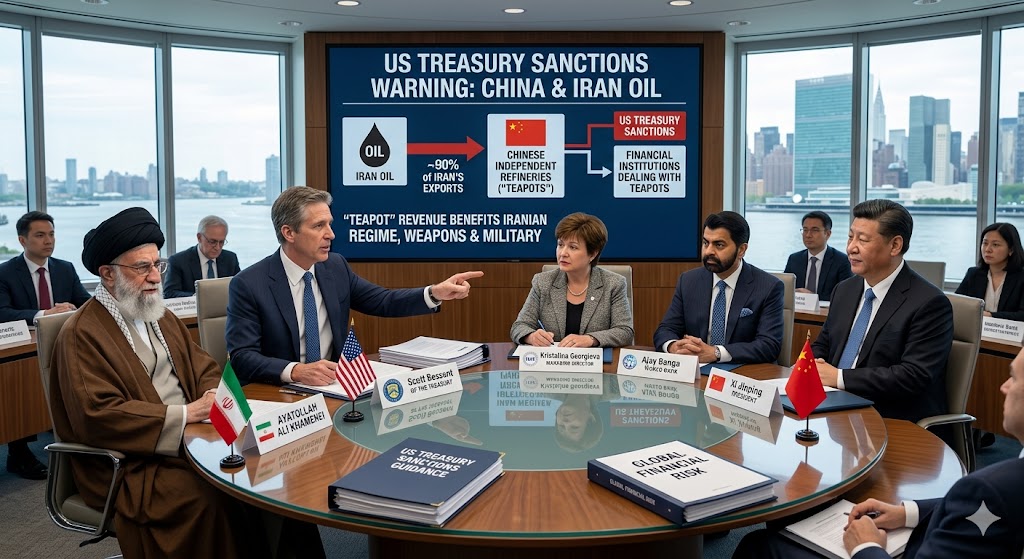
The US Treasury warned financial institutions that they could face sanctions if they engage in dealings with Chinese refineries that process Iranian oil. The Treasury urged financial institutions to avoid facilitating transactions involving independent refineries, known as “teapots,” that import Iranian oil, noting that China purchases approximately 90% of Iran’s oil exports. “This revenue ultimately benefits the Iranian regime, its weapons programs, and its military,” the Treasury said.
What Is “Operation Economic Fury”?
The United States is taking decisive action to disrupt Iran’s illicit oil trade — the Iranian regime’s primary revenue stream that funds terrorism and regional destabilization. The Department of State sanctioned multiple entities, an individual, and a vessel involved in the trade of Iranian petroleum and petroleum products. These designated entities have enabled the flow of billions of dollars to Tehran through sophisticated evasion schemes, including illicit ship-to-ship transfers and “dark fleet” operations that employ deceptive shipping practices endangering legitimate maritime commerce.
This action marks the 12th round of sanctions targeting Iranian oil sales since the President issued National Security Presidential Memorandum 2 on February 4, 2025. The United States will continue to intensify economic pressure on Iran and the international network that sustains its illicit energy trade as part of Economic Fury.
The Five Chinese Refineries Now in the Crosshairs
Tensions escalated when Washington sanctioned five Chinese refineries, accusing them of trading in Iranian petroleum. These include four teapot refiners — Shandong Jincheng Petrochemical Group, Hebei Xinhai Chemical Group, Shouguang Luqing Petrochemical, and Shandong Shengxing Chemical — alongside Hengli Petrochemical in Dalian, one of China’s largest private refining firms with a daily capacity of around 400,000 barrels. The US Department of State framed the move as part of a broader effort to disrupt Iran’s oil revenues.
The Qingdao Haiye Oil Terminal — Dark Fleet at the Center
The action targeted Qingdao Haiye Oil Terminal Co., Ltd., a China-based petroleum terminal operator that has imported tens of millions of barrels of sanctioned Iranian crude oil. Haiye enabled the flow of billions of dollars to Tehran, relying on sophisticated evasion schemes — accepting cargo from vessels conducting illicit ship-to-ship transfers with previously sanctioned vessels, and conducting deceptive shipping practices that endangered legitimate maritime commerce.
Bessent’s Beijing Warning — The Geneva Stakes
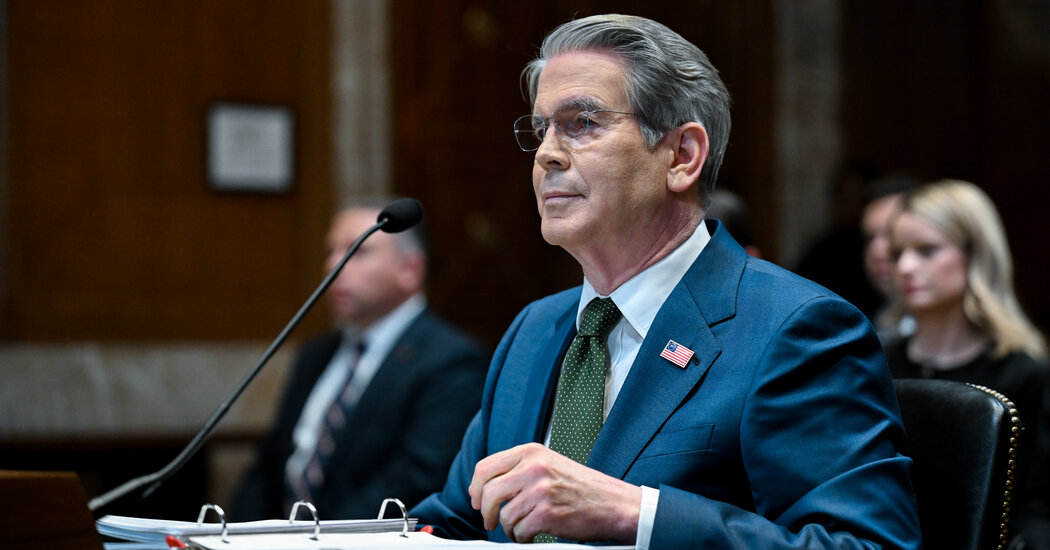
The warning came from Treasury Secretary Scott Bessent, who participated in high-stakes US-China meetings in Geneva. Bessent has been leading an aggressive campaign to cripple Iran’s economy with a blitz of new sanctions — and made clear to Chinese officials that buying Iranian oil during an active US war is not something Washington will tolerate.
The timing is loaded. US-China trade talks in Geneva are running simultaneously with US-China Iran oil confrontation — making every negotiating session more combustible by the hour.
China Pushes Back — The Counter-Injunction
China issued an injunction aimed at countering US sanctions targeting refineries that purchase oil from Iran. The development represents a significant escalation in the ongoing dispute between the US and China over trade, energy policy, and global influence. China’s move signals an attempt to legally block the enforcement of foreign sanctions within its jurisdiction — providing protection for domestic entities that continue to engage in transactions involving Iranian oil.
China’s decision directly challenges the US’s extraterritorial sanctions and signals a new era of geopolitical economic policy — one in which Beijing is willing to absorb US pressure rather than comply with Washington’s demands about who China can buy energy from.
The Secondary Sanctions Threat — Everyone Is on Notice
The Treasury is leveraging the full range of available tools and is prepared to deploy secondary sanctions against foreign financial institutions that continue to support Iran’s activities. Financial institutions globally are now urged to implement risk-based controls to avoid facilitating transactions involving designated teapot refineries or any other teapot refineries that may be importing Iranian oil — conduct enhanced due diligence on transactions involving China-based refineries, particularly in Shandong Province.
The message to the global banking system is unmistakable: if you process dollars for a Chinese refinery that buys Iranian oil — you could be next on the sanctions list.
Disclaimer: This article is for general informational and news reporting purposes only. All sanctions designations, company names, and policy details are based on official US Department of State and Treasury press releases, CNBC, The Week India, and GlobalSecurity.org as of May 4–5, 2026. The sanction of named entities does not constitute a criminal conviction. TrenBuzz.com does not represent any government or financial regulatory body. Readers are encouraged to consult qualified legal or compliance advisors and follow official US government sources for the latest sanctions guidance.