
Key points
- U.S. officials held covert talks with Venezuela’s hardline interior minister, Diosdado Cabello, months before the Jan. 3 raid that captured President Nicolás Maduro — and those contacts have continued since.
- Cabello — long sanctioned and named in a U.S. indictment — was not detained during the raid; U.S. interlocutors warned him against using militias or security forces to target the opposition.
- Washington appears to view engagement with Cabello as a pragmatic effort to reduce violence and secure a fragile transition while preserving access to Venezuelan oil and key institutions.
- The conversations raise questions about U.S. strategy: balancing short-term stability and oil access against legal and political risks from negotiating with an indicted, hardline actor.
Lede — US talks with hardline Venezuelan minister Cabello
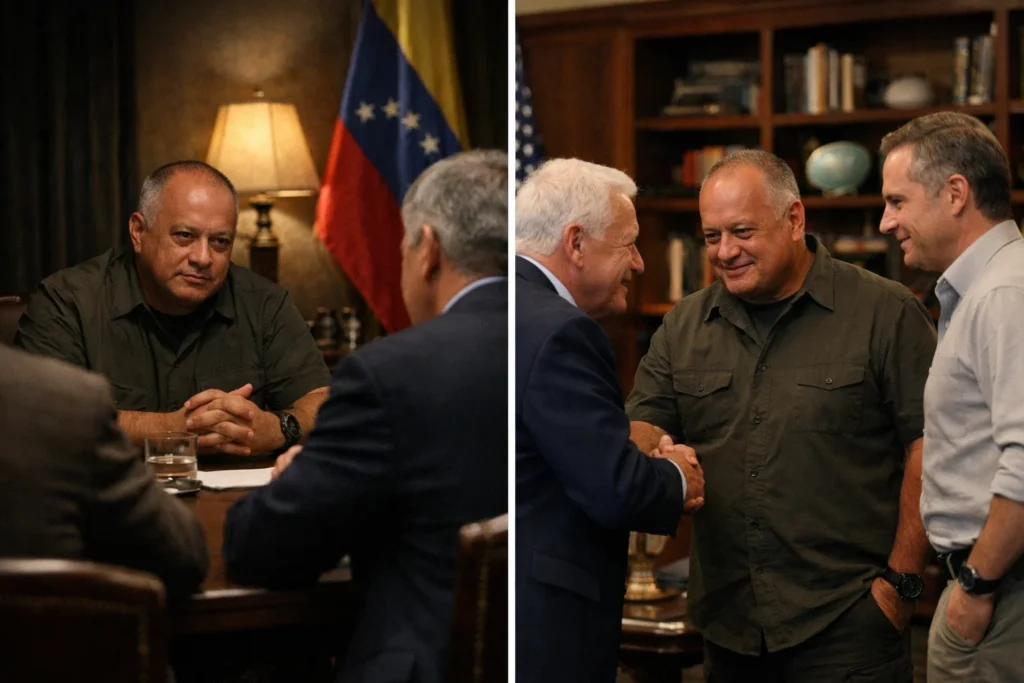
Reporting from Reuters indicates U.S. officials opened lines of communication with Diosdado Cabello months before the U.S. operation that removed Nicolás Maduro from power — contacts the administration continued after the raid. The outreach to one of Venezuela’s most consequential and controversial figures shows Washington is using a mix of coercion and engagement to try to stabilize Venezuela during a chaotic transition.
What Reuters reported (the essentials)
- U.S. officials were in talks with Cabello — the interior minister who controls elements of Venezuela’s security apparatus and pro-government militias — for months prior to the raid and still maintain contact.
- Cabello is subject to U.S. criminal indictment (drug-trafficking allegations) and long-standing sanctions; he was not detained in the raid. U.S. interlocutors say they warned him not to use the forces he oversees to repress or target opposition groups.
Those four facts are the foundation for understanding why talks with Cabello are politically sensitive and operationally consequential.
Why the U.S. may have engaged Cabello
- Stability-first pragmatism: Cabello wields influence over intelligence, police and militia networks that could either accelerate violence or keep the peace. Engaging him may be a way to prevent outbreaks of retaliatory repression during a fragile power shift.
- Protecting a transition window: U.S. officials reportedly see a narrow window to secure oil output, institutional continuity and orderly handovers. Quiet talks can be a tool to reduce the risk of spoilers undermining that process.
- Damage control: After the raid, Washington likely judged that keeping channels open to influential regime figures lowers the odds of chaotic resistance or a violent counter-move.
Who is Diosdado Cabello — short profile
- Power broker: Longtime chavista, often described as the regime’s “second man,” with a reputation for controlling security networks and militia groups.
- Controversial standing: Named in U.S. indictments and subject to sanctions for alleged narcotics trafficking; fiercely nationalist and often publicly hostile to U.S. interference.
- Spoiler potential: Because of his networks and political base, Cabello is often seen as someone who can either facilitate or sabotage a negotiated process — a classic spoiler in transition dynamics.
Legal and political frictions
- Indictment vs. engagement: Negotiating with a person the U.S. has formally indicted raises legal, ethical and political questions. Critics argue such contact can undercut the rule of law and the credibility of sanctions; defenders call it necessary realism to prevent bloodshed.
- Domestic politics: Any U.S. administration that appears to tolerate or tacitly deal with indicted figures risks criticism from opponents and human-rights advocates who want accountability for abuses.
Early signs on the ground
- Reuters and other outlets reported a modest easing in political detentions and a slow program of prisoner releases in the days after the raid — changes that U.S. officials linked to pressure and to the ongoing contacts with power-holders inside Venezuela. That suggests the talks may be producing near-term risk reduction, though observers caution about durability.
What this means for U.S. policy and the region
- Short term: Engagement buys Washington leverage to try to limit violence, protect energy production, and shepherd a transition. Officials appear focused on stabilizing supply chains (including oil) and preventing civil breakdown.
- Medium term: The U.S. must decide whether to trade access and stability for delayed accountability — a politically fraught bargain that could complicate future prosecutions or sanctions enforcement if handled poorly.
- Geopolitical signaling: Quiet talks with a senior chavista send a message to other regional and global actors (Russia, China, Cuba) that Washington is intent on managing the transition pragmatically — even if that means dealing with unsavory figures.
Interactive: quick checklist — what to watch next
(Answer Yes / No; then follow the recommended monitoring item.)
- Did Cabello issue public statements denying talks or accepting contacts? — If Yes, track content for conciliatory vs. defiant language.
- Are releases of political detainees continuing? — If Yes, engagements may be producing tangible, short-term stability.
- Does the U.S. announce legal or policy carve-outs (e.g., temporary waivers) for Venezuelan actors? — If Yes, that will signal a deeper transactional approach.
(Reply “Track Venezuela” and we’ll send a two-line daily brief for 7 days.)
Frequently asked questions (brief)
Q: Does talking to Cabello mean the U.S. has dropped charges?
No. Public reporting indicates talks were tactical and ongoing; indictments and sanctions remain in place unless formally changed. Contact does not equal legal clemency.
Q: Could Cabello derail the transition?
Yes. His control over security networks gives him the capacity to be a spoiler — which explains why Washington would seek to keep lines of influence open.
Q: Is this normal diplomatic practice?
Engaging powerful domestic actors — even tainted ones — is a common crisis-management technique. The moral trade-offs are real, and critics argue the legal and ethical costs can be high.
Bottom line
The revelation that U.S. talks with Diosdado Cabello began months before the raid complicates the narrative of a purely coercive U.S. operation. It shows Washington combining hard enforcement with pragmatic engagement to try to manage a risky transition in Venezuela — seeking stability and access while wrestling with real legal and political trade-offs. Whether that mix delivers a peaceful, accountable outcome or simply postpones reckoning will be one of the defining policy questions in the weeks and months ahead.