By TrenBuzz — Special report
Key points
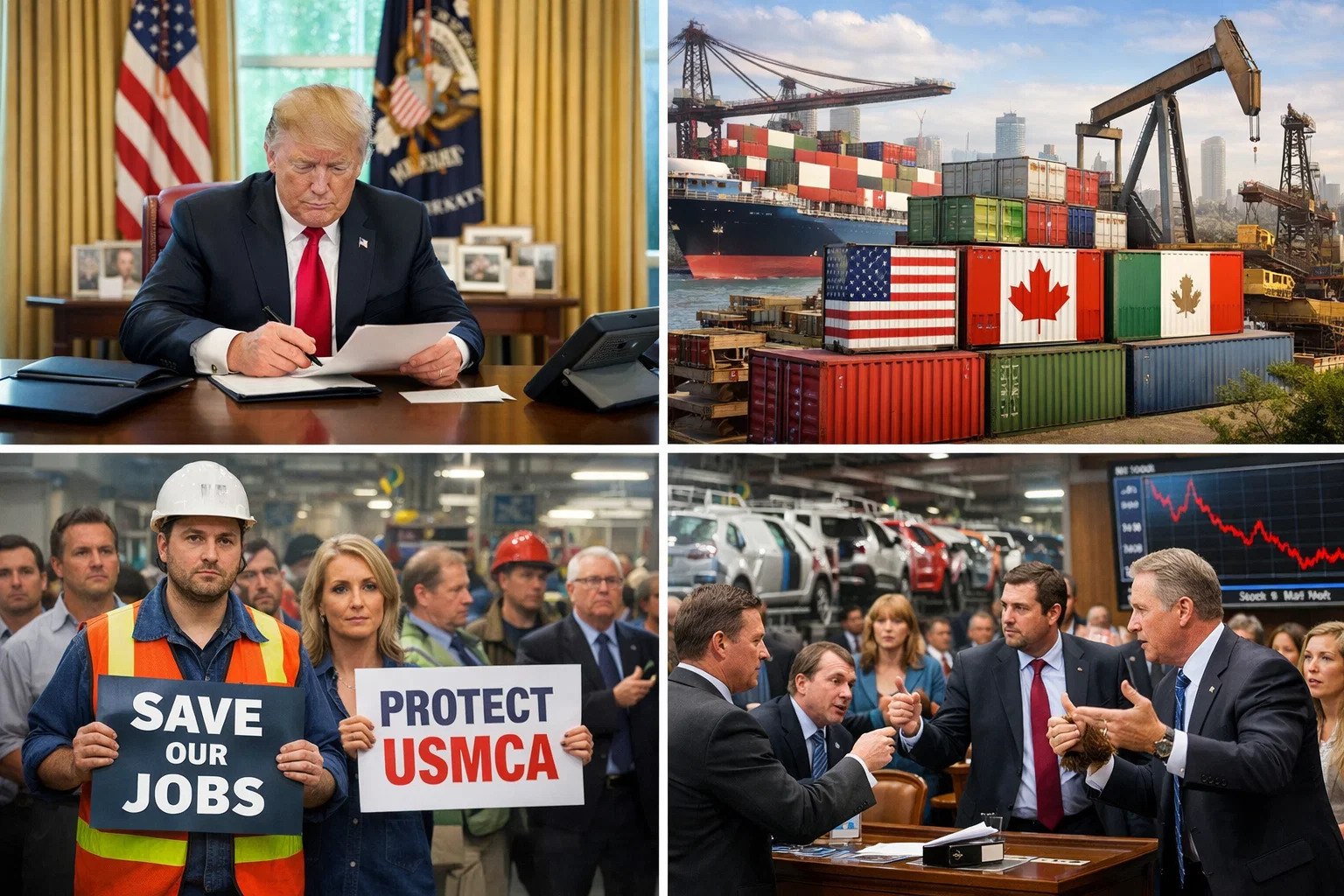
- President Donald Trump is reportedly privately considering withdrawing the United States from the USMCA — the North American trade pact he negotiated and signed — a move first reported by Bloomberg and picked up by major wire services.
- USMCA includes a built-in withdrawal procedure: a Party can give written notice and the withdrawal takes effect six months after notice — but whether a president can unilaterally do this without Congress is legally contested.
- Exit would immediately re-expose many Canadian and Mexican exports to higher U.S. duties (and risk retaliation), upend integrated supply chains and inject fresh uncertainty into manufacturing, energy and agricultural sectors across North America.
- Business groups warn that scrapping USMCA would chill investment and jobs in all three countries; some U.S. lawmakers and industry leaders are already pushing back.
- A formal withdrawal campaign would likely trigger intense legal, political and market battles — including questions about presidential authority, fast congressional response, and the practical mechanics of tariffs and customs implementation.
USMCA trade pact— the short version
Bloomberg reported that President Trump has privately mused about quitting the United States–Mexico–Canada Agreement (USMCA), the trade deal he negotiated to replace NAFTA. If carried out, withdrawal would be fast in international-law terms (six months after written notice), but messy in politics and economics: it would revive tariff exposure for billions in cross-border commerce, risk retaliation from Canada and Mexico, and set off fights over whether the president can unilaterally terminate an agreement that Congress implemented.
The reporting — what’s been said so far
- Bloomberg’s scoop (reported widely) cites people familiar with the matter saying Trump has asked aides why he shouldn’t renounce the deal he negotiated — though the president has not publicly announced any decision. Reuters and other outlets carried the Bloomberg account as the lead reporting item.
- The White House response in wire reporting so far stresses that any action would be announced directly by the president and treats the reports as speculative. Media outlets note the comments come as USMCA heads into its mandatory joint review period in mid-2026.
How withdrawal would work — the legal and practical mechanics
- Treaty text: USMCA’s final provisions provide a clear withdrawal mechanism: “A Party may withdraw from this Agreement by providing written notice of withdrawal to the other Parties. A withdrawal shall take effect six months after a Party provides written notice…” That means, on paper, a withdrawal can be effected quickly.
- Domestic law question: Whether the President can issue that notice unilaterally when Congress enacted implementing legislation is legally unsettled. Congressional-Executive agreements like USMCA have sparked debate in prior administrations; authoritative legal memoranda (including DOJ/OLC opinions and congressional research service analyses) suggest the President likely has the power to withdraw but that a court fight could follow. Expect robust legal briefing if notice is given.
- Customs & tariffs: Practically, U.S. Customs rules that currently implement USMCA duty preferences (19 CFR Part 182) would need urgent revision; many imports presently tariff-free or low-duty under USMCA rules could face substantially higher rates, and U.S. importers and customs brokers would have little runway to adjust.
Who would feel the immediate pain
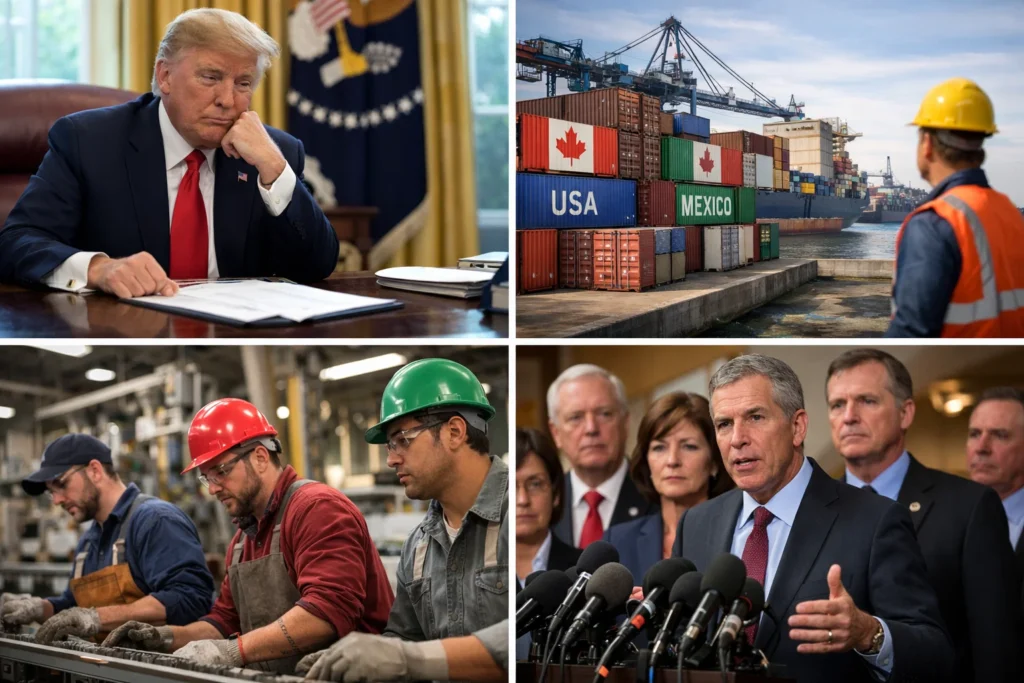
- Manufacturers and auto supply chains: Automotive and parts supply chains are deeply integrated across the three countries; uncertainty would raise costs, disrupt production schedules and could delay new investment decisions.
- Agriculture and energy: Canada and Mexico are major suppliers of energy, food and intermediate goods to the U.S.; re-tariffing those flows would ripple through prices and commodity markets.
- Workers & investors: Business Roundtable and other trade organizations warn an exit could chill hiring and investment in U.S. states that depend on North American trade. Expect immediate industry lobbying and state-level pressure.
Political fallout — domestic and international
- Congress: Many lawmakers from both parties have publicly criticized recent unilateral tariff and trade moves; a formal withdrawal would invite fast congressional debate, and some members could seek to block or constrain executive steps through legislation or court action. Reuters recently noted bipartisan rebukes to other tariff moves, signaling limited appetite in Congress for abrupt unilateralism.
- Canada and Mexico: Both neighbors have pushed back on U.S. tariff moves before and would likely respond diplomatically and commercially. Mexico’s economy already faces downside risk from USMCA uncertainty, and Canada’s leaders have signalled they would push back strongly to protect export markets.
- Markets: Financial markets price policy risk. A credible withdrawal threat tends to raise risk premiums for manufacturers and could move currencies, bond spreads and stock sectors sensitive to trade. Analysts say the 2026 joint review already makes the agreement a political lever — active withdrawal talk amplifies market volatility.
Strategic motives — why the White House might be tempted
- Leverage in negotiations: Threatening withdrawal is a bargaining chip in renegotiation: the USMCA contains a six-year joint review and sunset architecture that allows parties to push for changes; a withdrawal threat can be used to extract concessions.
- Domestic political signaling: Hardline trade stances (tariffs, exit threats) project toughness to constituencies that favor protectionism — but risk alienating exporters, farmers and state economies reliant on cross-border trade.
Worst-case vs. managed scenarios (what could happen next)
- Worst-case: The U.S. issues notice, Canada/Mexico retaliate with tariffs, supply chains rewire, investment stalls and a court fight ensues over the President’s authority — an economic and diplomatic shock across the continent.
- Managed outcome: The threat is used to extract concessions before notice is issued; formal renegotiation or clarifying side-letters are produced; business continuity plans and transitional customs rules are negotiated to blunt disruption.
Practical checklist — what businesses, investors and officials should do now
- Trade teams: Map exposure to USMCA tariff preferences and identify high-risk product lines that would face the largest duty increases. (Customs and origin paperwork matter.)
- Supply-chain managers: Identify alternate sourcing options and test contingency routes for critical inputs (especially autos, electronics, food and energy components).
- State & local leaders: Prepare targeted advocacy to Congress and the Administration; state economies with strong North American links can press for delay, carve-outs or negotiated transition rules.
- Investors: Re-price risk in sectors tied to cross-border trade and monitor currency/commodity indicators for early signs of stress.
What to watch next (concrete triggers)
- Official White House announcement or written notice: That would start a legally binding six-month clock under USMCA. (United States Trade Representative)
- Congressional moves: Any fast bipartisan resolutions, hearings, or legislation intended to block or constrain withdrawal. (Congress.gov)
- Canada/Mexico official responses: Formal diplomatic statements, emergency consultations, or trade-retaliation plans.
- Business Roundtable & industry lobbying: Watch corporate statements and state governors’ appeals for an extension or renegotiation rather than abrupt termination.
Bottom line
Bloomberg’s report that President Trump is privately weighing quitting USMCA is more than a bureau-room curiosity: it signals a potential rupture in one of the world’s most integrated trading relationships. Legally, the pathway to withdraw is short (six months after notice) — but constitutional, commercial and political obstacles make unilateral termination neither simple nor cost-free. Whatever the White House ultimately decides, North American businesses, investors and governments should treat the next few weeks as a critical window for contingency planning and rapid diplomacy.