By TrenBuzz.com · May 15, 2026 · 5 min read
► Key Points – Trump Wraps Up Historic Beijing Summit With Xi
- Trump concludes his first state visit to China since 2017, calling it a “milestone” summit
- President Trump claims “fantastic trade deals” were struck, with no major agreements formally announced
- Xi warns Trump that mishandling Taiwan could lead to “clashes and even conflicts”
- Both leaders agree Iran must not possess nuclear weapons; China offers to help reopen the Strait of Hormuz
- Chinese warplanes halted patrols near Taiwan during the summit – a notable diplomatic signal
- Xi expected to visit Washington later this year; calls the bilateral relationship “the most important in the world”
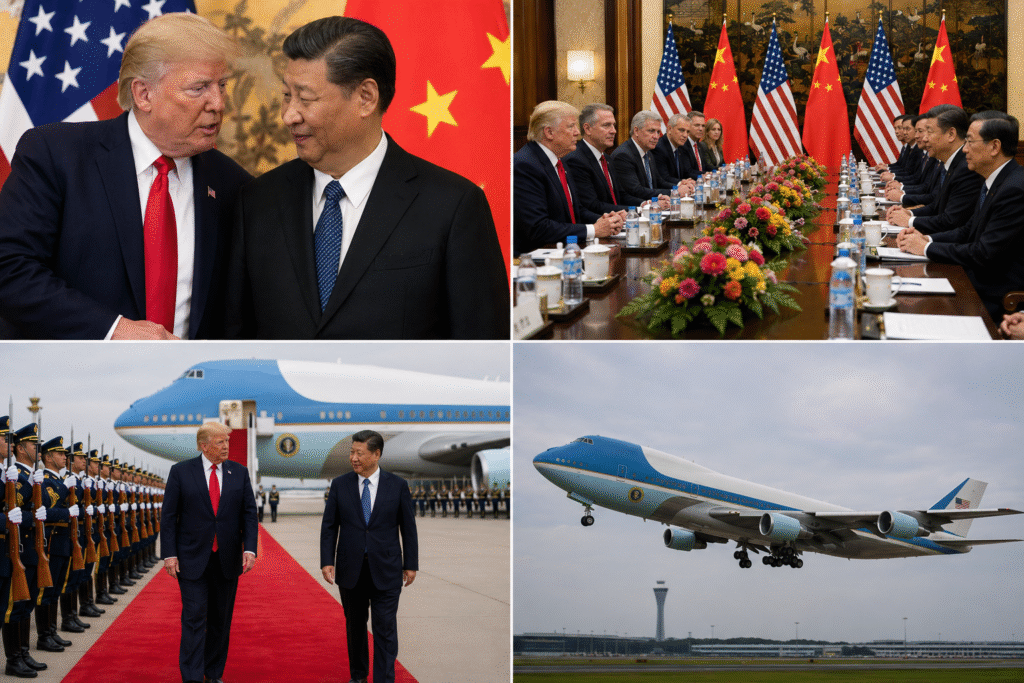
When Air Force One lifted off from Beijing Capital International Airport on Friday, it carried not just the U.S. president, but a flurry of bold claims, warm handshakes, and — arguably — more questions than answers. The Trump Xi Summit 2026 is officially over, and the world is still parsing what it all means.
President Donald Trump described the two-day state visit as transformative, saying he and Chinese President Xi Jinping had settled “a lot of different problems” that no one else could have resolved. Whether that confidence translates into concrete policy change remains to be seen.
This was Trump’s first presidential visit to China since 2017 — and the first by any sitting U.S. president in nearly a decade. The stakes, given the fractured state of U.S.-China relations, could not have been higher.
The Summit’s Grand Stage
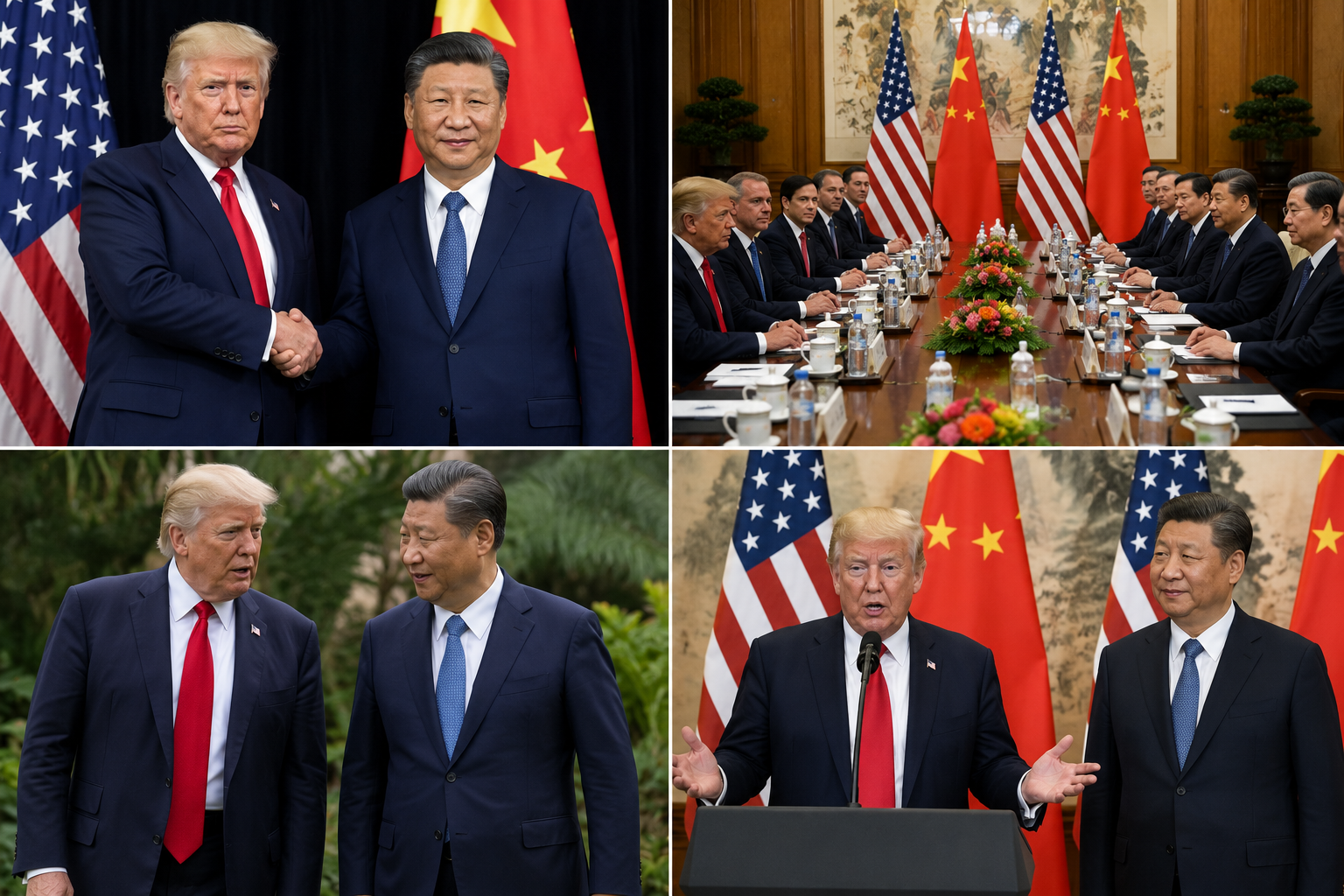
The pageantry was unmistakably intentional. Xi gave Trump a lavish welcome at Tiananmen Square, followed by a state banquet filled with glowing speeches about a “historic” visit. The two leaders later strolled the gardens of Zhongnanhai — China’s equivalent of the White House — where Xi showed Trump roses and offered to send seeds back to Washington.
Trump called Xi a close “friend” and described the U.S.-China relationship as “one of the most consequential in world history.” Xi said both nations should be partners, not rivals, and that “mutual respect” was the cornerstone of stable ties.
The warm optics were a deliberate departure from years of turbulence. But underneath the smiles, serious geopolitical tensions sat just below the surface.
“We settled a lot of different problems — things other people wouldn’t have been able to settle.”
— President Donald Trump, Beijing, May 15, 2026
Trade Deals: Big Claims, Few Details
On the economic front, Trump declared “fantastic trade deals” had been made, with attention on agriculture, aviation, and artificial intelligence sectors. However, no formal agreements were signed before his departure from Beijing.
Analysts were quick to note a familiar pattern. At the 2017 Beijing summit, Trump announced deals worth over $250 billion — many of which never materialized. Economists are urging the same caution now.
The existing tariff truce — struck in October last year — remains the foundation. Under that deal, Washington lowered tariffs on Chinese goods while Beijing paused restrictions on rare earth exports. This summit was largely about reinforcing, not rebuilding, that fragile arrangement.
🔗 Also Read:U.S.-China Trade War Timeline — What’s Changed Since 2018
Taiwan: Xi Draws a Red Line
The most pointed moment came when Xi warned Trump directly — mishandling Taiwan’s status could put the entire U.S.-China relationship “in great jeopardy” and could lead to “clashes and even conflicts.” The statement was delivered publicly and deliberately.
Secretary of State Marco Rubio responded by saying U.S. policy on Taiwan remains “unchanged.” Washington’s long-standing position of strategic ambiguity — neither confirming nor denying it would defend Taiwan militarily — continues to serve as the policy guardrail.
In a striking side development, Chinese military aircraft completely halted their near-daily patrols around Taiwan for the duration of the summit — a signal Beijing rarely sends, and one that diplomatic analysts found deeply significant.
Iran, Hormuz, and a New Opening?
The Iran war loomed large over the summit table. Trump confirmed that he and Xi discussed Tehran’s nuclear ambitions, with both leaders agreeing Iran must not acquire nuclear weapons. Xi offered China’s assistance in negotiating an end to the conflict and helping reopen the Strait of Hormuz — a critical global shipping lane currently under blockade.
Trump pushed back on urgency, telling reporters that the U.S. doesn’t need the strait reopened as badly as China does — framing it as leverage rather than a shared crisis. China’s foreign ministry separately stated the Iran war “should never have happened.”
Whether Beijing’s offer to mediate gains any traction in Washington remains unclear, but it marks a notable shift in China’s posture on a conflict it had previously stayed quiet about.
🔗 Also Read:U.S.-Iran War — What Closing the Strait of Hormuz Means for Global Oil
What the Trump-Xi Summit 2026 Actually Achieved
The most concrete outcome of the Trump-Xi Summit 2026 may simply be this: the two most powerful leaders on the planet spent two days in the same room — talking, walking, and eating together — without the relationship deteriorating further.
That alone, given the state of U.S.-China tensions over the past several years, is not a trivial accomplishment. But words and walks are not policy, and the real test will come in the months ahead as both nations follow through — or don’t — on what was said in Beijing.
Trump also confirmed he looks forward to hosting Xi in Washington later this year, suggesting the diplomatic channel is now firmly open — a welcome signal for global markets and international stability alike.
Disclaimer: This article is intended for informational and news reporting purposes only. The views and analysis expressed are based on publicly available information and do not constitute financial, political, or legal advice. TrenBuzz.com does not endorse any political party, government policy, or geopolitical stance. All trademarks and names belong to their respective owners. Content is produced in compliance with Google AdSense publisher policies.