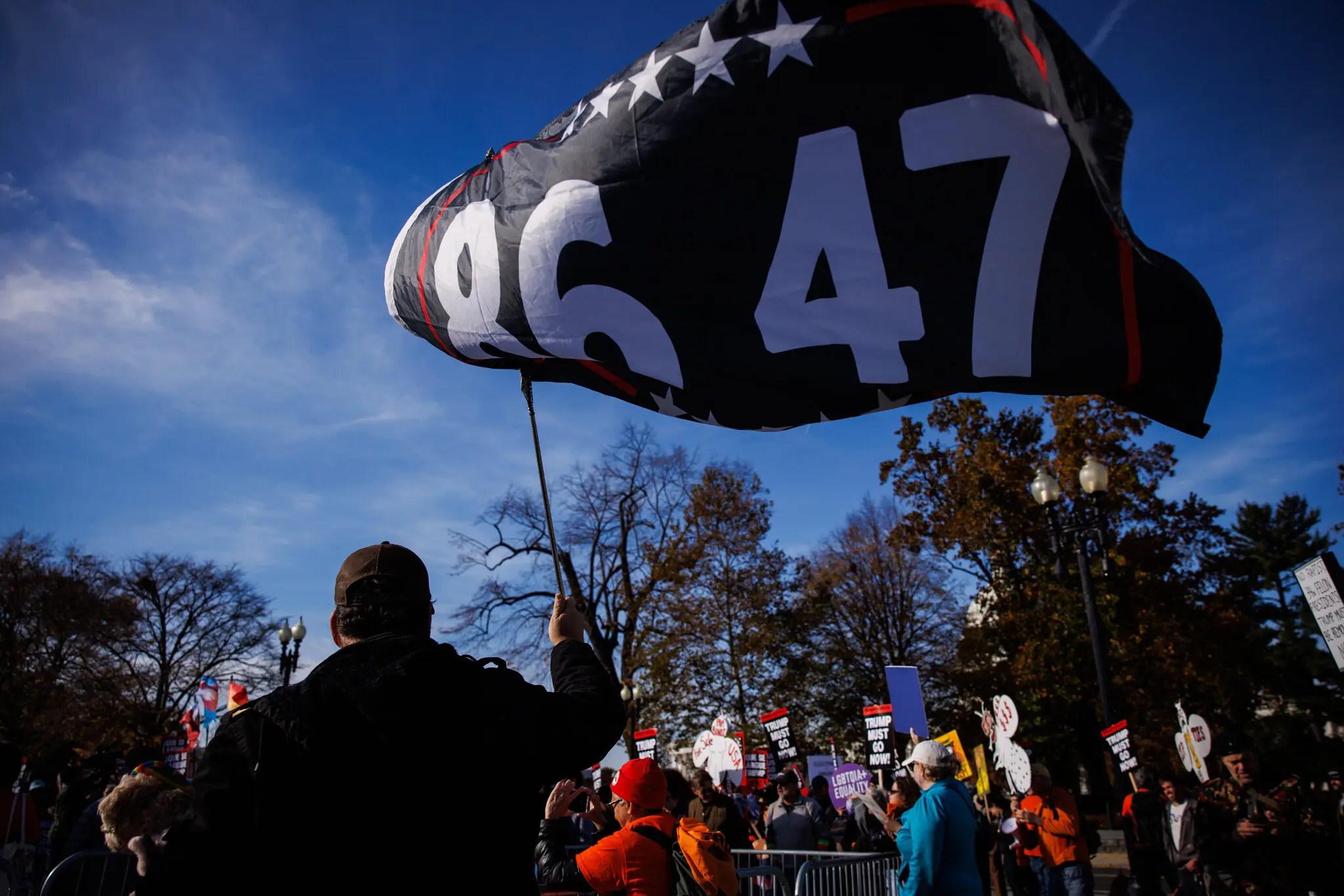
Key points – 8647 flag protest ruling
- A federal judge in Washington let protesters keep displaying an “8647” flag near the Capitol.
- The court said it was hard to view the flag as a true threat, which undercuts the DOJ’s argument.
- The same phrase is also tied to the separate James Comey case, which has fueled the wider political backlash.
The latest 8647 flag protest ruling has turned a small banner into a major Washington flashpoint. A federal judge in June 2026 allowed protesters in Washington, D.C. to continue displaying the “8647” flag, rejecting the government’s claim that the message was a true threat against President Trump.
The dispute began after a progressive group used the flag during demonstrations near the Capitol. The National Park Service and Secret Service scrutinized the display, but the court said the government had not shown enough to justify forcing the flag down.
That is why the 8647 flag protest ruling matters far beyond one protest site. It is now being read as a First Amendment test, with the judge signaling that political speech can be offensive, provocative, and still protected.
The controversy also overlaps with the separate James Comey case, where the same “8647” phrase was treated very differently by federal prosecutors. That contrast is helping drive public debate over whether symbolism, context, and intent are being weighed consistently.
For readers following the 8647 flag protest ruling, the bigger story is simple: the courts are forcing Washington to draw a sharper line between protected protest speech and actual threats. That line is now at the center of one of June 2026’s most closely watched legal fights.
Disclaimer: This article is based on publicly reported developments available on June 2, 2026, and court or case details may change as litigation continues.