Published by TrenBuzz.com | May 15, 2026
Key Points at a Glance – Clarence Thomas Breaks His Silence on Supreme Court Security
- Supreme Court Justice Clarence Thomas spoke publicly about escalating security threats at the 11th US Circuit Court of Appeals judicial conference in Aventura, Florida on May 14, 2026.
- Thomas, now 77, is the second-longest serving justice in Supreme Court history – confirmed in 1991.
- He used the phrase “very, very dicey” multiple times – describing how the security environment has transformed since he first became a circuit justice.
- Thomas has had to switch public appearances to remote, cancel events entirely, and limit his movements due to escalating physical threats.
- The Supreme Court is seeking millions of dollars in additional security funding from Congress amid rising physical and cyber threats.
- A 2022 assassination attempt against Justice Brett Kavanaugh near his Maryland home was a watershed moment for the Court’s security posture.
- Thomas noted he can no longer “move around as much as I used to” — a stunning admission from one of America’s most prominent public servants.
- The remarks come just weeks after the WHCD assassination attempt against President Trump — deepening national conversation about political violence against officials.
- The US Marshals Service is responsible for protecting Supreme Court justices — and has been lobbying for expanded resources for years.
- Congress has yet to pass the Supreme Court Security Funding Enhancement Act — leaving justices increasingly reliant on ad hoc protection measures.
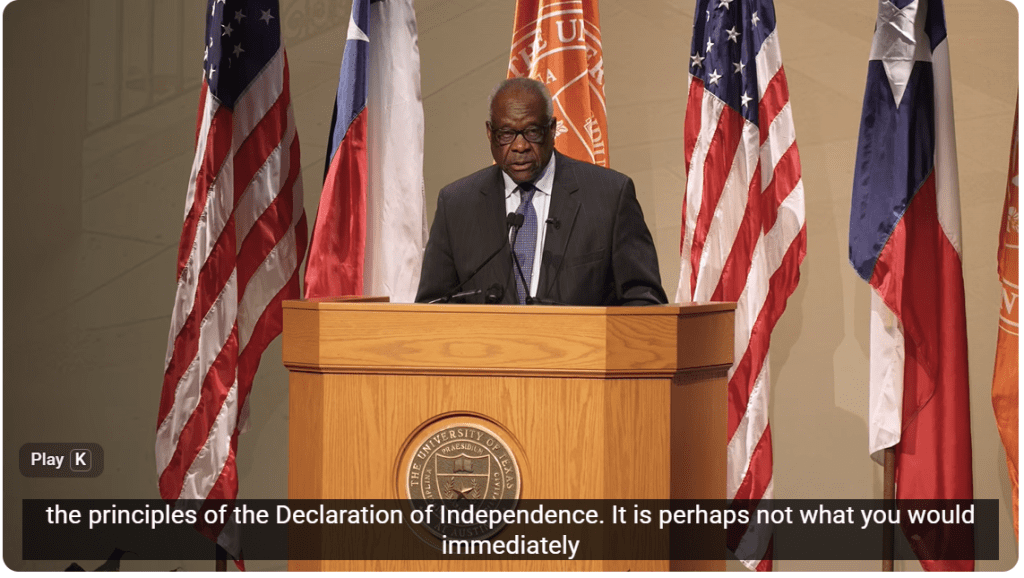
He has sat on the nation’s highest court for 35 years. He has shaped American law on everything from gun rights to affirmative action. But standing before a roomful of lawyers and judges in South Florida on Thursday, Clarence Thomas described something no law can fix – the creeping fear that has changed how a Supreme Court justice moves through the world.
Justice Clarence Thomas lamented the heightened security that has become necessary for members of the Supreme Court in recent years, telling an audience in Florida on Thursday that it is now far more difficult for him to take part in activities outside the courthouse. The observation came as the court has sought millions of dollars in additional security funding from Congress amid increasing physical and cyber threats aimed at the judiciary. “The security concerns now are much different from the way they were when I first became a circuit justice,” Thomas told the conference, which was organized by the 11th US Circuit Court of Appeals. “That’s really one of the big changes since I’ve been on the court — that it’s become very, very dicey.”
The Personal Cost – A Justice Who Can’t Move Freely
Thomas has had to skip events, limit his movements and weigh every appearance against the security risk it creates not just for himself but for everyone around him. He described the current security environment as “very dicey,” a phrase he returned to more than once. Earlier this year, he was scheduled to appear in person at an event at American University in Washington but switched to a remote appearance at the last minute, citing security.
Thomas said increased threats have restricted his movements outside the courthouse and affected his ability to attend public events. “And as I said, because of the security concerns, I’m not able to move around as much as I used to,” he added.
The Kavanaugh Watershed – When Everything Changed
The 2022 arrest of a man armed with a knife and zip ties outside Justice Brett Kavanaugh’s Maryland home — who admitted he planned to kill the justice after Roe v. Wade was overturned marked a turning point in how the Court approached its own vulnerability.
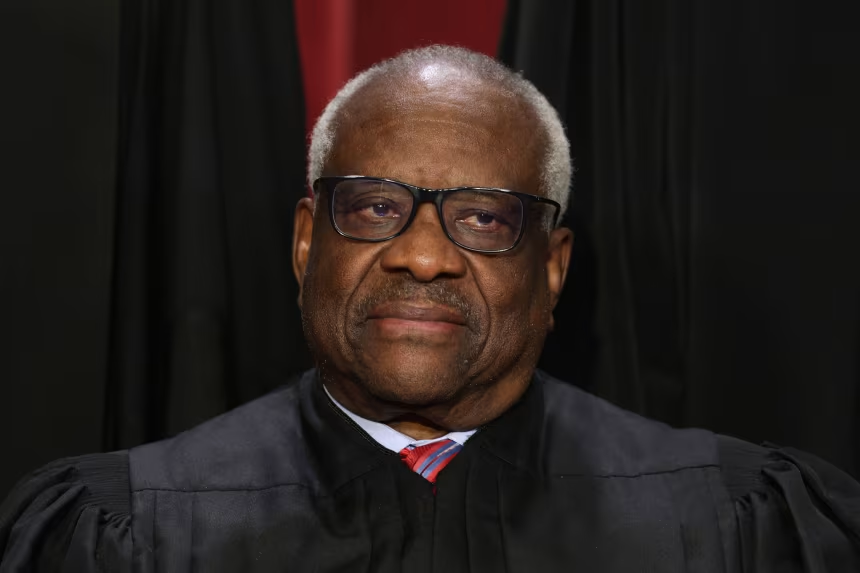
Thomas, 77, has served on the Supreme Court longer than any current justice and is the second-longest-serving justice in the institution’s history. A leading voice in the court’s conservative wing, Thomas has remained active in public speaking appearances despite criticism and scrutiny regarding some of the court’s decisions.
The Physical and Cyber Threats — A Two-Front Battle
The growing attention around Clarence Thomas circuit justice security reflects wider fears about hostility toward judges, prosecutors, and other legal officials across the country. Public officials connected to controversial rulings increasingly require tighter protection, restricted travel arrangements, and enhanced security measures. For Supreme Court justices, these concerns have become especially serious in recent years due to the politically charged atmosphere surrounding major legal decisions.
Physical threats aren’t the only concern. The Supreme Court has also flagged a significant increase in cyber threats including targeted campaigns against justices’ personal emails, family members’ information, and Court IT infrastructure.
The Funding Fight — Congress Hasn’t Acted
The comments from Clarence Thomas come at a time when concerns over Supreme Court protection and threats against federal judges are becoming major national issues. The court has sought millions of dollars in additional security funding from Congress as the threats continue to grow.
The Supreme Court Security Funding Enhancement Act which would permanently extend Marshals Service protection to justices’ immediate family members has stalled in Congress twice since 2022, caught between budget negotiations and partisan disagreements over Court reform more broadly.
The Broader Warning — What Thomas Is Really Saying
Thomas stood before a gathering of lawyers and judges and described something most people rarely think about: what it costs a Supreme Court justice to simply exist in public. Thomas, now the second-longest serving justice in the history of the Supreme Court, told the 11th US Circuit Court of Appeals judicial conference that the atmosphere around the court has shifted in ways that would have been hard to imagine when he was first confirmed in 1991.
When a Supreme Court justice cannot attend a public law conference without a security review, something fundamental about American civic life has shifted. Thomas didn’t call it a crisis. He called it “dicey.” But three and a half decades on the bench and a phrase he kept coming back to suggest he knows exactly how serious it is.
Disclaimer: This article is for general informational and news reporting purposes only. All quotes and security details are sourced from CNN, The Washington Examiner, The News Pakistan, Rolling Out, and Local News 8 as of May 14–15, 2026. TrenBuzz.com does not represent the Supreme Court, the US Marshals Service, or any government body. Readers are encouraged to follow credible news and official government sources for the latest updates on federal judicial security policy.