Published by TrenBuzz.com | April 12, 2026
Key Points at a Glance
- Cuban President Miguel Díaz-Canel flatly refused to resign in his first-ever interview with a U.S. broadcast network on April 9, 2026.
- The NBC News interview with “Meet the Press” host Kristen Welker marked a rare and historic moment in US-Cuba relations.
- Trump has called Cuba a “failing nation” and hinted at a potential “takeover” of the island.
- The US has imposed an oil blockade on Cuba, triggering blackouts of up to 22 hours and widespread food shortages.
- Russia vowed it will never abandon Cuba, sending an oil tanker despite US tariff threats.
- Cuba has seen at least 156 protests since March 6, 2026 — the largest unrest since 2021.
- Secretary of State Marco Rubio has called Cuba a “disaster” but denies demanding Diaz-Canel’s resignation personally.
In a moment that felt ripped from Cold War history books, Cuba’s president sat across from a U.S. television network and told America — plainly and defiantly — exactly what he thought of calls for his removal.
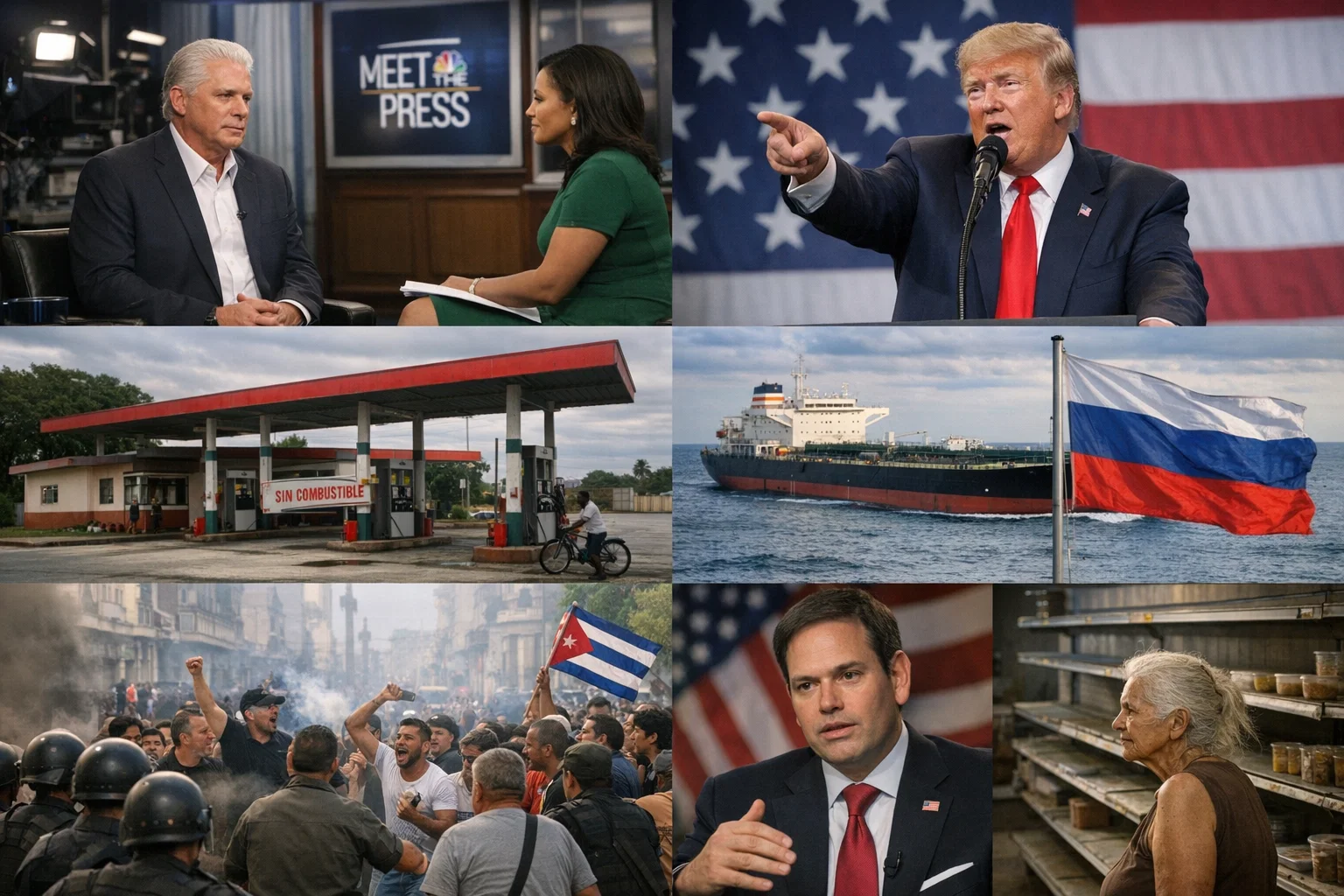
Cuban President Miguel Díaz-Canel insisted that he’s not “stepping down” in an interview with NBC News’ “Meet the Press” moderator Kristen Welker in Havana — his first interview with a U.S. broadcast network.
The Interview That Stopped Washington in Its Tracks (Cuba President Refuses to Resign)
Díaz-Canel bristled when Welker asked if he would be “willing to step down to save your country,” responding: “In Cuba, the people who are in leadership positions are not elected by the U.S. government, and they don’t have a mandate from the U.S. government. We have a free sovereign state.”
He added: “The concept of revolutionaries giving up and stepping down — it’s not part of our vocabulary.”
When pressed further, Díaz-Canel shot back at the journalist: “Is this question from you, or does it come from the US State Department?”
Why Is the US Demanding Cuba’s President Step Down?
Since returning to office last year, Trump has labelled Cuba an “unusual and extraordinary threat” to US national security and threatened a “takeover” of the island. Trump has hinted that Cuba could face the same fate as Venezuela and Iran.
Trump called Cuba a “failing nation,” saying last month it may be “a friendly takeover, it may not be a friendly takeover.”
US Secretary of State Marco Rubio, who is of Cuban descent, has taken the reins of negotiations with Havana and has called for major changes to Cuba’s leadership — though Rubio denies specifically calling for Díaz-Canel’s resignation.
Cuba’s Crisis on the Ground — The Human Toll
The political standoff is playing out against a devastating humanitarian backdrop.
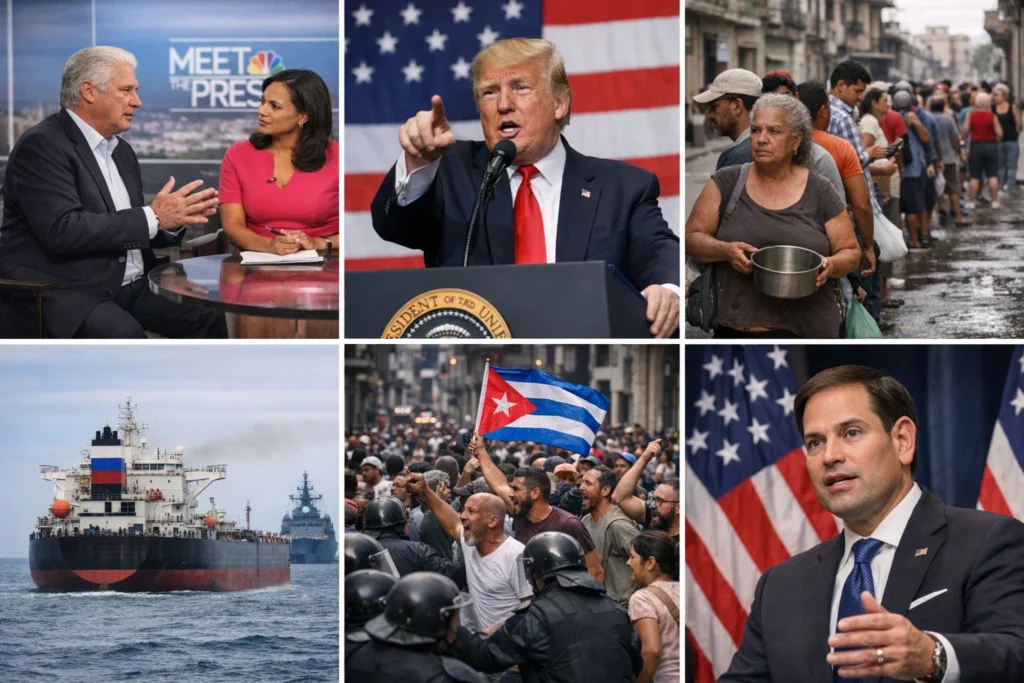
Cuba’s main oil supply was cut off after Trump ousted Venezuelan leader Nicolas Maduro in January. The US has since imposed an oil blockade, threatening tariffs on any country that sells oil to Cuba — triggering widespread power blackouts, fuel shortages, and disruptions to water and food distribution.
Cuba has been experiencing weeks of massive street protests, the largest since July 11, 2021. Since March 6, at least 156 protests have been recorded across multiple provinces, featuring road blockades, trash burning, and attacks on Communist Party headquarters.
Cuba produces only 40 percent of the fuel it consumes, and stopped receiving key Venezuelan oil shipments after the US moved against Venezuela in January.
Russia Steps In — Defying Washington
While the US tightens the screws, Cuba’s old ally is refusing to walk away.
Russia’s Deputy Foreign Minister Sergei Ryabkov declared: “We cannot betray Cuba. That is out of the question. We cannot leave it on its own.”
In late March, the Russian tanker Anatoly Kolodkin carrying 730,000 barrels of crude oil reached Cuba, marking its first oil delivery in three months — even as the US had threatened tariffs on nations selling oil to the island.
Díaz-Canel’s Final Word — And His Warning to Washington
In response to Trump’s threats, Díaz-Canel said: “I have no fear. I am willing to give my life for the revolution.”
He also appealed to American public opinion: “I think the American people are sensitive people, and they wouldn’t see with good eyes that their government would invade a very small island that does not pose any concern in terms of national security.”
Despite the defiance, Cuba’s 10 million people remain trapped in an economic spiral, with the standoff dimming any near-term prospects for relief — while the world watches a flashpoint that could reshape hemispheric politics.
Disclaimer: This article is intended for general informational and news reporting purposes only. All quotes, facts, and data referenced are based on publicly available and credible news sources as of April 12, 2026. TrenBuzz.com does not take any political stance on US foreign policy or Cuban governance. Readers are encouraged to follow official government and credible international news sources for the latest developments.