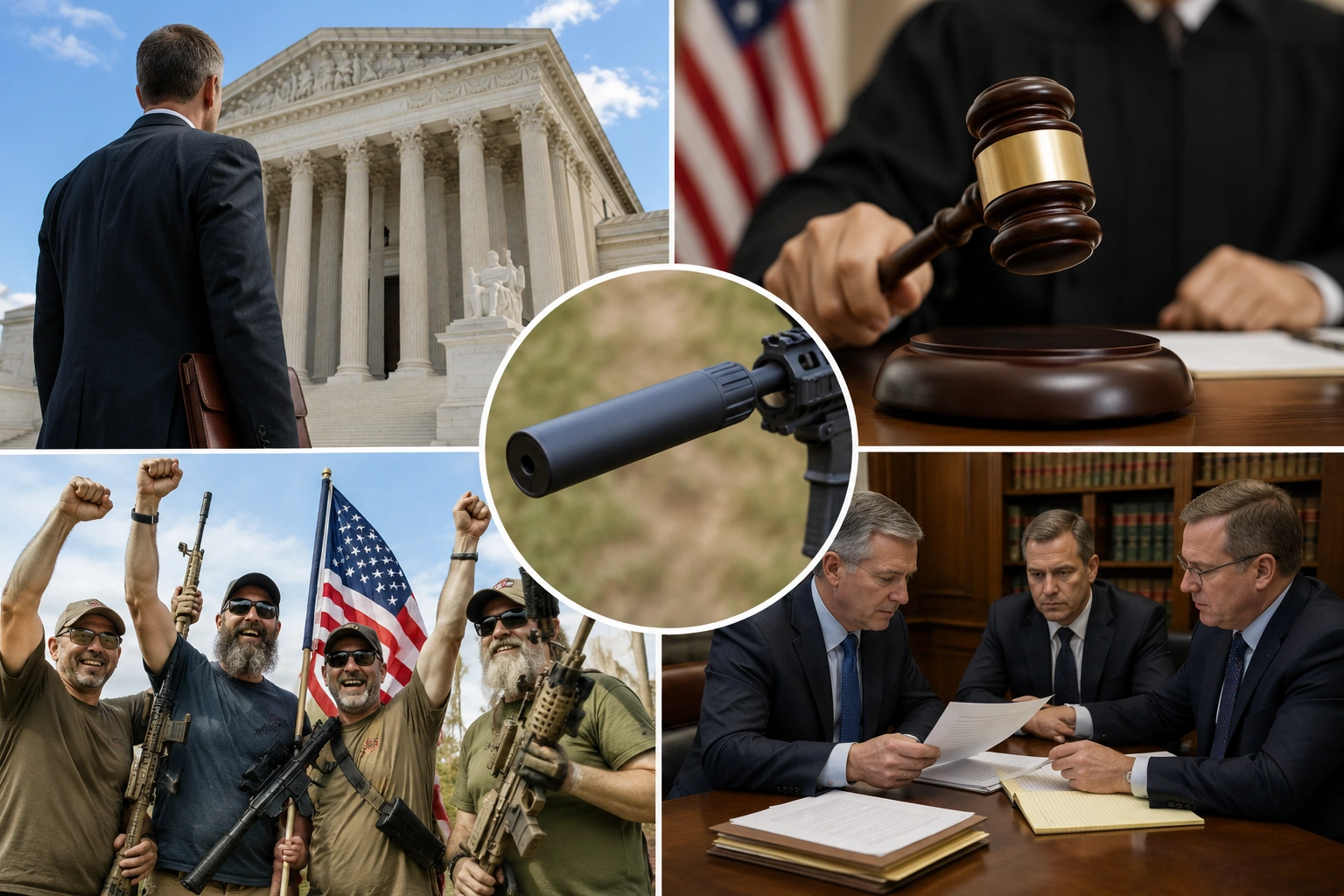
Key Points: DOJ Appeal NFA Decision
- DOJ appeal NFA case was declined, letting a landmark ruling against suppressor rules stand
- A federal judge struck down registration requirements after Congress zeroed out the underlying tax
- Gun rights groups call it the biggest Second Amendment win in over 90 years
- Parallel legal challenges are still active in Missouri and Kentucky, keeping this fight alive
For 92 years, Americans wanting to legally own a suppressor had to register it, submit fingerprints, and wait months for federal approval. This week, that entire system effectively collapsed.
Why The DOJ Appeal NFA Decision Matters So Much
The Department of Justice confirmed Wednesday it will not appeal a federal court ruling that struck down key registration requirements under the National Firearms Act.
Here’s the case at the center of this decision. Judge James Wesley Hendrix of the Northern District of Texas issued a 66-page opinion on August 5 in Silencer Shop Foundation v. ATF.
Rep. Andrew Clyde announced the DOJ’s decision directly on social media, thanking the Trump administration and Attorney General Todd Blanche for what he called the most significant Second Amendment win in over 90 years.
The Legal Logic Behind This Ruling
Here’s the reasoning that made this ruling possible. The National Firearms Act of 1934 was structured specifically as a tax law, requiring a $200 payment to register suppressors, short-barreled rifles, and short-barreled shotguns.
That changed when Congress zeroed out those fees through the One Big Beautiful Bill Act, reducing the required tax stamp payment to $0 starting January 1, 2026.
Judge Hendrix concluded that once Congress eliminated the actual tax, the registration requirements built around collecting it lost their constitutional foundation entirely.
He specifically rejected the government’s backup argument too, ruling the Commerce Clause and Necessary and Proper Clause couldn’t independently justify keeping the registration scheme alive.
What This Actually Changes For Gun Owners
Here’s what disappears for people going through licensed dealers like Silencer Shop. The Form 4 application, the lengthy federal approval wait, and the permanent registry entry are all being eliminated for covered purchases.
Legal experts are urging real caution here despite the celebratory tone from gun rights groups. The American Suppressor Association specifically warned people to keep filing standard paperwork until they have direct confirmation their situation is covered.
Here’s why that caution matters. The penalties for possessing an unregistered NFA firearm remain fully active under federal law, regardless of this ruling’s broader implications.
Why This Fight Isn’t Fully Over Yet
Here’s the detail suggesting this story has more chapters ahead. Similar NFA legal challenges remain active in Missouri and Kentucky, and a circuit split between courts could eventually push this issue toward the Supreme Court.
A separate Fifth Circuit ruling in June, Comeaux v. United States, actually reached a different conclusion, upholding a suppressor-related conviction while still recognizing suppressors as protected “arms” under the Second Amendment.
That inconsistency between rulings adds real uncertainty about how consistently this decision will apply nationwide, even with DOJ choosing not to appeal this specific case.
With gun rights organizations celebrating and DOJ formally stepping back from this legal fight, suppressor ownership in America just entered genuinely uncharted territory, nearly a century after federal registration first began.