
Key points
- Newly released DOJ documents include an investor pitch that, according to reporting, was forwarded to Jeffrey Epstein offering him the chance to buy a large Pentagon-adjacent office complex in Arlington, Virginia.
- The investor deck describes the site as “mission-critical” for the Department of Defense and values the opportunity at roughly $116–$120 million; reporting says there is no evidence the transaction went forward.
- Separate proposals in the files reportedly pitched investments in FBI field offices (Richmond and Baltimore) and other federal courthouses — a package that raised immediate national-security and reputational questions when revealed.
- The documents are part of the Justice Department’s recent tranche of Epstein-related files, a massive release that has prompted fresh scrutiny of Epstein’s contacts and the intermediaries who forwarded him deals.
- Key names tied to the email chain in reporting include businessman David Stern (the intermediary who sent the pitch to Epstein) and real-estate investor Jonathan D. Fascitelli, who originated the proposal. Journalists stress that the files show a pitch, not a completed sale.
What the files show — Epstein was offered
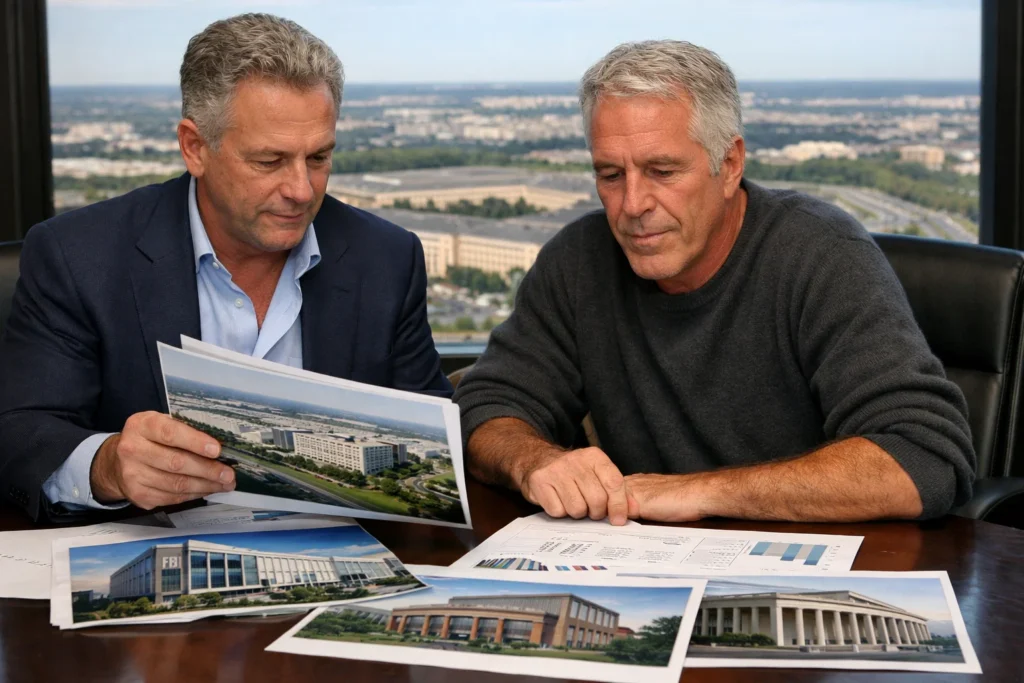
Documents recently posted by the Department of Justice include an email, an investor presentation and a deal summary that — per multiple news outlets — show an approach to Pentagon-area real estate being pitched to Epstein in 2016. The package described the 911,818-sq-ft campus as “the only property in Arlington, Virginia other than the Pentagon itself with the ability to meet the space and infrastructure needs of the DOD,” and estimated the purchase price at roughly $116–$120 million. Reporters emphasize there is no public evidence Epstein completed such a purchase.
(For clarity: the pitch was not an official government sale — it was a commercial real-estate investment proposal circulated privately and later found among files released by federal authorities.)
Who appears in the chain — and why that matters
Reporting identifies David Stern as the intermediary who forwarded the pitch to Epstein, and names Jonathan D. Fascitelli as the person who originally circulated the investor deck. The same set of files, reporters say, included a related 2015 proposal to invest in two Federal Bureau of Investigation field offices and courthouses (Richmond and Baltimore) — deals described in some documents as attractive because they already had federal tenants. Those particulars are what prompted security and reputational concern when the documents were unsealed.
What’s verified, and what isn’t
- Verified in the released files: the investor pitch, the forwarded email, the investor deck and the deal summary that appear among the DOJ materials.
- Not established by reporting so far: any evidence Epstein became a co-owner or landlord to the U.S. government, or that the government actively sold buildings to him. Multiple outlets explicitly note there is no evidence the deals were consummated.
That distinction matters legally and politically: documents that record an offer or pitch are very different from documents that show a completed acquisition or official approval by federal agencies.
Why this raised alarm
Two things make the pitch notable:
- Sensitive tenants. Properties housing defense or federal law-enforcement functions carry national-security implications and are normally subject to strict tenant protections and security vetting; the idea that a convicted sex offender was being shown an investor package tied to such assets has obvious reputational and security resonance.
- The wider context of the DOJ release. The investor materials emerged inside a much larger trove of files the DOJ has released under a transparency mandate — a release that has already produced new leads, sparked probes (for example in New Mexico) and prompted renewed questions about Epstein’s network.
Quick Q&A — readers’ likely questions
Q: Did Epstein buy any Pentagon or FBI buildings?
A: Not that reporting or the released files show. News outlets stress the materials are a pitch/offer in an investor deck and there is no evidence of a completed sale.
Q: Did the Pentagon or FBI authorize or endorse any sale?
A: The documents are commercial proposals; they do not represent federal-agency approvals, and there is no reporting that the Department of Defense or the Department of Justice authorized any such sale to Epstein. Officials quoted in coverage have described the pitch as alarming, but a formal agency sale or lease to Epstein has not been documented.
Q: Who else is named in the files?
A: Alongside Stern and Fascitelli, broader coverage of the DOJ release highlights a range of associates, political figures and intermediaries who appear across millions of pages; investigative outlets are still parsing names and context.
What to watch next
- Document verification and context: reporters and investigators will continue to publish excerpts and metadata — look for outlets that link to the original DOJ file IDs or publish scanned documents.
- Agency statements: if the Pentagon, FBI or DoJ issues formal comment or confirms details, those will be primary sources that clarify whether the pitch ever moved beyond the commercial-proposal stage.
- Local/State probes: some state attorneys general have already reopened inquiries tied to Epstein properties; new leads from the files could prompt further scrutiny.
Responsible reading note
Large document dumps often contain raw, unvetted material — emails, pitch decks and notes that require cross-checking. Appearing in a document does not equal guilt or complicity; careful reporters will seek corroboration and agency confirmation before asserting any sale or official approval occurred.