Published by TrenBuzz.com | June 14, 2026
Key Points at a Glance – Georgia’s QR Code Ballot
- Georgia law bans QR codes from counting ballots starting July 1, 2026, but lawmakers left the legislative session without a replacement system or funding.
- Gov. Brian Kemp called a special session for June 17, 2026, the day after primary runoffs, to address the issue.
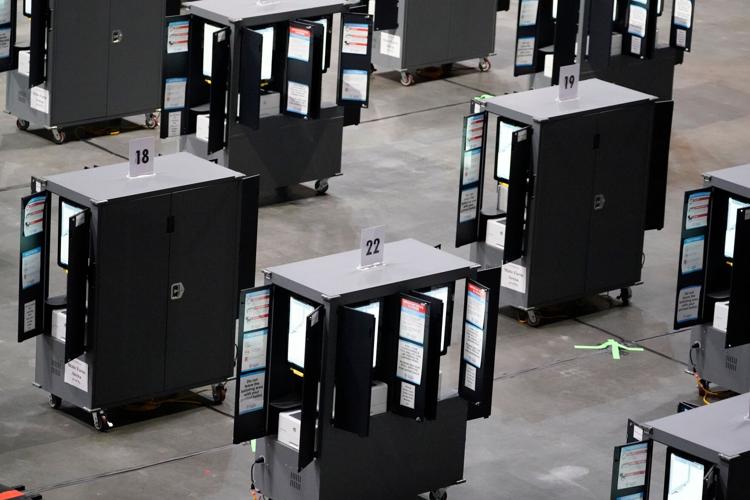
- Current Dominion machines print ballots with both a QR code and human-readable text, but scanners only read the QR code to tally votes.
- The Coalition for Good Governance estimates removing QR codes could cost the state $70 million for new equipment.
- A federal judge dismissed a yearslong lawsuit, Curling v. Raffensperger, that sought to compel hand-marked paper ballots.
- ACLU of Georgia wants lawmakers to extend the deadline to 2028 if no funded solution is ready.
In nine months, Georgia voters will cast ballots for governor, Senate, and Congress. In just over two weeks, the system that counts those ballots becomes illegal under the state’s own law.
QR codes must be eliminated from Georgia’s ballots by July 2026, but with midterms approaching, the state hasn’t figured out how to comply. State lawmakers passed the bill in 2024 to eliminate the codes, but they didn’t allocate any money to do so. Election officials warn it’s too late to make significant changes before the midterms.
How We Got Here
The newer machines print a paper ballot listing the voter’s choices in plain English next to a QR code encoding the same choices. When ballots are tabulated, the scanners read the QR code, not the printed text beside it, to count the vote. That design has drawn fire from both Republicans and Democrats, who argue voters cannot actually verify what the QR code says.
A compromise bill that would have let counties keep the current system through 2026 while requiring QR codes gone by 2028 passed the House, but Senate Republicans declined to take it up, leaving counties with no funded path forward.
Kemp’s Special Session
The special session will begin June 17, 2026, the day after the state’s primary election runoffs. Lawmakers will also be tasked with addressing the QR code deadline alongside redistricting questions following the Supreme Court’s ruling weakening the Voting Rights Act.
“We’re in limbo. We have no direction. We can’t prepare for elections overnight,” said Deirdre Holden, the elections administrator in Paulding County.
What Happens If Nothing Changes
If the July 1, 2026 deadline comes to pass with no funding and no further legislation enabling alternatives, election officials say they will have no legal alternative but to use emergency backup procedures. Outside groups have indicated they could sue if Georgia is found out of compliance with its own law after July 1.
Three days. One special session. One state’s entire election infrastructure on the line before voters even head to the polls in November.
🔗 Also Read: “South Carolina Senate Rejects Trump’s Redistricting Demand: Full Story” | TrenBuzz.com]
🔗 “New Hampshire Proof of Citizenship Voter Law Struck Down by Judge” | TrenBuzz.com]
Disclaimer: This article is for general informational and news reporting purposes only. All facts and quotes are sourced from Government Technology, Votebeat, Georgia Recorder, Atlanta News First, and ACLU of Georgia as of April-June 2026. TrenBuzz.com does not represent any government or election body. Readers are encouraged to follow official Georgia Secretary of State sources for the latest updates ahead of the July 1 deadline.