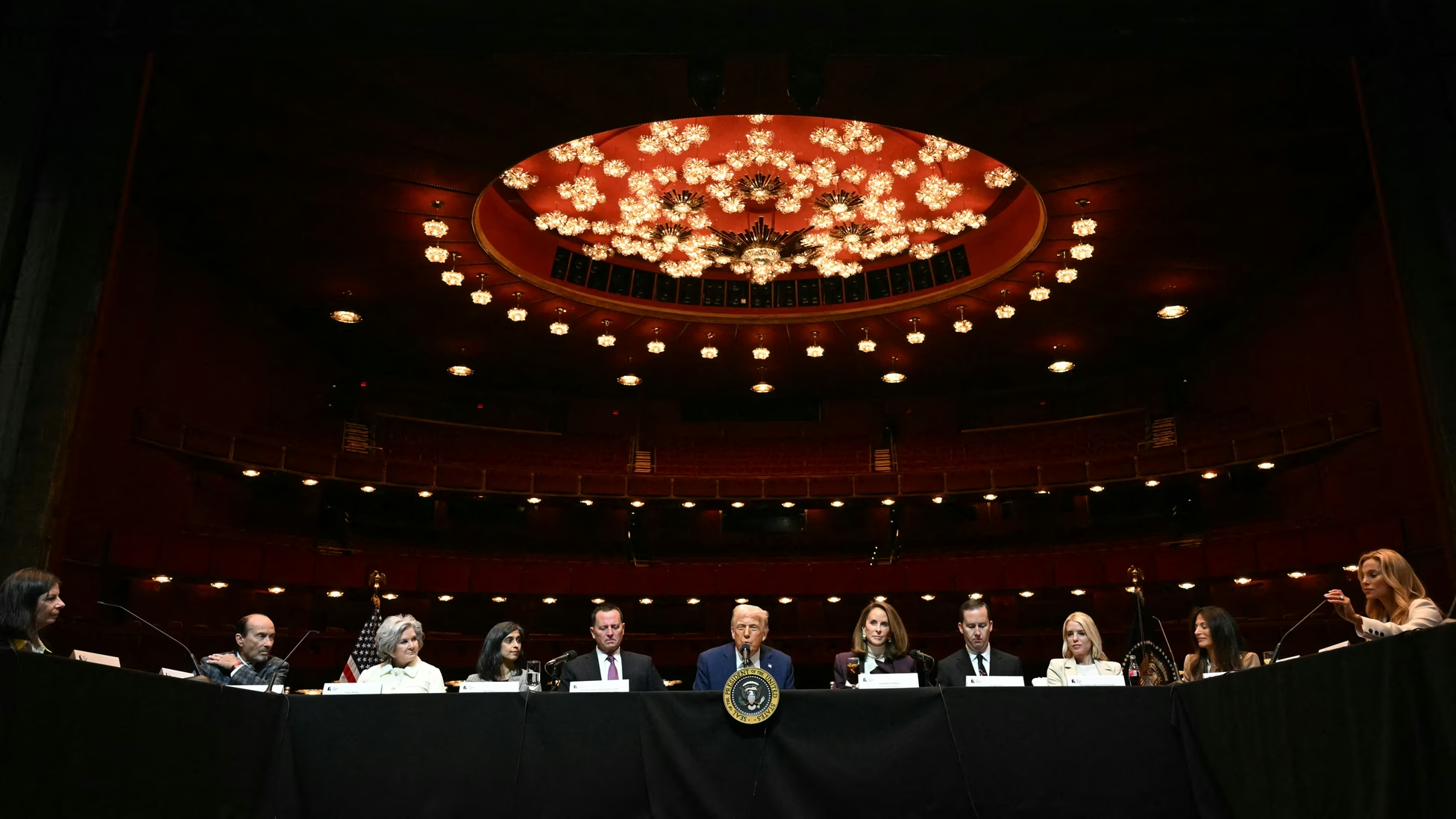
Key Points: Kennedy Center 2nd Demolition Threat
- The Kennedy Center Trump name fight escalated this week after DOJ lawyers warned the building could face demolition if a judge blocks its renovation plans.
- A federal judge already ruled in May that adding Trump’s name to the building was illegal and ordered it removed.
- The Kennedy Center’s board voted again this month to put the name back on, prompting an emergency court hearing Thursday.
- This is not the first time this administration has paired a beloved D.C. landmark’s fate with a renovation ultimatum.
Kennedy Center Trump Name Dispute Reaches Its Most Dramatic Point Yet
The Kennedy Center Trump name battle has been building for months, but this week’s development marks a genuine escalation. Justice Department attorneys told a federal judge the historic arts complex could ultimately face demolition if its renovation plans get blocked.
That threat arrived in court filings ahead of Thursday’s emergency hearing, part of an ongoing lawsuit from Rep. Joyce Beatty, an Ohio Democrat who serves as an ex officio Kennedy Center board member.
How This Fight Actually Started
This dispute traces back to December 2025, when the Kennedy Center‘s board, largely appointed by Trump, voted to rebrand the complex as “The Trump-Kennedy Center.” New exterior signage went up almost immediately, replacing wording that had honored the assassinated president alone since Congress created the memorial in 1964.
Beatty sued shortly afterward, arguing Congress alone holds legal authority to rename an institution it created by statute in the first place. In May, U.S. District Judge Christopher Cooper agreed, ruling the name change illegal and ordering it removed from the building’s facade.
The Board’s Second Attempt
Rather than dropping the matter, the Kennedy Center’s board voted again earlier this month on a new resolution. This version would add two separate inscriptions honoring Trump, including language crediting him with the complex’s “restoration and renovation,” alongside a possible future addition tied to a $100 million donor endowment threshold.
Beatty’s attorneys have called this move “outright defiance” of the judge’s original order, arguing it amounts to the same rebranding effort dressed up in slightly different legal packaging.
Why Demolition Entered The Conversation At All
Here is where this week’s filing took a genuinely unusual turn. DOJ attorney Brantley Mayers referred to the Kennedy Center repeatedly as a “decrepit” structure in court papers, warning that blocking the board’s renovation plans could ultimately jeopardize the building’s physical future entirely.
Beatty’s legal team pushed back sharply, describing the language as a thinly veiled threat. Attorneys Norm Eisen and Nathaniel Zelinsky called it unconscionable for the Justice Department to include such language in a formal legal filing at all.
Judge Cooper himself seemed unmoved by the framing during Thursday’s hearing, cutting off the government’s attorney mid-argument to ask what the building’s physical condition had to do with what Congress originally intended when it created the memorial.
A Pattern Worth Recognizing
This isn’t the first time a major Washington landmark’s fate has gotten tied to a renovation ultimatum under this administration. Some of the same attorneys representing preservation groups in the Kennedy Center fight have also challenged the sudden demolition of the White House’s East Wing to make way for a separate, controversial underground ballroom complex.
That pattern deserves real attention. Two historic federal buildings, both facing renovation disputes wrapped in urgency and structural concern, both becoming flashpoints for a broader fight over how much unilateral control the executive branch actually holds over the capital’s most iconic institutions.
What The Kennedy Center Itself Is Saying
A spokesperson for the Kennedy Center pushed back on the demolition framing directly, describing the language in court filings as describing only a hypothetical outcome if the desperately needed renovation gets blocked by what the statement called partisan interests.
Notably, Congress has already allocated more than 250 million dollars toward Kennedy Center repairs, and the judge specifically noted nothing in his earlier ruling actually prevents renovation work from proceeding regardless of how the naming dispute resolves.
What Happens Next
Judge Cooper appeared inclined to move the case into a formal discovery phase, giving Beatty’s legal team more time to gather evidence rather than issuing an immediate ruling from the bench Thursday.
That means this fight is far from over, with both the naming question and the underlying renovation timeline likely to remain contested for weeks or months to come.
The Bottom Line
The Kennedy Center Trump name dispute has evolved from a signage disagreement into a genuine test of how far renovation leverage can be stretched inside a legal fight over presidential legacy and congressional authority.
Trenbuzz will continue following this case as Judge Cooper’s discovery process moves forward.