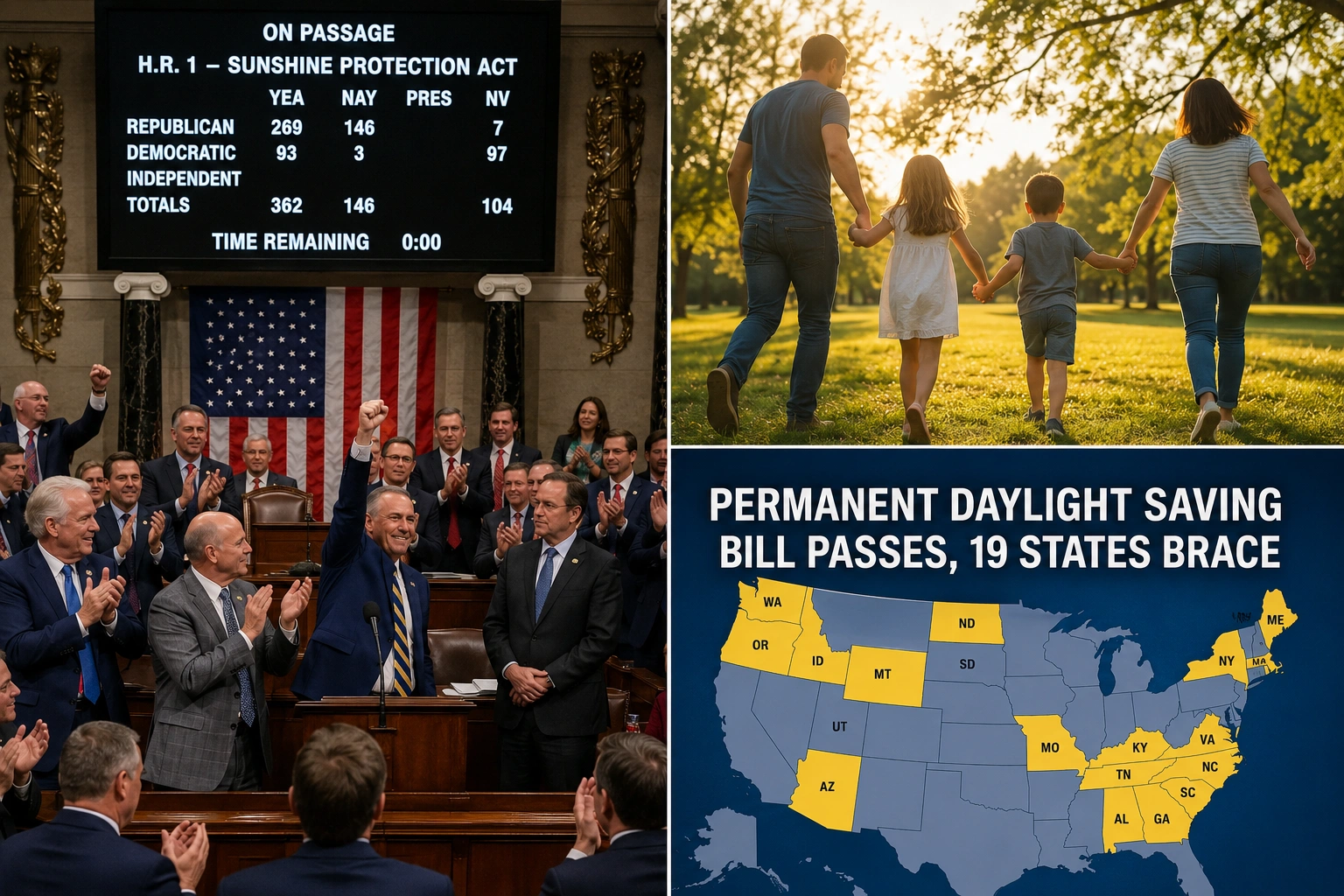
Key Points: Permanent Daylight Saving Bill Passes
- Permanent daylight saving state impacts are now real after the House passed the Sunshine Protection Act
- Trump publicly pushed for the bill, calling clock changes a costly, ridiculous production
- The measure passed 308-117, locking clocks on daylight time unless states opt out
- Sleep experts warn against the change, citing health risks tied to darker winter mornings
Congress just moved one big step closer to ending America’s twice yearly clock ritual for good.
The House passed the Sunshine Protection Act Tuesday by a wide 308-117 margin, sending real momentum behind permanent daylight saving time.
Here’s exactly what the bill does. It would lock the entire country onto the time currently observed from March through November, unless a state chooses to opt out first.
Trump has been pushing hard for this outcome. He’s repeatedly called the biannual clock switching costly and unnecessary, urging Congress to finally settle the debate.
Rep. Scott DesJarlais even played the Beatles’ “Here Comes the Sun” on the House floor as the final vote tally came in, capturing the celebratory mood.
Here’s where the permanent daylight saving state impacts get complicated fast. Nineteen states have already passed their own legislation supporting year-round daylight time, but every one of them needed federal approval first.
That approval is exactly what this bill would finally provide, unlocking those state level laws that have been sitting dormant for years.
Two places already skip the clock changes entirely. Hawaii and most of Arizona currently observe permanent standard time, giving a real world preview of year-round consistency.
Not everyone’s on board though. Sleep medicine experts have pushed back hard, warning that permanent daylight time means darker winter mornings across much of the country.
Vanderbilt sleep researcher Dr. Beth Malow has testified before Congress on this exact concern, arguing standard time actually aligns better with the body’s natural rhythms.
Public opinion leans toward Trump’s preferred outcome, though not overwhelmingly. A 2022 poll found 46% of Americans wanted permanent daylight time, compared to just 33% favoring standard time year-round.
There’s also a competing option quietly working through committee. The Daylight Act of 2026 proposes a half-hour permanent shift instead of the full hour change.
With the bill now headed to the Senate, and no guaranteed timeline for a vote there, Americans should still expect to set their clocks back this November unless something changes fast.