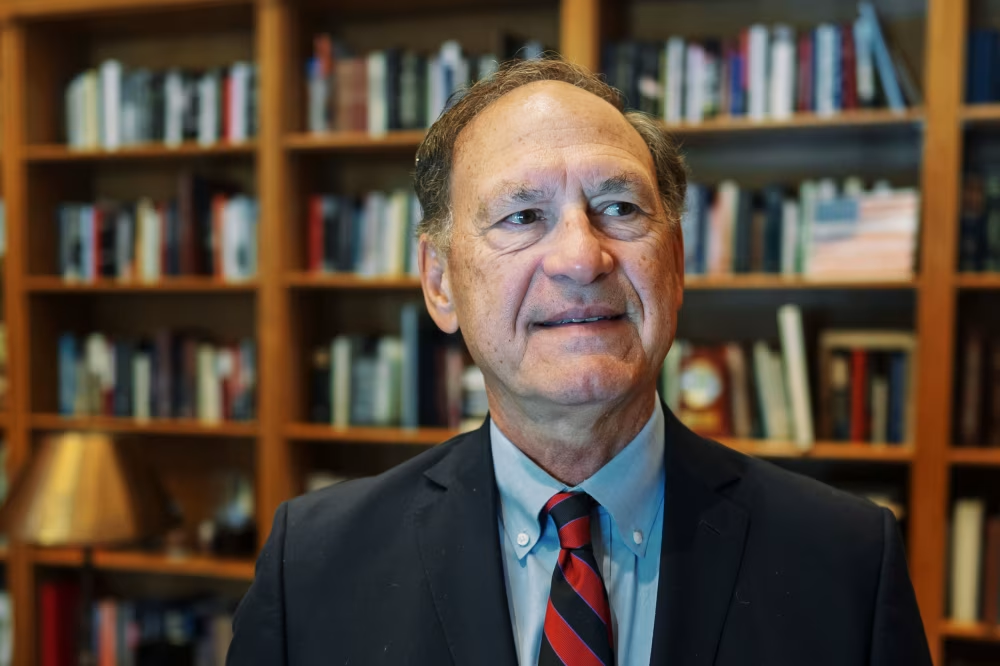
Key Points: Samuel Alito Won’t Retire
- Justice Samuel Alito, 76, confirmed on Thursday, November 5, 2026, that he has no plans to retire and will serve through at least the current term, which ends in late June or early July 2027.
- Democrats take control of the Senate in January, so President Trump may not get a Senate-confirmed pick if a seat opens.
- Analysts say Republicans may not win back the Senate for about six years.
- On Thursday this week, Alito also warned that Congress could “turn off the lights” at the Court by cutting its funding.
- Justice Clarence Thomas, 78, has not said he plans to retire either.
Samuel Alito’s Retirement Decision
Alito’s message was simple. He is not leaving, at least not yet.
He first said in early October that he intended to “stick around” through the term, and he repeated it after Democrats swept the midterms. A major newspaper also reported that he told friends he does not plan to retire right away.
That means a quick retirement during the lame-duck period, while Republicans still run the Senate, now looks unlikely.
Who Is Samuel Alito?
Alito was nominated by President George W. Bush and joined the Supreme Court in early 2006. He wrote the 2022 decision that overturned Roe v. Wade.
He is the second-oldest member of the Court after Thomas. Both are among its most conservative justices.
Conservatives hold a 6 to 3 majority, which gives these two seats special weight in political planning.
Why the Timing Matters So Much
Before this month, speculation was strong. In June, a public radio reporter published, then retracted, a story saying Alito was retiring.
Some Republicans hoped an older justice would step down while Trump could still win quick Senate confirmation. The midterm results changed that, since Democrats will have at least 55 Senate seats.
Supreme Court nominees can no longer be filibustered, so the party in control of the Senate holds most of the power.
The Angle Few People Discuss: Congress’s Five Levers Over the Court
Many readers think of the Court as untouchable. In fact, Congress has several ways to influence it.
First, it sets the number of justices, which has been nine since 1869. Second, it controls the Court’s budget, which is what Alito warned about on Thursday.
Third, it decides which cases federal courts can hear. Fourth, the Senate confirms justices, and fifth, the House can impeach them.
How Realistic Is Each Lever?
Not all levers are equally likely. Changing the Court’s size would need a bill that passes both chambers and a presidential signature, which Trump would not give.
Cutting funding would also face a veto, and budget deals need 60 votes for most spending bills. Impeachment would need 67 senators to convict.
That leaves confirmation as the biggest lever, which is exactly why Alito’s decision matters.
Alito’s Warning About Funding
On Thursday, Alito said Congress “can turn off the lights” at the Court and stop operations by withholding money. He also said some lower court judges “have gone far astray.”
He made the comments while discussing a “concerted effort” by political actors to pressure the justices. The Hill reported the remarks.
Critics may see the comment as political, while supporters say he was describing a real constitutional risk.
What Democrats Say
Senate Democratic leader Chuck Schumer would not say whether Democrats would leave a vacancy open until after the 2028 election, the way Republicans did in 2016. But he said, “we’re not going to allow a right-winger on the court.”
He added that Democrats will not confirm “any crappy nominees.” That signals a tougher fight if a seat opens.
Republicans note that Democrats have always faced Senate hurdles when they were in the minority too.
What Trump and Republicans Face
Trump may have missed a window to name a younger justice. Analysts at conservative outlets warn that retirements are now more difficult, and the party may be locked out of Senate control until 2032.
If Alito or Thomas left in the next two years, Trump would need to pick someone acceptable to Democrats. That could lead to a more moderate nominee, or a long vacancy.
Both justices have strong reasons to stay as long as they are able.
What This Means for Everyday Americans
The Court rules on abortion, guns, voting, and presidential power. A stable 6 to 3 majority means those decisions are likely to keep leaning conservative for years.
If a vacancy flips that balance, many of those rulings could face new challenges. That is why every health report and public comment gets so much attention.
For voters, the lesson is that Senate elections shape the Court as much as presidential ones.
A Note on Research
Some readers asked for non-public or classified information. I can only use public reports and official statements, so I cannot provide that.
The Supreme Court’s own website posts opinions, schedules, and justices’ public statements.
What to Watch Next
Watch the end of the term in late June 2027 for any retirement announcement. Also watch the spending debates in Congress, since Alito’s funding warning could become a real fight.
For now, the situation is clear. Samuel Alito is staying, and the political fight over the Supreme Court is only getting started.