Key points
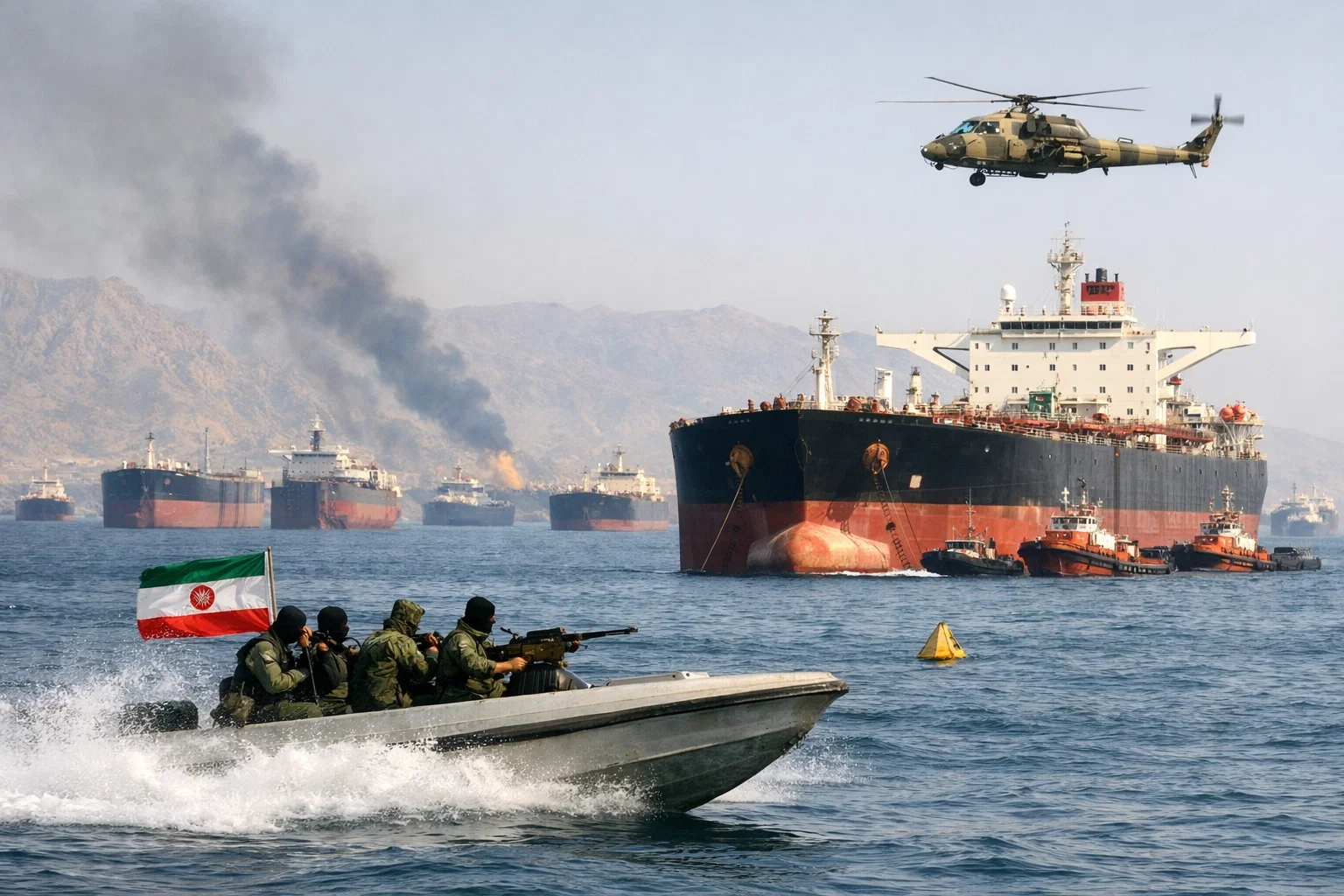
- Iranian Revolutionary Guard radio warnings and reports say Iran has declared passage through the Strait of Hormuz “not allowed,” a development that risks disrupting a major global oil chokepoint.
- Several oil majors and traders have suspended shipments and tankers are gathering outside the strait — the market is already pricing a geopolitical premium into oil.
- Insurers and underwriters are canceling or re-pricing coverage for ships in the Gulf, sharply raising war-risk premiums for any vessel that transits the area.
- The Strait connects the Persian Gulf with the Gulf of Oman and handles roughly one-fifth of the world’s seaborne oil, so even a partial disruption can spike prices and scramble supply chains.
- Analysts say a full, prolonged closure is unlikely but even partial avoidance or rerouting could remove millions of barrels per day from the market and push oil toward triple-digit levels.
What exactly has been reported so far
EU naval sources say Iran’s Revolutionary Guard transmitted VHF radio messages telling ships that passage through the Strait is not allowed, and several majors paused shipments pending clarity.
Authorities and companies are treating the order as a serious escalation even though Iran has not always confirmed formal closure language in public statements.
Why the Strait of Hormuz matters (simple map-level briefing)
The Strait of Hormuz is the narrow sea corridor between Oman and Iran that connects Persian Gulf producers to the Gulf of Oman and the Arabian Sea.
Roughly 15–20% of global seaborne oil and a significant share of global LNG transit the strait, making it one of the world’s most important maritime chokepoints.
What shippers and insurers are doing now
Major oil traders and tanker owners reported suspending shipments and diverting tankers, while war-risk insurers cancelled or hiked policies for the region, sharply lifting voyage costs.
Higher insurance premiums and rerouting add days to voyages and hundreds of thousands of dollars per cargo — costs that usually pass through into fuel and commodity prices.
Short-term market impact on oil prices and energy security
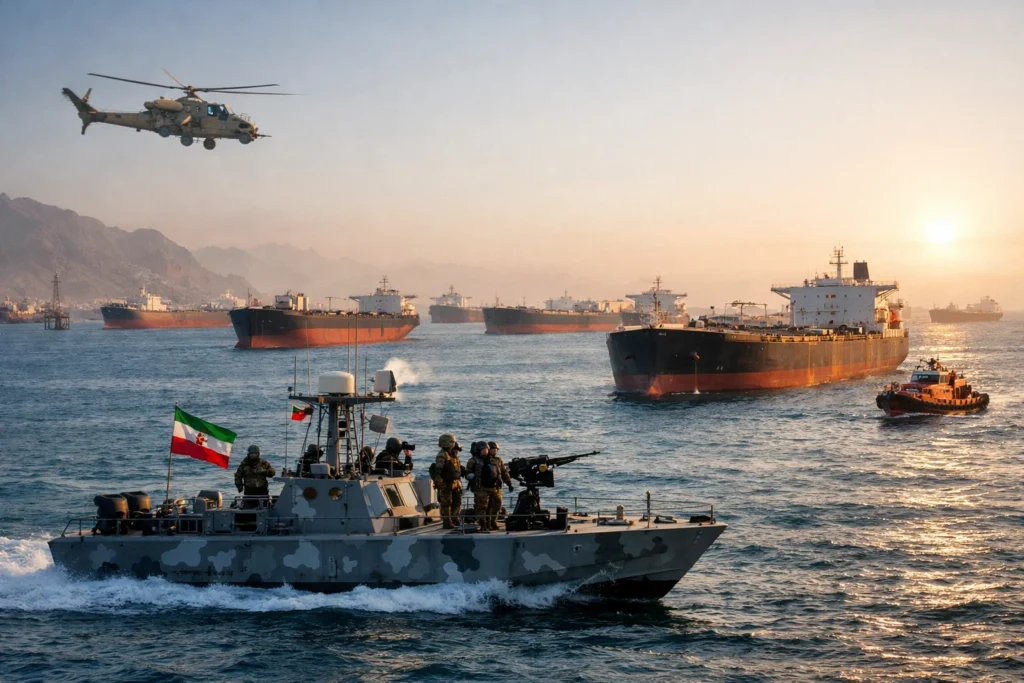
Markets generally react to the risk of supply disruption before it arrives; analysts warn that even partial disruptions could push prices materially higher and lift the “geopolitical premium.”
Some traders estimate that removing several million barrels per day from effective supply — whether by diversion, delay or precautionary suspensions — could send Brent toward or above $100 per barrel depending on stock levels and spare capacity.
Practical ripple effects for countries and companies
Countries heavily dependent on Gulf seaborne oil (East Asia, India, parts of Europe) would face fuel-supply stress and may seek alternative purchases or tap strategic reserves.
Refiners, airlines and shipping firms should expect higher input costs and possible short-term rationing or prioritization of cargoes.
Military and diplomatic context — why Iran threatens closure
Iran has threatened to close or disrupt the strait historically in response to military pressure or strikes on its territory. Current radio warnings follow recent U.S. and Israeli strikes that have raised the likelihood of retaliatory measures.
Closure would be both symbolic and tactical — intended to raise the economic and political cost of further attacks — but it also risks drawing in other powers tasked with keeping global trade lanes open.
Is a full, long-term closure likely? (analysts’ view)
Most market analysts say a permanent, long-term closure is unlikely because it would be massively costly for Iran as well as for global trade.
But they caution that even limited or intermittent disruptions — or the prospect that insurers will not cover transit — is enough to push prices and raise strategic uncertainty.
Quick FAQ — concise answers readers want
Is the Strait of Hormuz closed right now?
As of the latest reports, Iran’s Revolutionary Guard has issued radio warnings and several companies suspended shipments; official, universal closure has not been confirmed by all governments.
How much oil flows through the Strait?
Roughly 15–20% of global seaborne crude oil flows through the Strait of Hormuz, plus a significant share of regional LNG — making it critical to global energy security.
Will oil hit $100 or more?
Analysts say a sizable partial disruption could push prices past $100 per barrel; the exact move depends on spare capacity, inventories and how long transits are curtailed.
Bottom line — why this matters to everyday consumers
A closure or disruption of the Strait of Hormuz reverberates quickly into fuel prices, heating oil and goods costs worldwide.
Even if shipping resumes in days, insurers and traders already repriced risk — so expect volatility in energy markets until a durable de-escalation.
Disclaimer: This article summarizes breaking reporting as of Feb. 28, 2026. Situations at sea and diplomatic responses can change rapidly — check official naval advisories and trusted news services for live updates.