Key Points: Trump Coin Sales Reveal
- Trump coin sales opened September 2 with the US Mint charging well above face value
- A 25-coin roll costs $61, a markup of roughly 144% over its actual $1 face value
- Hidden among ordinary coins, 250,000 carry a rare “JULY 4th” privy mark worth chasing
- Trump becomes only the second living president ever depicted on US circulating coinage
The US Mint just did something it rarely admits outright: it’s selling dollar coins for dramatically more than a dollar, and collectors are lining up anyway.
What Trump Coin Sales Actually Look Like Right Now
The Mint opened sales Wednesday at noon ET, offering the new 2026 Semiquincentennial President Donald J. Trump $1 Coin in two formats.
Here’s the exact pricing breakdown. A 25-coin roll costs $61, while a 100-coin bag runs $154.50, according to the Mint’s official product listings.
Do the math on that roll price and something jumps out immediately. Twenty-five coins at $1 face value should cost $25. Instead, buyers are paying $61, a markup of roughly 144% over actual currency value.
The bag markup runs smaller but still notable, working out to about 54.5% above face value for the same quantity of coins purchased in bulk.
The Design Behind This Unusual Coin
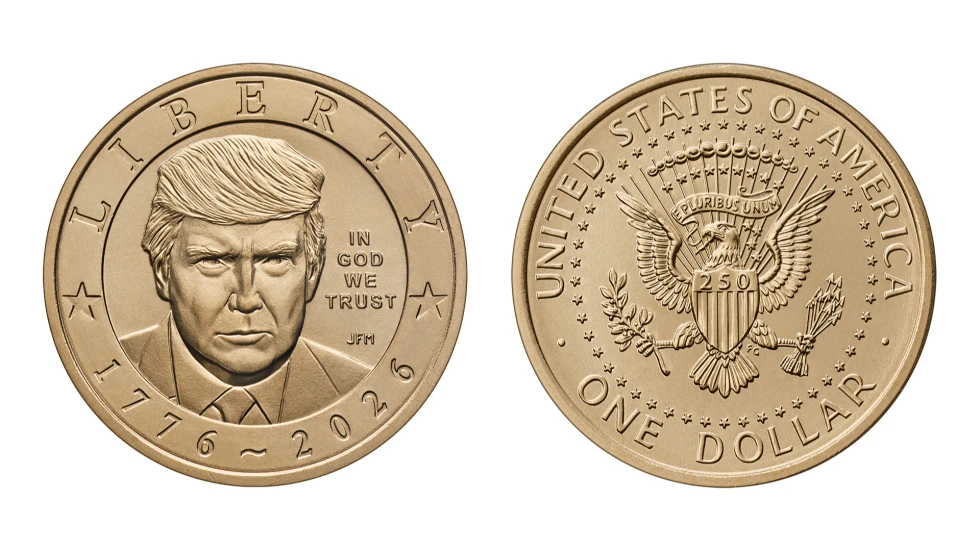
Here’s what the coin actually looks like. The obverse features Trump’s portrait with “LIBERTY” arched above and “1776~2026” inscribed below, based on an official White House photo taken by Daniel Torok.
US Mint Chief Engraver Joseph Menna designed that portrait specifically, while the reverse side reuses a Presidential Seal design originally created by former Chief Engraver Frank Gasparro.
Here’s the historically significant detail driving this entire release. Trump becomes only the second living president ever featured on US circulating coinage, a milestone the Mint’s own messaging leaned into heavily.
Here’s The Scarcity Detail Most Coverage Buried
This is where the real collector angle gets interesting, and where most reporting glossed over the actual mechanics. The Mint struck exactly 250,000 of these dollars on July 4th itself, stamped with a special “JULY 4th” privy mark.
Here’s how the Mint chose to distribute that scarcity. Rather than selling those 250,000 coins separately, officials randomly mixed them into the ordinary rolls and bags going on sale September 2.
That’s a deliberate gamble mechanic hiding inside a government coin release. Every roll or bag buyer has some statistical chance of unknowingly holding a rarer, potentially more valuable variant, without any way to identify it before opening the packaging.
Numismatic tracking site CoinNews confirmed this detail directly, describing it as a “chase element” designed to add “a measure of scarcity” that collectors would specifically hunt for once coins started circulating publicly.
Why “Check Your Pocket Change” Is Slightly Misleading
Here’s a nuance worth flagging directly, since it complicates the Mint’s own promotional language. The Mint’s X post told the public these coins are “also in circulation” and urged people to “check your pocket change.”
Here’s the legal reality underneath that framing though. CoinHub’s detailed breakdown notes these specific roll-and-bag products contain coins that have “never been placed into circulation,” despite carrying a circulating finish and full legal tender status.
That distinction matters for anyone hoping to stumble across one in everyday transactions. The coins genuinely exist as legal currency, but the batch sold directly to collectors through the Mint’s website isn’t the same batch actually entering general commerce through banks and registers.
What This Coin Fits Into
Here’s the broader context shaping this release. Three of the Mint’s four September product launches specifically tie into America’s Semiquincentennial, the nation’s 250th anniversary being celebrated throughout 2026.
With household order limits of two coins remaining in effect through Thursday afternoon, and collectors already speculating about the privy-marked coins’ eventual resale value, this release blends genuine historical milestone marketing with a treasure-hunt mechanic rarely seen in official US currency.