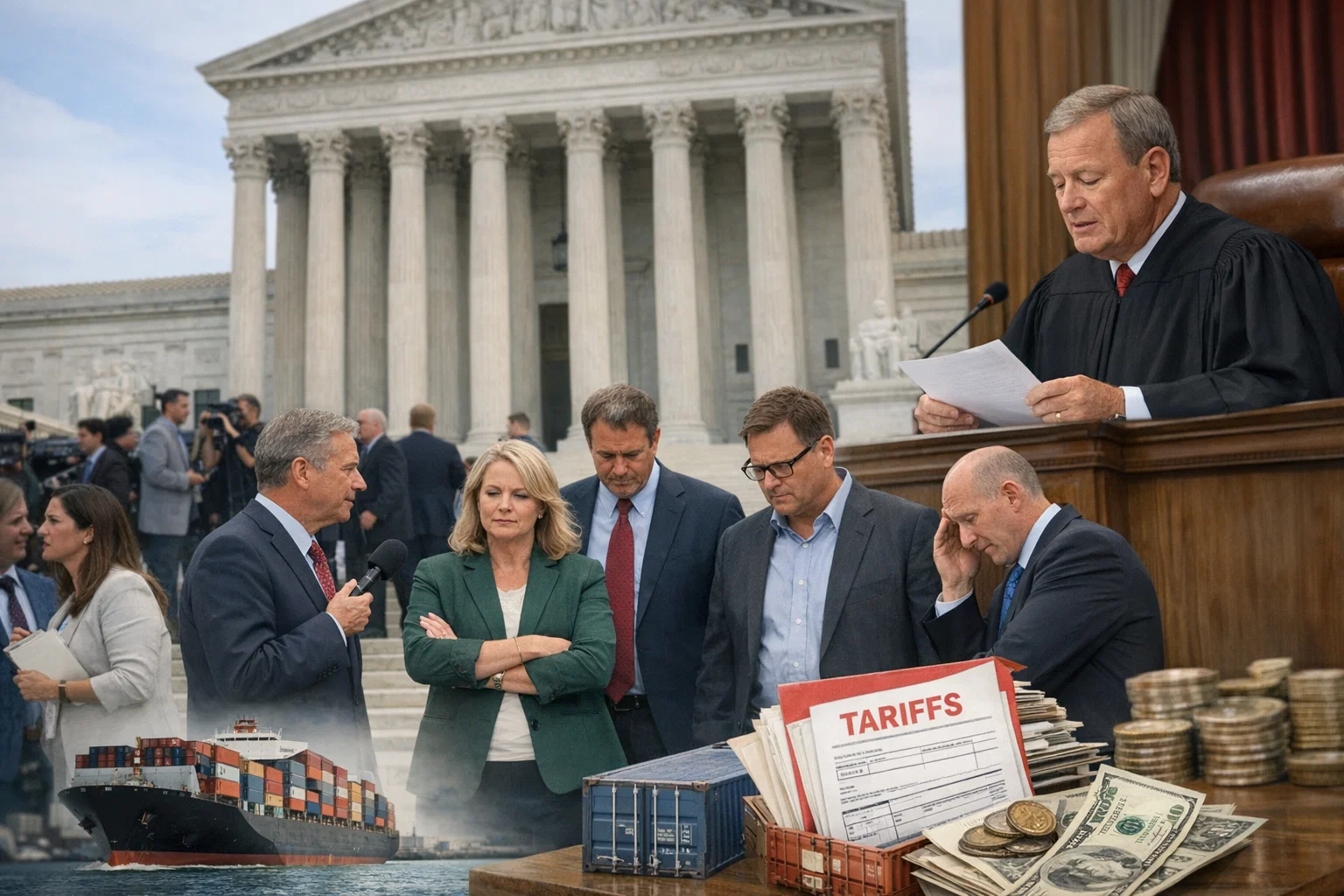
- The Supreme Court of the United States issued a 6–3 decision that invalidates the sweeping global tariffs the administration imposed under the International Emergency Economic Powers Act (IEEPA).
- Chief Justice John Roberts wrote the majority opinion: the court held that IEEPA does not give the president authority to levy broad import taxes — that power lies with Congress.
- The ruling immediately raises questions about billions in tariff revenue and whether importers can recover duties already paid; independent estimates put revenue at risk in the low-hundreds of billions.
- The decision limits the executive branch’s use of emergency powers for major economic policy moves and will reshape trade, legal strategy and political messaging going forward.
The short version — what the court said and why it matters
In a landmark decision, the U.S. highest court concluded that the president exceeded his statutory authority by using the International Emergency Economic Powers Act to impose economy-wide import duties. The majority said Congress — not the executive — holds the constitutional taxing power and that major policy choices affecting the national economy require clearer legislative authorization. The ruling upends a central pillar of the administration’s trade policy and narrows the scope for future presidents to use emergency statutes for large fiscal measures.
Legal reasoning in plain English
- Statutory limit: The court concluded IEEPA authorizes certain trade restrictions in a national emergency but does not expressly empower a president to levy general import taxes. That omission matters because tariffs are functionally taxes and therefore fall under Congress’s domain.
- Major questions doctrine: The majority leaned on a legal principle that the executive may not use vaguely worded statutes to decide issues of “vast economic and political significance” without clear congressional authorization. This doctrine played a central role in curbing unilateral, far-reaching executive actions.
- Dissents: Three justices dissented, arguing the statute and historical practice gave broader flexibility to the president — a legal disagreement that leaves avenues for future administrations to pursue narrower or differently grounded trade measures.
Immediate economic and market effects
- Revenue and refunds: The ruling raises major questions about how to handle duties already collected. Analysts estimate tariff receipts at risk could total in the tens or hundreds of billions, depending on the scope counted and time frame; fiscal managers and affected businesses are seeking clarity about refund procedures.
- Market reaction: Financial markets and trade partners reacted quickly — stock indices rallied in some sectors while exporters and importers pondered near-term operating headaches as lawyers and customs officials parse the ruling.
- Trade policy ripple effects: The decision does not automatically remove narrow, sector-specific tariffs imposed under other statutory authorities (e.g., steel/aluminum safeguards), but it removes a blunt instrument the administration used for broad reciprocal duties. Expect negotiators to shift toward bilateral deals, targeted remedies, or new legislation.
What businesses, importers and consumers should do now
- Importers and customs brokers: Immediately consult trade counsel and your customs broker. Keep receipts and transaction records handy; some companies will likely pursue refund claims or administrative appeals once Treasury/Commerce issue guidance.
- Retailers and manufacturers: Re-examine pricing and supply-chain plans that assumed the tariff regime would remain in place — some competitive advantages tied to shielding domestic producers may evaporate.
- Consumers: Short-term price changes depend on how businesses react; if tariffs had already raised costs in certain categories, some sellers may lower prices once the legal dust settles, but pass-through effects vary by sector.
Political fallout — what to expect in Washington
- Administration response: The president has called the ruling a “disgrace” and said a “backup plan” is ready; legal and political teams may seek alternative statutory authorities or push Congress for retroactive authorization.
- Congressional dynamics: Lawmakers who opposed the executive-branch tariff gambit are likely to press for clearer legislative frameworks — either to codify the tariffs (if they support them) or to curtail emergency trade powers. Expect hearings, potential bills, and bipartisan debates over separation of powers.
- International impact: Trade partners and allies welcomed legal clarity, but will watch for secondary effects — refund disputes, retaliatory measures, and new U.S. trade initiatives.
A practical timeline — next steps readers can watch
- Treasury / Commerce guidance (days–weeks): Agencies will issue instructions on how customs should treat previously paid tariffs and whether administrative refund windows open.
- Litigation follow-ups (weeks–months): Expect a flood of private refund suits and agency appeals; courts and federal agencies may become busy adjudicating who gets repaid and how.
- Congressional action (months): Members may draft bills to either authorize or prohibit similar executive actions going forward; this is where permanent change would emerge.
Quick Q&A
Q: Does this affect all tariffs the administration imposed?
A: The ruling targets the broad emergency-based global tariffs under IEEPA. Sector-specific duties under other laws remain potentially unaffected; details will depend on legal and administrative parsing.
Q: Will importers get refunds automatically?
A: Not automatically. Agencies must issue procedures and courts will likely see many claims. Companies should compile documentation now.
Q: Could Congress simply pass a law to reauthorize the tariffs?
A: Yes — Congress could enact legislation granting the president specific tariff authority, but that would be a politically charged process requiring votes in both chambers.
Bottom line
The Supreme Court’s decision is a major constitutional and economic event: it reasserts Congress’s primacy over taxation and limits a shortcut the executive used for sweeping trade policy. The ruling immediately complicates the fate of billions in tariff revenue and opens complex refund and policy questions — but it also clarifies the legal boundaries for future administrations. Firms, lawmakers and consumers should brace for detailed guidance in the coming days and a prolonged legal and political aftershock.