Published by TrenBuzz.com | May 3, 2026
Key Points at a Glance – Trump Pulls 5000 Troops From Germany as NATO Scrambles
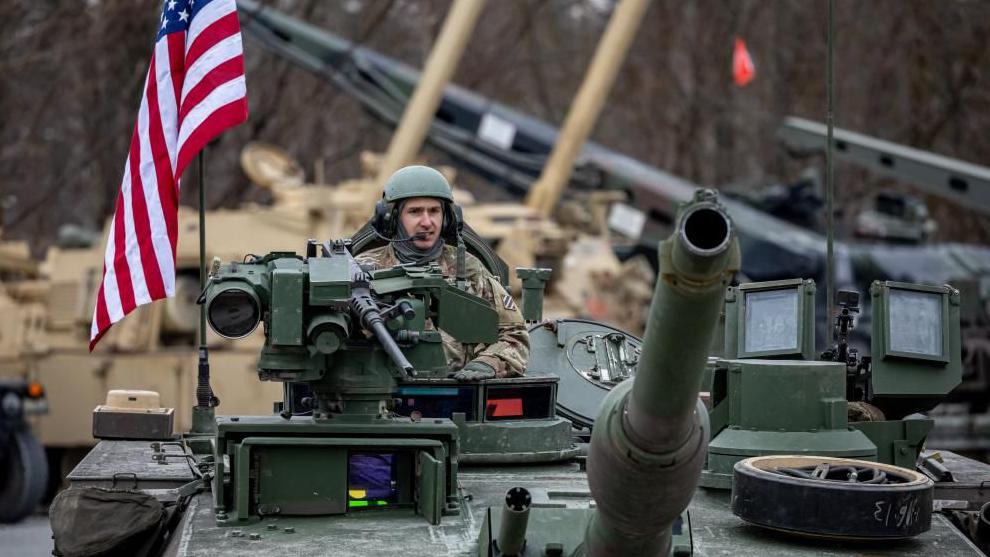
- The Pentagon announced the withdrawal of 5,000 US troops from Germany — the largest US military drawdown in Europe since the Cold War.
- NATO says it is “working with the US to understand the details” of the decision, with the drawdown expected to unfold over the next 6–12 months.
- German Defence Minister Boris Pistorius called the move “foreseeable” — but admitted it rattled the alliance.
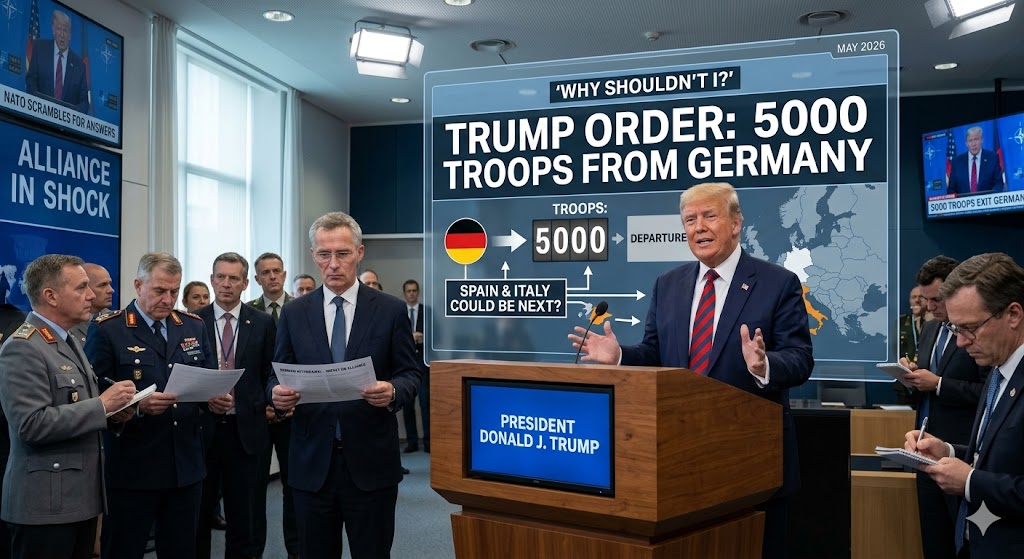
- Trump confirmed he is also considering troop reductions in Spain and Italy — saying “Yeah, probably I will — why shouldn’t I?”
- The withdrawal is directly linked to a fierce feud between Trump and German Chancellor Friedrich Merz, who said Iran was “humiliating” Washington at the negotiating table.
- The US currently has 36,000+ active duty troops stationed in Germany — the world’s largest forward deployment of American soldiers.
- Germany’s defence spending is on track to hit 3.1% of GDP — well above NATO’s 2% benchmark.
- Ramstein Air Base — described as having “an irreplaceable function” — is explicitly not being closed.
- The move arrives simultaneously with Trump’s 25% EU auto tariff announcement — doubling pressure on European allies.
- NATO allies at The Hague summit last year agreed to spend 5% of GDP on defence — Hart cited that commitment as the silver lining.
In the span of 48 hours, Donald Trump announced a 25% auto tariff on Europe and pulled 5,000 soldiers out of Germany. The message to America’s oldest allies couldn’t be clearer — or more alarming.
NATO says it is assessing the details of the United States’ decision to withdraw about 5,000 troops from Germany, a key partner in the Western security alliance, amid tensions over the war on Iran. In a statement on Saturday, NATO spokesperson Allison Hart said the bloc is “working with the US to understand the details of their decision on force posture in Germany,” a process the US Pentagon estimates will unfold over the next six to 12 months.
Why Trump Did It — The Merz Feud That Broke the Dam
The Pentagon’s announcement of the troop withdrawal follows a spat between US President Donald Trump and German Chancellor Friedrich Merz, who said on Monday Iran was “humiliating” Washington at the negotiating table. Trump fired back by saying that Merz “doesn’t know what he’s talking about.”
The latest spat between Trump and Merz was triggered by comments by the German chancellor on Monday. Merz told university students that “the Americans clearly have no strategy. The Iranians are obviously very skilled at negotiating, or rather, very skilful at not negotiating, letting the Americans travel to Islamabad and then leave again without any result.”
That one comment — made by a leader who already refused to back the US-Israel war against Iran — appears to have been the straw that broke 80 years of transatlantic military solidarity in Germany.
Germany’s Response — Calm on the Surface, Concern Underneath
German Defense Minister Boris Pistorius sought to project calm Saturday after the Pentagon announced it would withdraw roughly 5,000 troops from his country, calling the decision “anticipated” and insisting his country is ready to shoulder more of the burden of its defense. “The presence of American troops in Europe, and particularly in Germany, lies in our interest and in the interest of the US,” the defense minister told German news agency dpa.
German Foreign Minister Johann Wadephul said during a visit to Morocco that Germany was “prepared” for a reduction in US troops and was “discussing it closely and in a spirit of trust in all NATO bodies.” However, Wadephul said large American bases in Germany are “not up for discussion at all,” citing Ramstein Air Base specifically — which he said has “an irreplaceable function for the United States and for us alike.”
Spain and Italy on Notice — Trump’s “Why Shouldn’t I?” Moment
Trump also indicated this week that he was also weighing troop reductions in Italy and Spain. “Yeah, I probably will…look, why shouldn’t I?” Trump told reporters Thursday, singling both countries out for what he described as unhelpful responses to the Iran conflict.
Italy and Spain both refused to allow US aircraft to use their bases for strikes against Iran — a refusal that Trump publicly condemned, calling the two nations “absolutely horrible.” If the Germany withdrawal is Phase One, Madrid and Rome may be staring down Phase Two.
NATO’s Message to Europe — Pay More, Depend Less
In her post on X on Saturday, NATO’s Allison Hart said the US decision to pull troops out of Germany “underscores the need for Europe to continue to invest more in defence and take on a greater share of the responsibility for our shared security. We’re already seeing progress since allies agreed to invest 5% of GDP at the NATO summit in The Hague last year.”
Germany’s defence expenditure is set to reach 3.1% of GDP, taking into account other defence funds, including Berlin’s continuing aid to Ukraine as it continues to fight against invading Russian troops.
What Stays — And What’s Really at Risk
Ramstein Air Base — the nerve center of US operations in Europe and Africa — is explicitly off the table. But the symbolism of 5,000 American soldiers leaving German soil is impossible to contain within a spreadsheet.
The EU said on Thursday the deployment of US troops in Europe was in Washington’s interest, and that the US was “a vital partner in contributing to Europe’s security and defense.”
For 80 years, American troops in Germany have been the physical embodiment of the transatlantic guarantee — the promise that Washington would never let Moscow gamble on European weakness. Whether 5,000 fewer soldiers breaks that promise or simply tests it depends entirely on what happens next — in Iran, in Ukraine, and in the negotiating rooms where Europe is learning to prepare for a future without America’s unconditional protection.
Disclaimer: This article is for general informational and news reporting purposes only. All quotes, troop numbers, and diplomatic details referenced are based on publicly available and credible sources including NPR, Al Jazeera, Times of Israel, and AP as of May 3, 2026. TrenBuzz.com does not represent any government or military body. Readers are encouraged to follow credible international news sources for real-time updates on this rapidly evolving transatlantic security story.