
A split D.C. Circuit panel has again shut down Judge James Boasberg’s criminal contempt probe — and this time, the majority called it a “clear abuse of discretion.”
By TrenBuzz Staff | Washington, D.C. | April 14, 2026 | 5 min read
Key Points
- A 2-1 D.C. Circuit panel ruled Tuesday that Judge Boasberg cannot continue his contempt probe into Trump administration officials.
- The majority labeled Boasberg’s investigation a “clear abuse of discretion,” citing separation-of-powers concerns.
- The case stems from March 2025 deportation flights of alleged Venezuelan Tren de Aragua gang members under the 1798 Alien Enemies Act.
- A DOJ whistleblower alleged officials planned in advance to ignore court orders — a claim the DOJ has denied.
- Trump called for Boasberg’s impeachment; Democrats accuse Trump-appointed judges of strategically stalling the case.
- The Supreme Court previously vacated Boasberg’s original injunction but affirmed due process rights for the deportees.
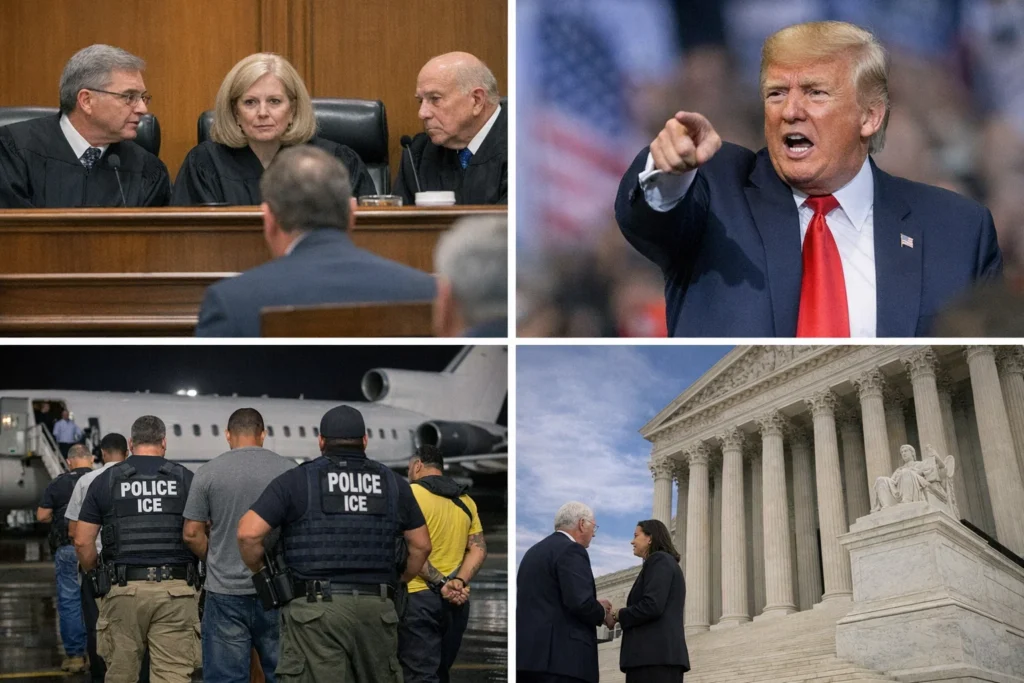
In a ruling that sent shockwaves through legal and political circles on Tuesday, a divided federal appeals court again blocked Judge James Boasberg from pursuing contempt proceedings against Trump administration officials — dealing what may be the most decisive blow yet to the year-long legal saga over deportation flights and the Alien Enemies Act.
The two-judge majority on the U.S. Court of Appeals for the D.C. Circuit — both Trump appointees — ruled that Boasberg’s contempt probe had crossed constitutional lines and described the inquiry as a “clear abuse of discretion.”
The lone dissenter, an Obama appointee, argued that the rule of law cannot survive if officials defy court orders without consequence.
How Did We Get Here? The Full Timeline
● March 15, 2025
President Trump invokes the 1798 Alien Enemies Act, deporting over 200 alleged Tren de Aragua gang members to El Salvador’s maximum-security CECOT prison. Judge Boasberg issues an emergency verbal order to turn flights around — the flights continue anyway.
● April 2025
Boasberg finds “probable cause” the Trump administration committed criminal contempt. The D.C. Circuit temporarily halts the contempt proceedings in a 2-1 ruling. The Supreme Court vacates Boasberg’s original injunction but affirms due process rights for deportees.
● August 2025
The D.C. Circuit (2-1) scraps Boasberg’s contempt finding entirely on jurisdictional grounds. DOJ whistleblower Erez Reuveni alleges senior officials, including Emil Bove, planned to defy any court order from the start.
● December 2025
Boasberg revives the contempt inquiry and schedules testimony from DOJ officials. The appeals court intervenes again, delaying everything into 2026 while ordering briefing on whether the court has the authority to proceed at all.
● April 14, 2026
The D.C. Circuit rules 2-1 again — this time calling Boasberg’s entire inquiry a “clear abuse of discretion.” The contempt probe is ordered to stop. The Trump administration declares a major legal victory.
What the Court Actually Said
The majority opinion raised deep concerns about judicial encroachment on executive power. The panel found that Boasberg’s probe into high-level White House decision-making on national security matters went well beyond what any district court is empowered to do.
In a concurring opinion, Judge Justin Walker argued the Trump administration had not technically violated Boasberg’s written order at all — only his verbal bench order, which the administration contended carried less legal weight.
The majority additionally found the proposed contempt hearings would amount to an open-ended investigation into executive branch conduct touching on military and diplomatic matters.
“These proceedings are a clear abuse of discretion — the district court proposes to investigate high-level discussions within the executive branch on matters of national security and diplomacy.”— D.C. Circuit Majority Opinion, April 14, 2026
The dissenting judge countered that the judiciary’s legitimacy crumbles when officials defy court orders without facing consequences — regardless of whether the underlying order is later overturned.
The Political Firestorm Around Judge Boasberg
The contempt proceedings have turned Judge James Boasberg into a political lightning rod. President Trump publicly demanded his impeachment, calling him an “activist judge.” Republican lawmakers filed impeachment articles and held hearings targeting the chief judge directly.
Senate Democrats, led by Senator Sheldon Whitehouse, have accused Trump-appointed appellate judges of deliberately timing their interventions to protect key figures — most notably Emil Bove, who was narrowly confirmed to a circuit judgeship before any contempt record could be established against him.
Attorney General Pam Bondi celebrated Tuesday’s ruling, calling Boasberg’s contempt effort “failed judicial overreach at its worst” and declaring the decision a vindication of the administration’s immigration enforcement approach.
Where Does This Leave the Alien Enemies Act Case?
The underlying immigration case is separate from the contempt proceedings and continues in Boasberg’s court. The Supreme Court has already allowed the Trump administration to use the Alien Enemies Act for deportations — but also confirmed that targeted individuals have due process rights before removal.
Many of the originally deported Venezuelans were released from the Salvadoran megaprison and transferred back to Venezuela as part of a prisoner swap. However, the ACLU has told the court that a number of them still wish to pursue their legal right to return to the United States.
Why This Case Matters Beyond Immigration
Legal scholars say the Boasberg contempt saga has exposed a fault line in American constitutional law: what happens when the executive branch ignores a federal court order it believes is invalid?
No clear legal mechanism exists to force compliance by a sitting administration short of criminal prosecution — which requires the Justice Department’s own cooperation. That is the impossible paradox at the heart of this case.
Trump’s Alien Enemies Act: The case raises a question that will outlast this administration: Can courts actually enforce their orders against a determined executive branch — or are those orders only as strong as the president’s willingness to follow them?
Disclaimer: This article is published for informational and news reporting purposes only. The content is based on publicly available information and news sources as of April 14, 2026. TrenBuzz.com does not express any legal or political opinion. Readers are encouraged to consult official court documents and legal professionals for detailed legal guidance. This article complies with Google AdSense content policies. All advertised content displayed on this page is independent of editorial decisions.