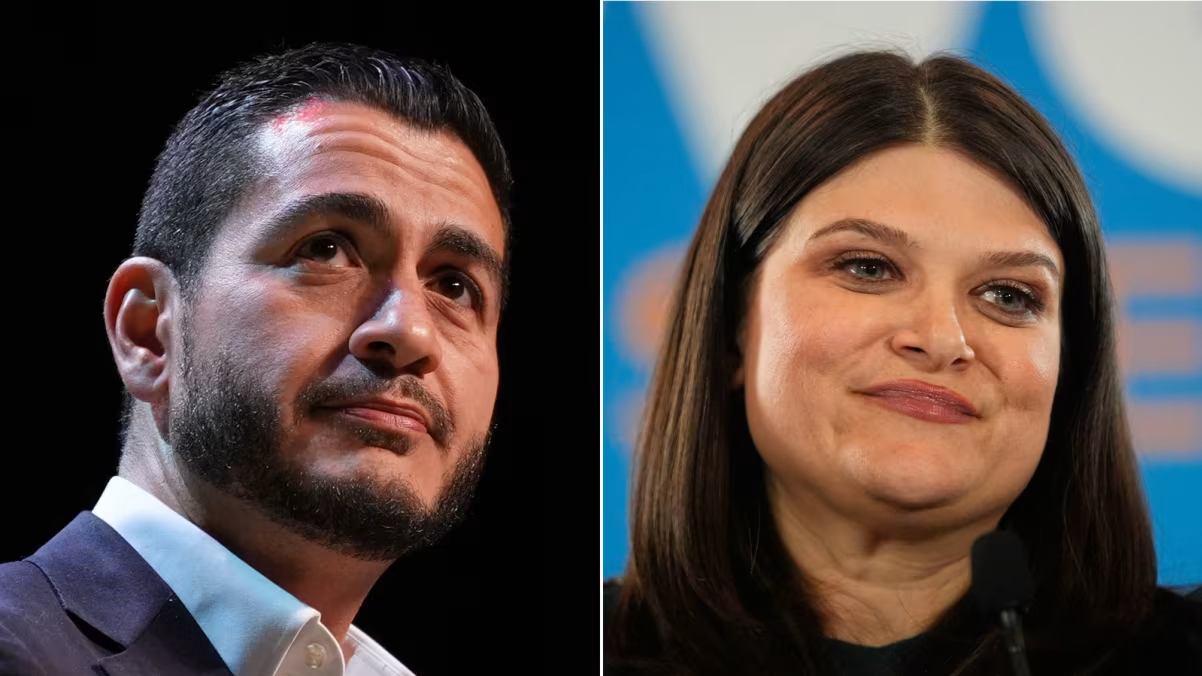
Key Points: Michigan Senate Race
- Michigan Senate race Democratic primary remains too close to call between El-Sayed and Stevens
- Abdul El-Sayed held a narrow, shrinking lead as of 1:30 a.m. Wednesday
- Republican Mike Rogers ran unopposed, awaiting his eventual opponent
- Wayne County and Dearborn’s mail ballots are shaping the final outcome
Michigan just delivered one of the tightest, most closely watched Democratic primaries of this entire election cycle, and as of early Wednesday morning, nobody knows who actually won yet.
Inside The Michigan Senate Race Nail-Biter
Voters headed to the polls Tuesday to choose a Democratic nominee for Gary Peters’ open Senate seat, and the results are still trickling in.
As of 1:30 a.m., Abdul El-Sayed held a narrow but shrinking lead over Rep. Haley Stevens, according to Bridge Michigan’s live tracking of the race.
Here’s what made this race genuinely competitive throughout election night. El-Sayed dominated in-person and Election Day votes, winning roughly six in ten of those ballots according to CNN’s analysis.
Stevens performed almost as strongly with mail ballots though, meaning the final outcome hinges heavily on which vote type gets counted last in remaining precincts.
Why Wayne County Became The Deciding Battleground
Here’s the county everyone’s watching closest. Wayne County, home to Detroit, represents roughly 30% of the outstanding vote, more than any other county in the state.
Stevens initially held a slight majority there, but her lead steadily shrank as more Election Day votes from Detroit and heavily Arab-American Dearborn continued arriving.
That detail carries real symbolic weight. El-Sayed, who is Egyptian American, has built strong support specifically within Michigan’s Arab American communities throughout his campaign.
Both candidates addressed supporters directly overnight. Stevens told her crowd to “get some sleep” or “some coffee” while awaiting final results, while El-Sayed praised his movement for outperforming expectations despite being heavily outspent.
What This Democratic Split Actually Represents
Here’s the bigger picture beyond just Tuesday night’s numbers. This primary became a genuine proxy battle over the Democratic Party’s direction, establishment moderates against a rising progressive wing.
Stevens rallied support from Washington and Michigan’s Democratic establishment throughout the race, while El-Sayed drew energy from national progressive figures like Sen. Bernie Sanders and Rep. Alexandria Ocasio-Cortez.
A third candidate, state Sen. Mallory McMorrow, also competed in the primary but didn’t factor into the final closing days’ momentum battle between Stevens and El-Sayed.
Whoever emerges victorious will face former Rep. Mike Rogers, who ran completely unopposed in the Republican primary, giving him a head start preparing for the general election.
With Michigan considered a genuine battleground state and control of the Senate hanging in the balance nationally, this race’s final margin, whenever it’s officially called, will shape one of the most closely watched contests heading into November.