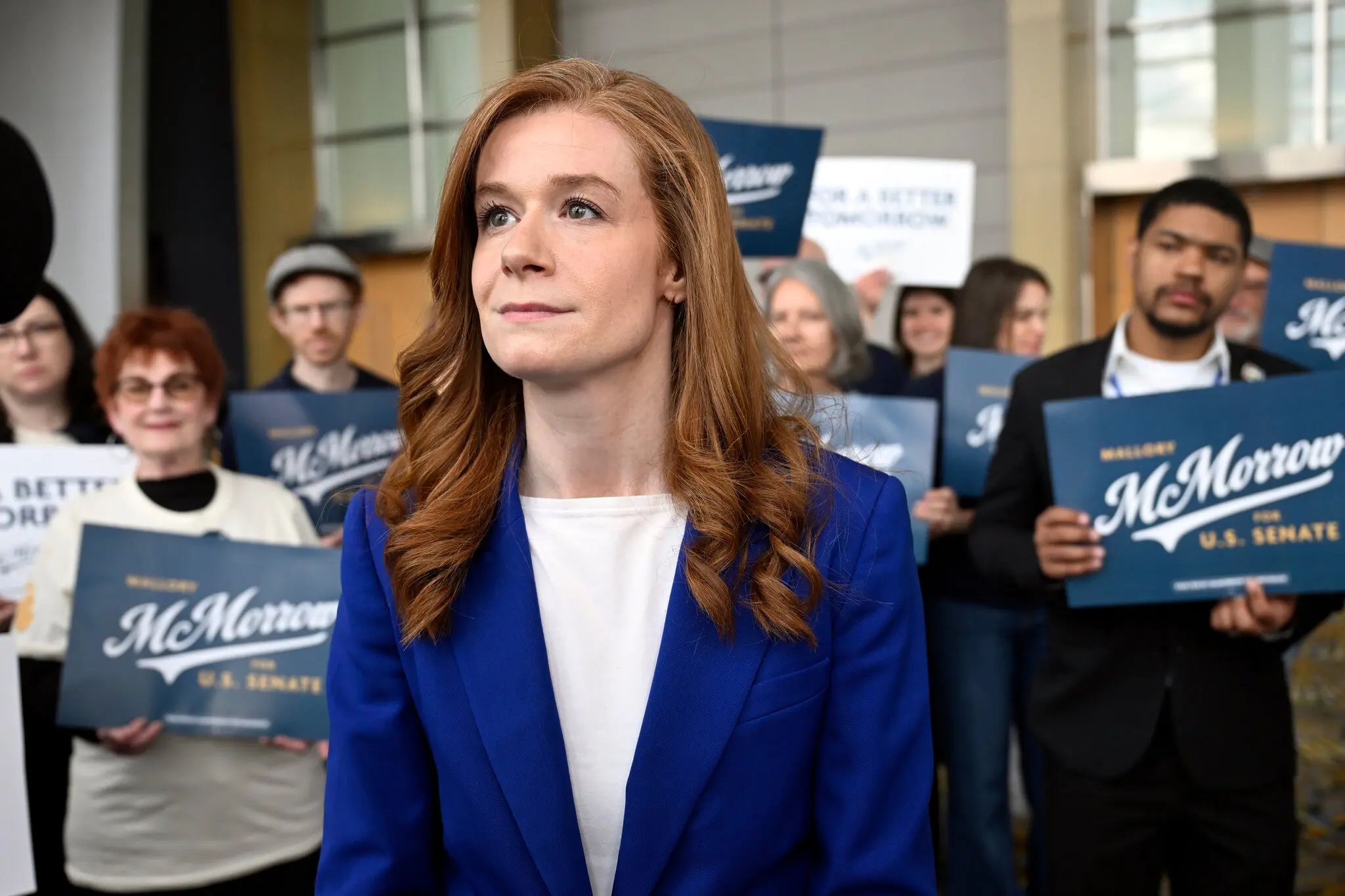
Published by TrenBuzz.com | July 5, 2026 | BREAKING MICHIGAN ELECTION
Key Points at a Glance – Mallory McMorrow Withdrawal
- Mallory McMorrow, Michigan state senator and one of the Democratic Party’s most viral voices of the past four years, suspended her Senate campaign Sunday July 5, 30 days before the August 4 primary.
- The Mallory McMorrow withdrawal sets up a direct showdown between Rep. Haley Stevens, the establishment choice backed by Senate Minority Leader Chuck Schumer, and Abdul El-Sayed, the progressive challenger backed by Bernie Sanders and Alexandria Ocasio-Cortez.
- McMorrow did not endorse either remaining candidate, a deliberate choice that keeps her political capital intact for whatever role she plays next.
- Michigan AG Dana Nessel, a McMorrow ally throughout the campaign, immediately endorsed Haley Stevens after the announcement, calling Stevens “a seasoned fighter.”
- Recent polls show El-Sayed ascending while both Stevens and McMorrow were slipping, making the primary outcome genuinely unpredictable.
- Michigan is one of the must-win Senate seats for Democrats if they want to flip the chamber in November.
Mallory McMorrow Withdrawal: Why the Timing Matters More Than People Realize
McMorrow entered the race as its most nationally visible candidate. Her 2022 Senate floor speech went viral with 90 million views, and her fundraising proved she could compete financially with the field.
But the race exposed a tension that may define Democratic politics for the next decade: being a great communicator and political star does not automatically translate into being the candidate voters in a Midwest swing state primary choose when the stakes are existential.
McMorrow was caught in a lane with no clear geography. Too progressive for establishment money and endorsements. Not progressive enough for Bernie Sanders and the DSA wave. That squeeze is what ended her campaign.
Abdul El-Sayed vs. Haley Stevens: What August 4 Is Really Deciding
McMorrow’s exit ahead of the early August primary doesn’t just reflect her own struggles, but also an emphasis among many Democrats to stop El-Sayed, out of fear he would be a weaker general election candidate against former Rep. Mike Rogers, a Republican.
That fear is real and measurable. El-Sayed trails Rogers by larger margins than Stevens does in head-to-head polling. The establishment argument is electability. The progressive counter-argument is that every “safe” establishment candidate this cycle, from Washington to Iowa to Colorado, has been losing to fired-up progressives who actually turn out voters.
McMorrow’s Silence on Endorsements Is Its Own Statement
McMorrow’s exit narrowed the field to a contest between Rep. Haley Stevens, the establishment candidate, and Abdul El-Sayed, who is popular on the party’s left wing.
By declining to endorse, McMorrow preserved every option. She could endorse Stevens quietly and help consolidate the moderate vote. She could wait for El-Sayed to reach out with a specific platform concession. Or she could stay neutral and let the primary play out while positioning herself for a future run, whether that is 2028 or beyond.
The UAW backed El-Sayed. Schumer backed Stevens. Whitmer has not picked anyone. Michigan has 30 days to decide which version of the Democratic Party it wants representing it in November against the Republican candidate who almost beat Elissa Slotkin just two years ago.