Published by TrenBuzz.com | May 25, 2026
Key Points at a Glance – Trump’s Citizenship Lists Order Actually Does
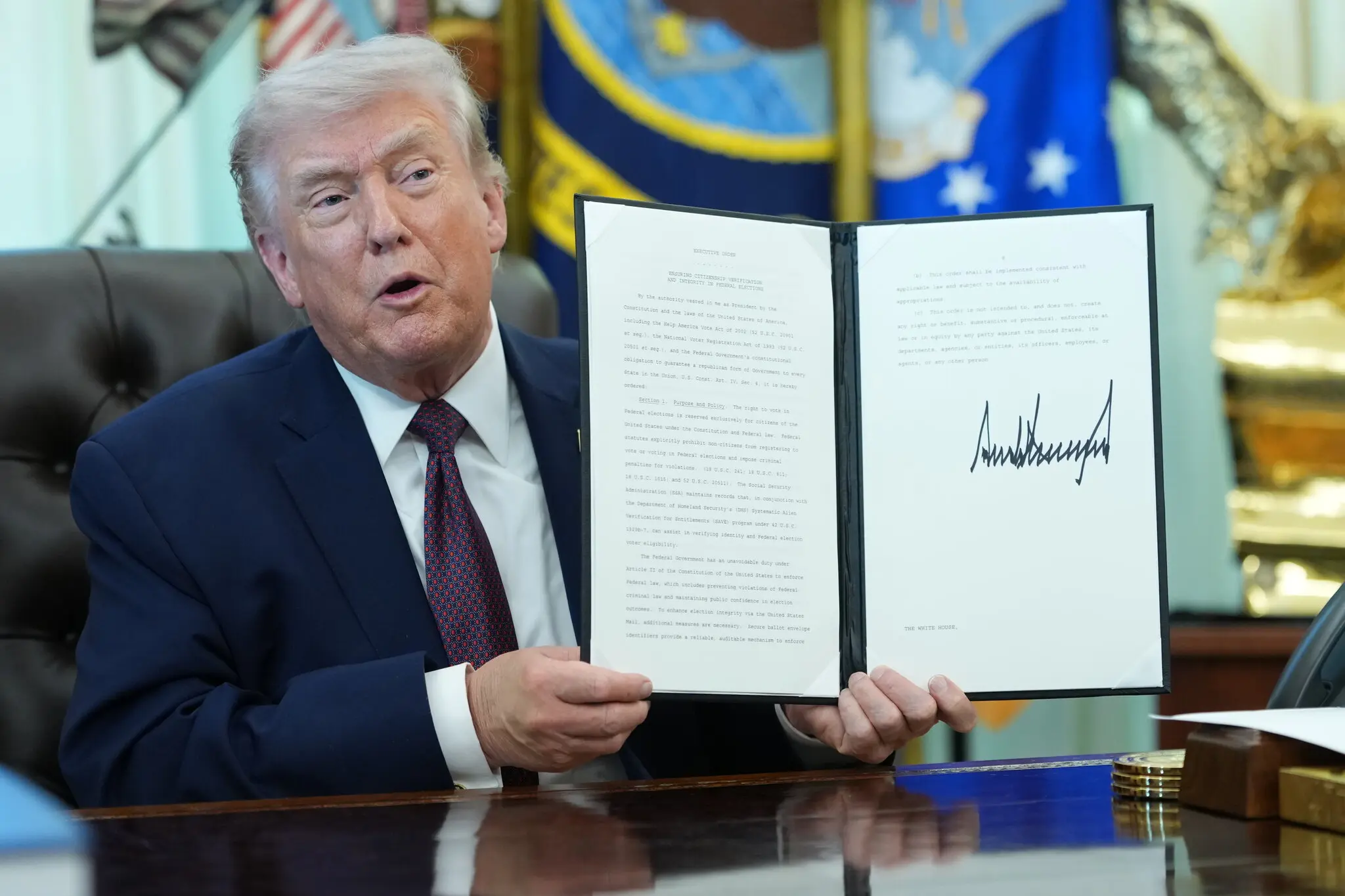
- Trump signed the “Ensuring Citizenship Verification and Integrity in Federal Elections” executive order on March 31, 2026.
- The order directs DHS/USCIS and the SSA to compile state-by-state “citizenship lists” drawn from passport records, naturalization files, Social Security data, and DMV records.
- USPS would be restricted to mailing ballots only to people on the official citizenship lists.
- Lists must be updated and sent to states at least 60 days before each federal election.
- Experts say the lists are not feasible — the federal government doesn’t have reliable data to compile them accurately.
- Errors could disenfranchise eligible citizens who don’t appear in federal databases.
- Nearly two dozen states have filed lawsuits to block the order.
- Timing experts warn implementation cannot happen before November 2026 — even without court blocks.
He called it “foolproof.” The experts who study federal databases and election law called it something else – a car crash meeting a train wreck, on the eve of the biggest midterm election in a generation.
President Donald Trump signed an executive order Tuesday that aims to create federal lists of citizens and ask the U.S. Postal Service to transmit mail ballots to only those people. Trump told reporters it was “That’s a big deal,” adding “I think this will help a lot with elections.”
What the Citizenship Lists Are — And Where the Data Comes From
The order asks the Department of Homeland Security to create “state citizenship lists” from federal citizenship and naturalization records, Social Security records, and other federal databases. Those lists would then be sent to the states to verify their voter rolls.
To create the “state citizenship list,” DHS through USCIS and the Social Security Administration must work together to compile, before each federal election, a list of individuals in each state who are confirmed to be US citizens.
The Mail Ballot Impact — What Changes for Voters
The Order directs the Postmaster General to initiate rulemaking to require all mail-in and absentee ballots transmitted by USPS to be placed in secure ballot envelopes. States are to send USPS lists of voters who will receive mail ballots and voters are prohibited from getting such ballots unless they’re on the USPS-approved list.
Why Experts Say It Can’t Work — The Data Problem
“They are trying to bring together hundreds of millions, if not billions, of different records from a variety of agencies that may have them formatted in a variety of ways and match them all together automatically,” said one expert. The Brennan Center for Justice warned: “Our government’s citizenship lists are incomplete and inaccurate. The United States Postal Service is overburdened and inadequate. This combines a car crash with a train wreck.”
Timing experts note “the timing here makes this virtually impossible to implement in time for November’s elections. It seems highly unlikely any of this could be implemented for 2026, even if it were not blocked by courts.”
What Comes Next — Courts and Congress
The order comes as Trump pressures Republicans in Congress to pass the SAVE America Act, a sweeping election overhaul imposing new voter identification and documentation requirements. That bill is stalled in the Senate due to Democratic opposition and the legislative filibuster.
With November 2026 just months away, the citizenship lists may never materialize in time. But the executive order has already done something no database can measure. It has made millions of voters uncertain about whether their ballot will be counted at all.
Disclaimer: This article is for general informational and news reporting purposes only. All executive order details, expert assessments, and legal challenges are sourced from NPR, NBC News, Nextgov/FCW, the Institute for Responsive Government, and the White House official fact sheet as of March 31–April 2026. Courts have not yet issued a final ruling blocking the order. TrenBuzz.com does not provide legal advice. Readers are encouraged to follow official election authorities and credible news sources for the latest updates on federal election policy.