Key Points: David Rubenstein Buys Blue Sculpture
- David Rubenstein buys Blue sculpture for more than $2 million after its abrupt Kennedy Center removal
- The 24-foot Joel Shapiro artwork will move to the National Gallery, where Rubenstein chairs the board
- A former curator says the removal came from Trump wanting “a new collection” at the reopened center
- This purchase lands amid an ongoing legal fight over the center’s renovation and Trump’s name
Here’s the detail that turns this story from a simple art purchase into something more pointed: the man ousted from one institution just bought the artwork removed from it, and is placing it somewhere he still runs the show.
What David Rubenstein Buying Blue Sculpture Actually Involved
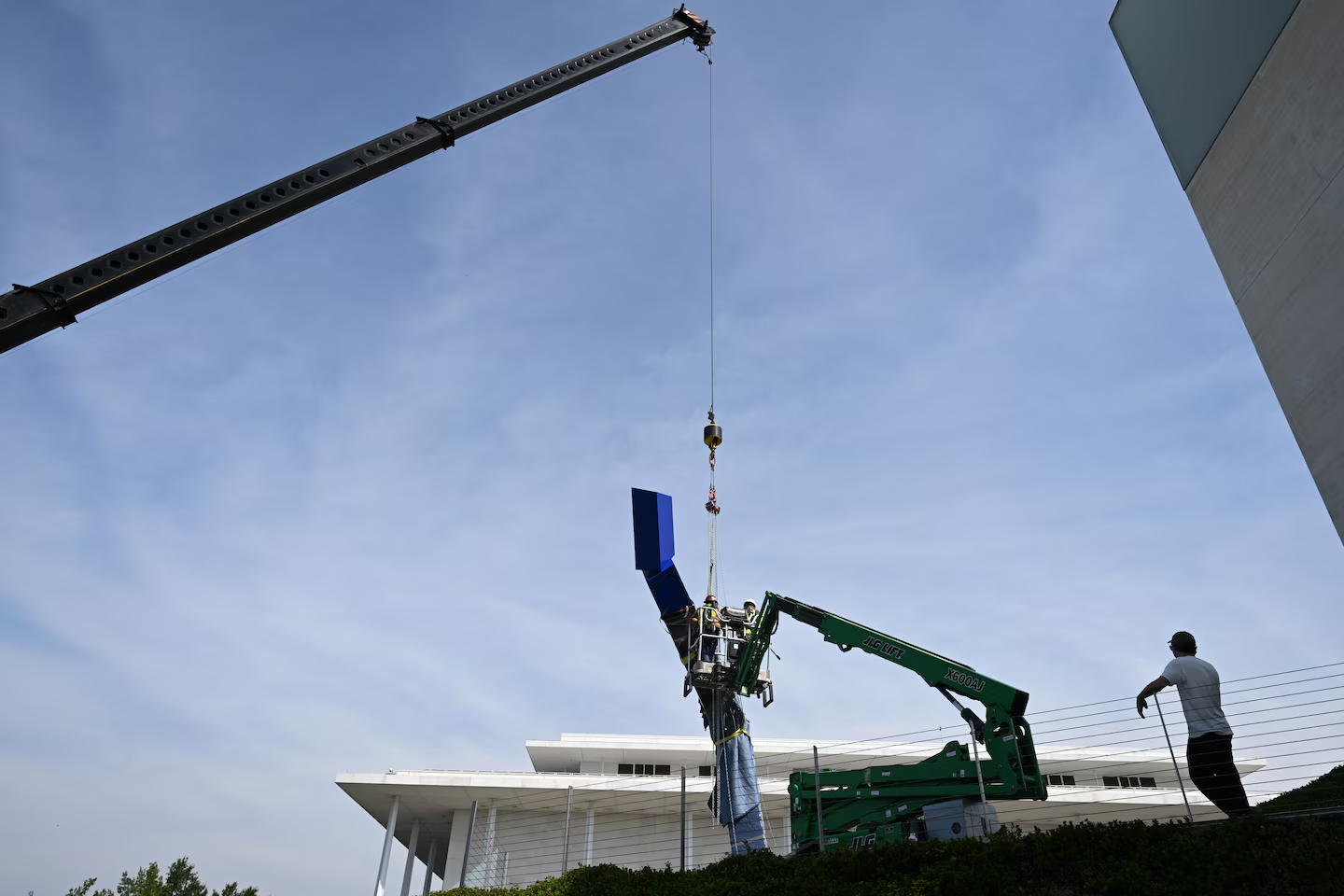
Billionaire philanthropist David Rubenstein purchased “Blue,” the 24-foot abstract sculpture removed from the Kennedy Center’s Reach campus, for more than $2 million.
Here’s who he bought it from specifically. The sculpture reverted to the Joel Shapiro and Ellen Phelan Foundation, run by the artist’s daughter Ivy Shapiro, once it was taken down. Rubenstein purchased it directly from that foundation.
His plan for the piece carries real symbolic weight. He intends to eventually display “Blue” in the Sculpture Garden of the National Gallery of Art, where Rubenstein currently serves as chairman of the board of trustees.
Why This Sculpture Got Removed In The First Place
Here’s the backstory explaining why “Blue” ended up available for purchase at all. The bright cobalt sculpture had stood outside the Kennedy Center’s Reach expansion since 2019, overlooking the Potomac River exactly as artist Joel Shapiro intended.
It was dismantled September 2 without any advance public notice, catching local patrons and arts observers off guard entirely.
Here’s the specific reasoning behind that removal, according to reporting from a former Kennedy Center curator. Josef Palermo told the Washington Post that former center president Richard Grenell instructed him to remove the outdoor artwork because “Trump wanted a new collection” once the center reopened.
Here’s The Institutional Chess Move Nobody’s Named Directly
This is where the story becomes genuinely interesting beyond a simple purchase, and where most coverage stopped at reporting the transaction rather than its deeper implication. Rubenstein didn’t just buy a sculpture he liked. He relocated it to an institution where his own authority remains fully intact.
Rubenstein chaired the Kennedy Center’s board until Trump’s 2025 takeover forced him out entirely. That ouster stripped him of institutional control over a space he’d helped fund and shape for years.
By purchasing “Blue” and moving it specifically to the National Gallery, where he still chairs the board of trustees, Rubenstein effectively relocated a piece of the Kennedy Center’s artistic legacy to a space still under his own governance.
That’s not simply preserving art. It’s a quiet but unmistakable statement about which institution actually retains the artistic vision Rubenstein spent years championing, and which one lost it during a politically driven takeover.
Rubenstein’s Broader Pattern Of Cultural Philanthropy
Here’s context showing this purchase fits a long-established giving pattern rather than a one-off gesture. Rubenstein has donated more than $200 million to Washington cultural and historical institutions throughout his philanthropic career.
That giving history includes $111 million to the Kennedy Center itself, $21 million toward displaying a copy of the Magna Carta at the National Archives, $35 million for repairs to the Lincoln, Washington, and Jefferson memorials, and $22 million to the National Zoo.
Given that extensive track record, this $2 million sculpture purchase represents a relatively modest financial commitment for Rubenstein personally, even as its symbolic weight within the ongoing Kennedy Center dispute runs considerably deeper.
Why This Purchase Lands During An Active Legal Fight
Here’s timing context that adds real significance to this specific week. The Kennedy Center is currently undergoing a planned two-year, $250 million renovation championed by Trump, one that’s become entangled in active litigation.
A federal judge has already temporarily blocked the center’s planned closure for that renovation and separately rejected the board’s decision to add Trump’s name to the institution’s official title.
Center officials are now actively working to convince that same judge to allow both the closure and the presidential name inscription, citing Trump’s role in securing congressional funding for the renovation project.
Adding another layer of urgency, center officials intensified their push for closure this past weekend, publicizing storm damage that created a hole in the building’s Grand Foyer ceiling as evidence supporting their case.
What This Means For “Blue” Going Forward
Here’s what remains genuinely uncertain about this sculpture’s next chapter. The National Gallery of Art has not announced any specific timeline for when “Blue” will actually go on public display following Rubenstein’s purchase.
With the Kennedy Center‘s own legal battles over closure, renovation, and naming rights still unresolved in federal court, and Rubenstein’s sculpture purchase adding a pointed cultural counter-narrative to that same institutional conflict, this story sits at the genuine intersection of art preservation and ongoing political maneuvering over one of Washington’s most prominent cultural institutions.