🔴 LIVE UPDATES — Last Updated: April 19, 2026 | 08:30 AM ET
Twenty percent of the world’s oil flows through a single narrow waterway — and right now, Iran controls it. With the ceasefire clock expiring, the world holds its breath.
Key Points at a Glance
- The two-week U.S.–Iran ceasefire agreed on April 8, 2026 is approaching its expiry — with no permanent deal in sight.
- Iran has closed the Strait of Hormuz again as of April 18, 2026, reversing a brief reopening announced just 24 hours earlier.
- Iran’s IRGC declared the strait has returned to its “previous state” — under strict military control — blaming continued U.S. port blockades.
- 230 oil tankers remain stranded inside the Persian Gulf, with roughly 20% of the world’s daily oil supply choked off.
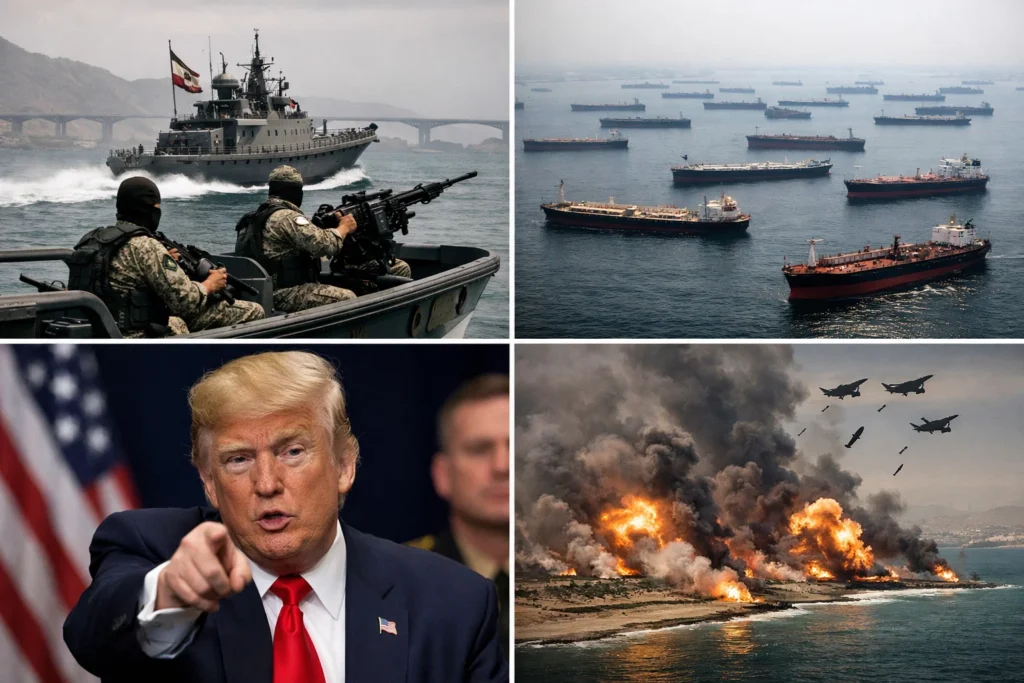
- Trump warned: “The blockade remains. If no deal — we start dropping bombs again.” A second round of talks in Islamabad may resume Monday.
- Oil prices have swung violently — crashing 11% on the brief reopening, then surging again after the strait closed once more.
The world woke up this Sunday, April 19, 2026, staring down one of the most dangerous diplomatic clocks of the decade. The two-week U.S.–Iran ceasefire — brokered by Pakistan on April 8 and hailed by Trump as “a big day for world peace” — is now teetering on the edge of total collapse, with the Strait of Hormuz closed again and both sides trading accusations of bad faith.
Iran’s state TV confirmed early Saturday morning that the Strait has “returned to its previous state” — fully under the Iranian military’s strict control. The IRGC accused the United States of continuing what it called “piracy and maritime robbery” by maintaining its naval blockade of Iranian ports, even as Tehran had briefly reopened the waterway on Friday.
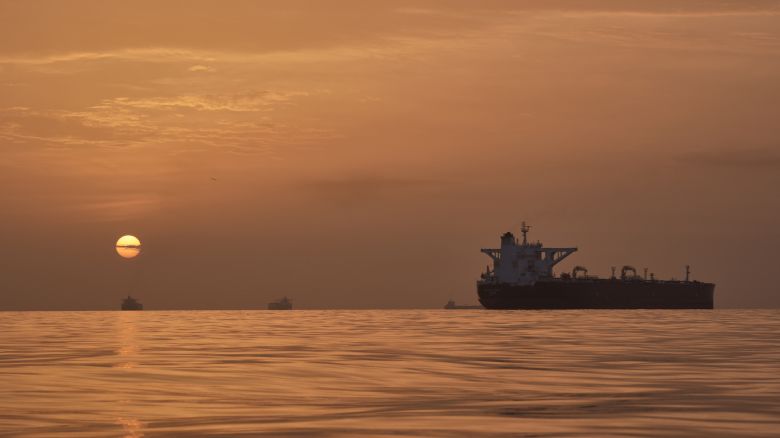
For the global economy, the consequences are immediate and severe. The strait carries roughly 20% of the world’s daily oil and gas supply — and right now, 230 fully loaded oil tankers sit stranded inside the Persian Gulf, unable to move.
230
Oil tankers stranded in the Persian Gulf
20%
Of world’s daily oil supply blocked at the strait
~$90
Brent crude per barrel after 11% price rollercoaster
How We Got Here: A War, a Ceasefire, and a Broken Promise
On February 28, 2026, the United States and Israel launched massive joint airstrikes against Iran, killing its Supreme Leader and decimating key military installations. Iran hit back with missile and drone barrages against U.S. bases and regional allies — and promptly closed the Strait of Hormuz, triggering the worst oil supply shock in recorded history.
Weeks of threats, counter-threats, and chaotic diplomacy followed. Trump at various points declared the war “complete,” demanded NATO and China force the strait open, and threatened to “destroy a whole civilization” unless Iran agreed to a deal by his April 7 deadline.
Pakistan’s mediation ultimately produced the April 8 two-week ceasefire — brokered between U.S. Vice President JD Vance, special envoy Steve Witkoff, and Iranian Foreign Minister Abbas Araghchi. But the ink was barely dry before both sides began accusing each other of violations.
“The blockade is going to remain. Maybe I won’t extend it — and unfortunately we’ll have to start dropping bombs again.”
— President Donald Trump, aboard Air Force One, April 18, 2026
The 24-Hour Whiplash: Open, Closed, and Open Again — Then Shut
Friday, April 17 brought a fleeting moment of global relief. Iran’s Foreign Minister Araghchi announced the Strait of Hormuz was “completely open” to commercial vessels for the duration of a newly-agreed 10-day Israel-Lebanon ceasefire. Oil prices crashed 11% instantly. Stock markets rallied. Traders exhaled.
But within hours, ship-tracking firm Kpler captured video of tankers attempting to exit the strait — then turning back. Iran’s IRGC-linked parliament speaker Mohammad Bagher Ghalibaf warned that ships linked to “hostile nations” would be blocked, and that the strait would close if the U.S. blockade continued. It did. And so did the strait.
By Saturday morning, Iranian state TV confirmed the strait had returned to its “previous state.” The 24-hour window of hope had slammed shut. And with the two-week ceasefire set to expire imminently, the world is once again staring into the abyss.
What Each Side Wants — and Why a Deal Remains Elusive
The U.S. demands are sweeping: a complete end to Iran’s nuclear program, missile limits, a fully reopened Strait of Hormuz, and restrictions on Iran’s support for proxy groups like Hezbollah. In exchange, Washington has signaled willingness to ease sanctions and release frozen Iranian assets — but only after Iran acts first.
Iran’s counter-demands are equally firm: an end to all U.S.-Israeli strikes, security guarantees against future attacks, war reparations, and international recognition of Iranian sovereignty over the Strait of Hormuz — a non-starter for Washington. The Islamabad talks between Vance and Ghalibaf collapsed on April 12 without a breakthrough.
A second round of face-to-face talks in Islamabad is now expected as early as Monday, April 20. U.S. officials have described the nuclear program as the central sticking point. The humanitarian cost, meanwhile, continues to mount — aid organizations warn of famine-like conditions in vulnerable nations cut off from Gulf shipping routes.
“You can’t just flip a switch and things start flowing. The ongoing impact of this crisis is going to continue to be felt for some weeks to come.”
— Ciarán Donnelly, International Rescue Committee, April 2026
What Happens Next — The World Is Watching Every Hour
As the ceasefire deadline draws closer, three scenarios are now on the table. First: a last-minute deal in Islamabad that produces a phased framework — buying weeks of breathing room and stabilizing oil markets. Second: a ceasefire extension with the Hormuz status quo unchanged, kicking the crisis down the road. Third: a full breakdown — and a return to bombs.
Trump has made clear the U.S. naval blockade of Iranian ports stays regardless of what happens — a position Tehran says makes any genuine reopening of the strait impossible. It is a classic standoff, with global energy markets, regional stability, and millions of civilian lives hanging in the balance.
One thing is certain as of this Sunday morning: the Strait of Hormuz is closed, the ceasefire is expiring, and the world’s most consequential diplomatic crisis of 2026 has entered its most dangerous hours yet. TrenBuzz will continue updating this story as events develop.
Disclaimer: This article is published for informational and editorial purposes only, based on publicly available news reports and official statements as of April 19, 2026. TrenBuzz.com does not claim affiliation with any government, military, or organization mentioned herein. This is a rapidly evolving situation — all details are subject to change. Readers are encouraged to consult multiple credible news sources for the latest developments.