Published: April 4, 2026 | Category: U.S. Politics & Defense,Trending | TrenBuzz
🔑 Key Points
- Defense Secretary Pete Hegseth forced out Army Chief of Staff Gen. Randy George — effective immediately — amid the ongoing U.S.-Israel war with Iran.
- Two additional Army generals, Gen. David Hodne and Maj. Gen. William Green Jr., were also removed the same day.
- Reports indicate the firings stem from clashes over military promotions, with concerns about racial and gender bias in Hegseth’s intervention.
- Hegseth has now removed more than a dozen senior military leaders since taking office — an unprecedented pace of wartime purges.
- A loyalist and former Hegseth military aide, Gen. Christopher LaNeve, has been tapped as acting Army chief of staff.
There’s a storm brewing inside the Pentagon — and it’s showing no signs of slowing down. On April 2, 2026, Defense Secretary Pete Hegseth made yet another jaw-dropping move by forcing out the U.S. Army’s highest-ranking officer, Gen. Randy George, in the middle of an active war. For anyone keeping score, this isn’t an isolated incident. It’s part of a broader, deeply troubling pattern.
Three Generals Out in a Single Day
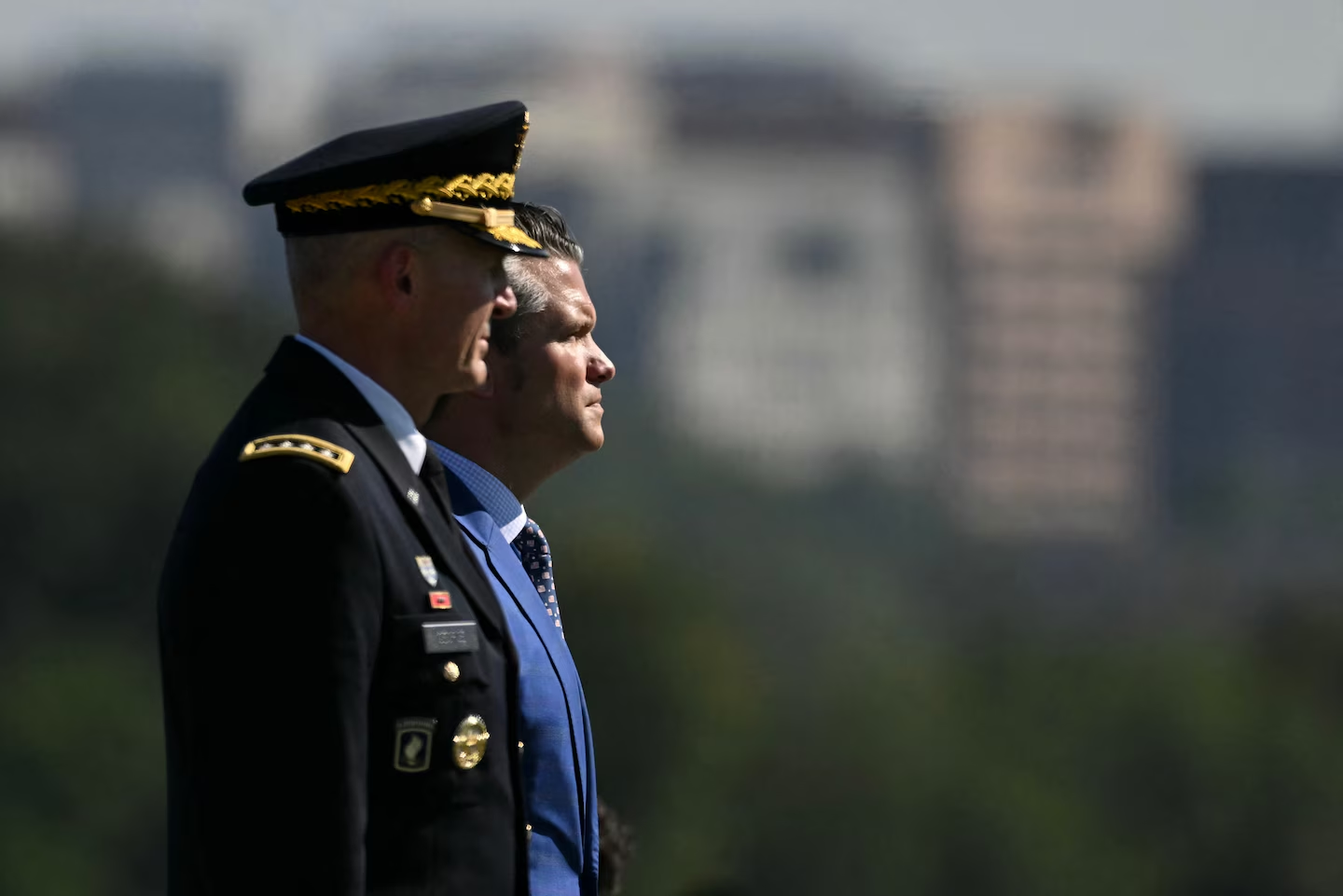
Defense Secretary Pete Hegseth asked U.S. Army Chief of Staff Gen. Randy George to step down and retire effective immediately — a stunning move that cuts short George’s tenure well before the end of his typical four-year term. And he didn’t stop there.
Hegseth also removed Gen. David Horne, who had been overseeing the Army’s Transformation and Training Command, and Maj. Gen. William Green, the Army chief of chaplains. Three senior leaders gone in a single afternoon, with no official explanation offered to the public.
Gen. Christopher LaNeve, a former Hegseth military aide, is expected to serve as acting chief of staff — a move that critics say is part of a deliberate effort to install loyalists at the top of the military chain of command.
What Triggered the Firing?
Behind closed doors, the tension had been building for weeks. The New York Times reported the removal was tied to clashes between George and Hegseth over the latter’s decision to single out and block the promotion of four Army officers on a list of 29 personnel. Most of the officers on the list are white men, while two blocked by Hegseth are Black, and the other two are women, leading senior military officials to question whether racial or gender bias was at play.
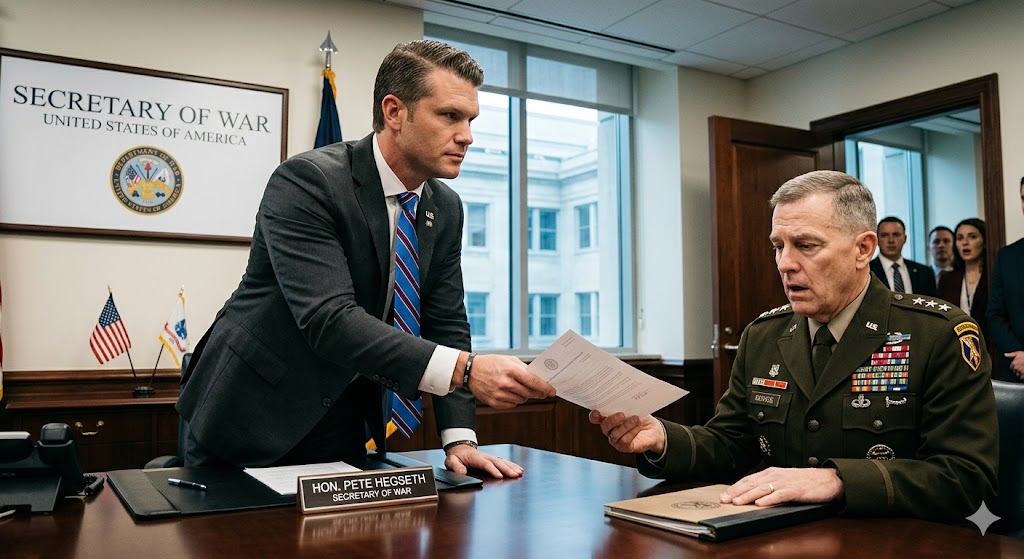
When George tried to address this directly, he asked Hegseth for a meeting to discuss the matter two weeks ago — and Hegseth refused. Not long after, George got a phone call informing him his career was over.
Nine U.S. officials familiar with the matter said Hegseth had either blocked or delayed promotions for more than a dozen Black and female senior officers across all four branches of the military. One official put it bluntly: “There is not a single service that has been immune to this level of involvement by Hegseth.”
A Pattern That Should Alarm Everyone
This isn’t a one-off. Hegseth has now removed more than a dozen senior military leaders across multiple branches, including Chairman of the Joint Chiefs Gen. Charles Q. Brown Jr., Chief of Naval Operations Adm. Lisa Franchetti, and Air Force Vice Chief of Staff Gen. James Slife — marking an unprecedented turnover at the highest levels of the armed forces.
The New York Times reported in November that Hegseth had fired or sidelined dozens of officials “with little explanation,” creating “an atmosphere of anxiety and mistrust” within the department. That atmosphere hasn’t lifted. If anything, it’s gotten worse.
What makes all of this even more staggering is the timing. The removal of multiple senior officers marks one of the most significant wartime leadership shakeups during active U.S. combat operations in recent years — happening while the U.S.-Israel war with Iran is still raging with no clear exit strategy in sight.
Who’s Raising the Alarm?
About a year ago, five former defense secretaries, including retired Gen. Jim Mattis, condemned the pattern of firings as “reckless.” Their joint letter, addressed to Congress, asked the House and Senate to hold immediate hearings to assess the national security implications of the dismissals. Those calls went unanswered. GOP leaders on Capitol Hill have scheduled no such hearings.
Meanwhile, the Pentagon intends to replace George with a leader aligned with Hegseth and President Trump’s vision for the Army — though what that vision looks like on a real battlefield remains deeply unclear.
The Bottom Line
What’s unfolding at the Pentagon isn’t just political drama — it’s a genuine national security concern. Firing battle-tested generals during an active war, blocking promotions based on alleged bias, and replacing experienced officers with personal loyalists is a recipe that history has rarely rewarded. The question Americans should be asking right now is simple: who exactly is minding the store?
Keep following TrenBuzz for real-time updates on the Pentagon shake-up and the ongoing Iran conflict.