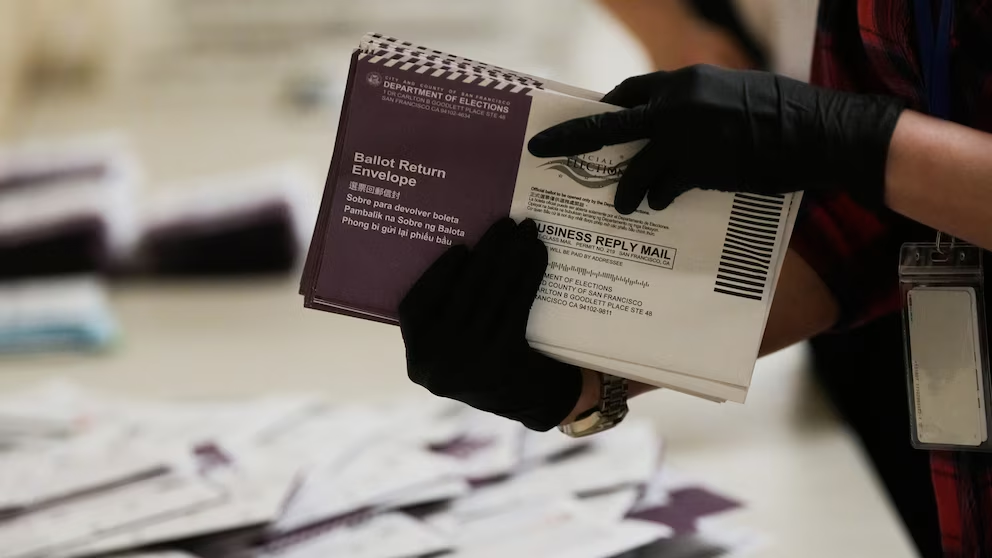
Key Points: Trump USPS Ballot Changes
- Trump administration’s USPS ballot changes tied to March 2026 executive order
- A federal appeals court just paused a block, letting the rule move forward
- Postmaster General says USPS won’t deliver ballots without state voter data
- Midterms are months away, and the legal fight is far from over
The rules around your mail ballot could change before you even notice. That’s the reality millions of voters are facing right now.
It started in March, when President Trump signed an executive order pushing federal agencies, including USPS, to overhaul how mail ballots get handled nationwide.
Under the proposed rule, USPS would only deliver ballots from voters listed on state rolls submitted to the federal government. States that don’t comply could see their ballots refused entirely.
Postmaster General David Steiner confirmed as much to senators in June. That admission turned a technical policy debate into a real controversy overnight.
Here’s where it gets messy. A federal judge blocked major parts of the plan in June, ruling that USPS has no legal authority handed down by Congress to control mail voting this way.
Then came a twist. On July 17, a federal appeals court paused that block, letting USPS keep moving forward while the broader legal fight continues.
That doesn’t mean the rule is settled law. It means two things are happening at once: USPS is finishing its rulemaking process, and courts are still deciding whether any of this is even constitutional.
Election law experts note something important. States, not the postal service, have always run elections. That’s exactly the argument at the center of ongoing lawsuits from the NAACP and several state officials.
With the 2026 midterms approaching fast, the timing couldn’t be tighter. Whatever happens next in court could reshape how tens of millions of Americans cast their mail ballots this November.
For now, the fight over mail ballots isn’t over. It’s just entering its most consequential phase yet.