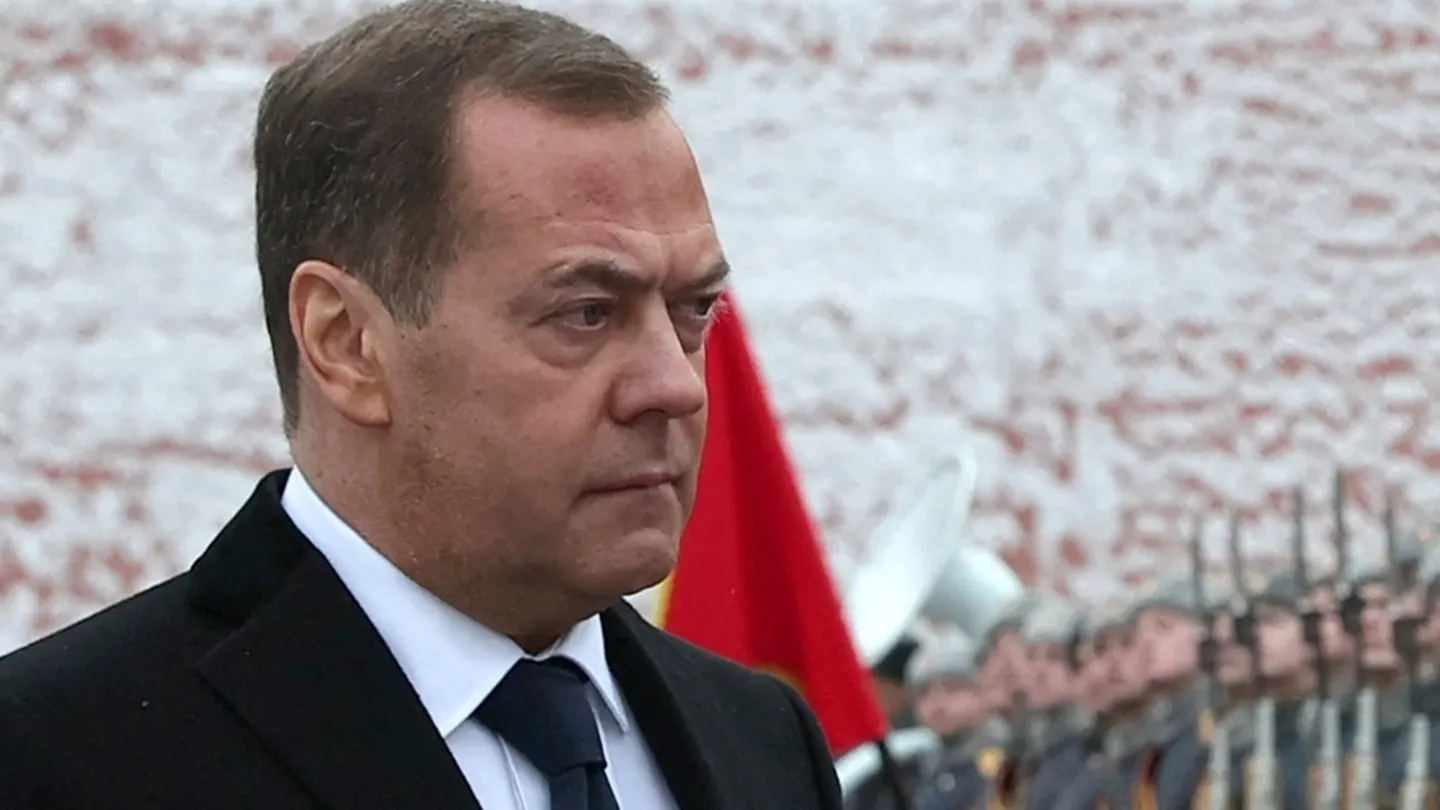
Key Points: Russian Nuclear Weapons Threat
- On Monday, November 23, 2026, Dmitry Medvedev, deputy chairman of Russia’s Security Council, wrote that Ukraine and NATO countries have “already created situations” in which Russia considers a nuclear strike.
- His article, in the Moscow Journal of International Law and excerpted by the state outlet Tass, also raised the idea of a “preventive nuclear attack” in some cases.
- It came four days after Presidents Trump, Putin and Xi Jinping signed a declaration in Shenzhen that a nuclear war cannot be won and must never be fought.
- Medvedev said Russia’s doctrine does not explicitly allow preventive strikes and that any decision rests with Putin alone.
- No official NATO or White House response to the article had been reported at the time of writing.
Nuclear headlines travel fast, and they are easy to misread. This one deserves a calm, careful look.
Here is what was said, who said it, and a simple way to judge how much weight to give it.
What Medvedev Said About Russian Nuclear Weapons
Medvedev, a former president who is now one of Putin’s most visible voices, wrote that Russia has not used nuclear weapons because events have not created “a state of direct necessity.” He said Ukraine, NATO members and some other Western countries have already built situations in which Russia considers the possibility.
He argued that a massive non nuclear attack that causes catastrophe could make a preventive nuclear strike possible. He also said secret or hidden Western supplies of nuclear weapons to Kyiv would provoke a “legitimate preventive nuclear attack.”
He added that the “Kyiv regime and its sponsors” must not have “dangerous illusions.” He said the final decision belongs to Putin.
The Legal Argument Inside the Article
Medvedev cited a 1996 opinion from the International Court of Justice. He argued that international law does not flatly ban nuclear use when a state’s survival is at stake.
He also criticized NATO’s nuclear sharing policy and Germany’s role in it. He said that reading of a major arms treaty is not universally accepted.
Western governments have long said NATO’s arrangements fit within that treaty. This is Medvedev’s argument, not a settled fact.
Four Days After Shenzhen
On November 19, Trump, Putin and Xi met in Shenzhen, China. They agreed to pursue talks on reducing nuclear risks and declared that a nuclear war cannot be won and must never be fought.
The summit produced no major arms cut. Four days later, Medvedev’s article appeared.
That gap is why the story drew so much attention. The two messages do not cancel each other out, but they point in different directions.
How We Got Here With NATO
This is not the first nuclear warning this fall. In late September, Russian embassies in London and Dublin posted that NATO was planning to isolate Kaliningrad, Russia’s territory between Poland and Lithuania.
One post said Russia would be ready to use “all its arsenal, including nuclear weapons” to defend its territory. Reuters also reported a similar message in a diplomatic note.
NATO Secretary General Mark Rutte replied, “We are a defensive alliance. And stop the nuclear threats.” He said no NATO exercise threatens Russian territory.
A Ladder for Reading Nuclear Headlines: Our Reading
Here is a view you will not find in most coverage. Not every nuclear statement carries the same weight, and readers can sort them like rungs on a ladder.
The bottom rung is a social media post or embassy message. The next rung is a signed article by a senior official, such as Medvedev’s.
Higher up are a formal change to doctrine, a troop or missile move, or a statement from Putin himself. The top rung is an actual order.
Medvedev’s article sits on the second rung. It is an opinion piece in a legal journal, and by his own words the decision is Putin’s. Medvedev has raised the idea of nuclear strikes many times since 2022, according to Newsweek.
That is our analysis, not a reported finding. But it offers a calm way to judge a scary headline.
Three Questions to Ask Before You Worry
- Who said it? A deputy security council chairman is not the same as the president.
- Where was it said? An article or post is lower than a decree or an order.
- What moved? Look for troops, missiles or formal changes, not only words.
If the answers are “an adviser,” “an article” and “nothing yet,” the statement is a signal, not a step. It still matters, because words can shape the mood of talks and of allies.
What NATO Countries Are Doing
The pressure is not only rhetorical. In October, Lithuania passed the first of three votes needed to repeal its constitutional ban on hosting nuclear weapons. The final vote is expected in January 2027.
Finland took a similar step earlier this year. Both countries say they have no immediate plans to host nuclear weapons.
Kremlin spokesman Dmitry Peskov has said nearby NATO military buildup cannot be seen as anything but a step toward more tension. NATO’s top commander, Gen. Alexus Grynkewich, said in October that NATO has “no need and incentive to escalate.”
What It Means for Everyday Readers
Nuclear rhetoric rises when talks are near and when wars drag on. The Ukraine war is now nearly five years old.
For most people, nothing changes in daily life because of an article. The real signals to watch are policy, diplomacy and any movement of forces.
What to Watch Next
- A NATO or White House reply: Whether officials answer Medvedev publicly.
- Follow up from the Kremlin: Whether Peskov or Putin repeats or softens the language.
- Shenzhen talks: Whether the promised nuclear risk talks get a date.
- Lithuania’s January vote: The final step on its nuclear weapons ban.
- Ukraine battlefield news: Whether any major strike changes the mood.
For now, the article is a warning on paper, and the Shenzhen declaration is a promise on paper. The next weeks will show which message carries more weight.