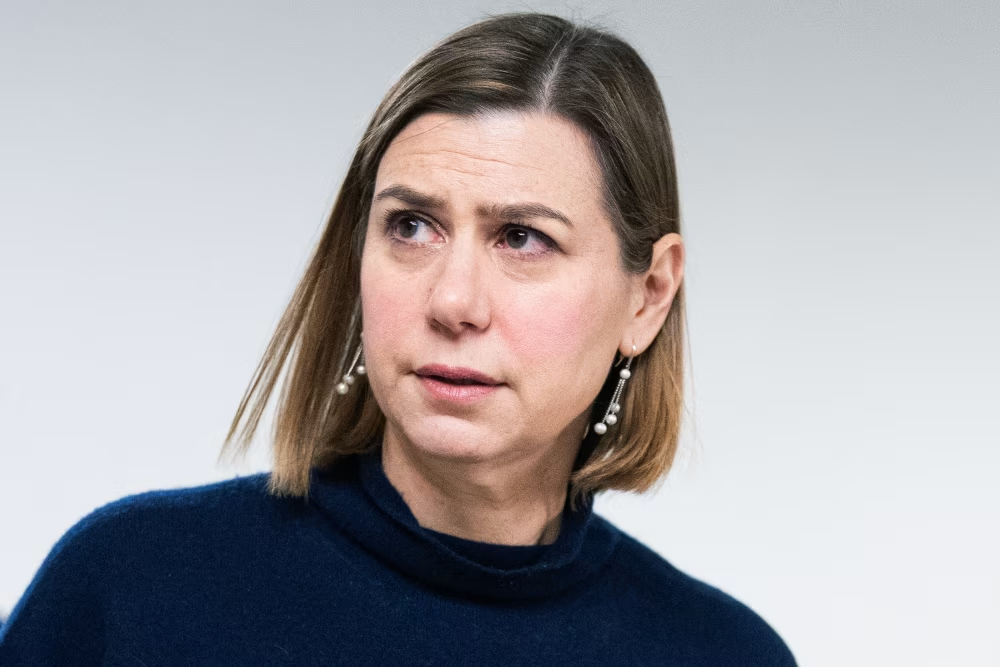
Key Points: DOJ Probe Elissa Slotkin
- Sen. Elissa Slotkin of Michigan is at the center of a new fight with the Justice Department over remarks she made on October 13 at a University of Chicago event.
- President Trump ordered the DOJ on November 8 to look into what he called a “criminal act.” The department has not confirmed that a formal investigation exists.
- Aaron Reitz, the U.S. Attorney in southern Texas, posted a letter suggesting her words could amount to a civil rights crime. Slotkin answered on November 18 and demanded he withdraw it.
- Reports say Attorney General Todd Blanche has said her words alone were “absolutely not a crime.”
- This is not her first clash with the DOJ. A federal grand jury earlier refused to indict her and five other Democrats over a separate video.
One sentence, said in a lecture hall, has now reached the president’s social media feed, a federal prosecutor’s letter and the desk of the attorney general.
The DOJ probe Elissa Slotkin rhetoric story is still unfolding, so here is what is known and what is not.
What Elissa Slotkin Actually Said
On October 13, Slotkin spoke at a University of Chicago discussion about how Democrats might use congressional oversight if they win power. She said she wanted a “deterrence message” for people thinking of joining the Trump administration.
She suggested young people could face “a ton of problems” if they took part in wrongdoing. A student who first shared the remarks later filed an ethics complaint with the Senate.
On Monday, Slotkin added a clarification. People who break the law or misuse taxpayer money should be held accountable, she said, and “if you’re not violating the law, no problem.”
Her critics hear a warning aimed at young Republicans. Her defenders hear a standard promise of oversight.
How the DOJ Probe Elissa Slotkin Rhetoric Fight Escalated
On Saturday, November 8, Trump wrote on Truth Social that he was ordering the Justice Department to look into this “criminal act, immediately.” He accused Democrats of threats and extortion, and he singled out Slotkin by name.
The next day, Blanche was asked on CNN whether Democrats’ rhetoric could be a crime. He said it “could be,” depending on what was said, and he named no specific offense.
A DOJ spokesperson did not confirm any investigation. The spokesperson said public servants should not face threats of retribution.
NBC News later reported that Blanche had said Slotkin’s words alone were “absolutely not a crime.” The two statements are hard to square, and the department has not explained them.
Slotkin’s lawyer, Preet Bharara, wrote to Blanche that her words are protected by the First Amendment and the Constitution’s Speech or Debate Clause. He asked the department to say publicly that she would not be investigated.
The Five Letters
Then came Reitz. He posted a letter on social media suggesting Slotkin’s remarks could be a criminal civil rights offense.
He sent similar letters to Sens. Elizabeth Warren, Richard Blumenthal and Adam Schiff, and to Rep. Robert Garcia. That makes five lawmakers in all.
Reitz told NBC News he was “not interested in chilling free speech.”
Slotkin answered in a letter on November 18. She called the threat of an investigation “baseless” and told him to withdraw it immediately.
She also noted that posting the letter publicly, instead of sending it to her or her lawyer, suggested the goal was publicity.
Three Audiences, Three Letters
Here is a reading you will not find in the day to day coverage. Each letter in this story seems written for a different reader.
Reitz’s letter was posted online first, so its audience was the public. Bharara’s letter went to Blanche, so its audience was the department. Slotkin’s reply cites DOJ policy and ethics duties, so its audience is any court or oversight body that might look at this later.
When the paper trail is written with the next reader in mind, the real fight may be about the record, not the speech.
That is analysis, not a legal finding. But it shows why a sentence from a lecture hall has turned into a stack of formal letters.
Why the Law Is Tricky Here
Speech is not a crime just because it is sharp. The First Amendment protects a great deal of political talk, including harsh warnings.
Courts generally look for things like a true threat or a direct call to illegal action. Reports on this case say the DOJ has not named a specific law or legal theory.
The Speech or Debate Clause adds a second layer. It protects members of Congress from prosecution for legislative acts, though how far it reaches is a question lawyers will argue about.
This is general background, not legal advice. Readers who want certainty should wait for a filed charge or a court ruling.
A Familiar Pattern, With One Difference
This is not the first time Slotkin has been in the department’s sights. In November 2025, she and five other Democrats with military or intelligence backgrounds posted a video reminding service members they need not follow unlawful orders.
The FBI and a federal prosecutor reached out to the lawmakers. In February, Slotkin declined a voluntary interview, and reports say a federal grand jury later declined to indict.
The difference now is the setting. This time the remarks were about oversight, and Slotkin says Trump stepped up his attacks after Democrats made gains in the midterms. The White House had not publicly answered that claim at the time of writing.
What to Watch Next
- Whether Reitz withdraws his letters: Slotkin has demanded it and reserved the right to take further action.
- Any formal DOJ statement: So far, no investigation has been confirmed.
- The Senate ethics complaint: The student’s complaint is still on file.
- The other four lawmakers: Their replies could shape the next round.
Supporters of the administration say officials should not be threatened for doing their jobs. Critics say using prosecutors against a senator’s speech chills debate.
Both sides agree on one thing. The next move belongs to the Justice Department.